
Grass Types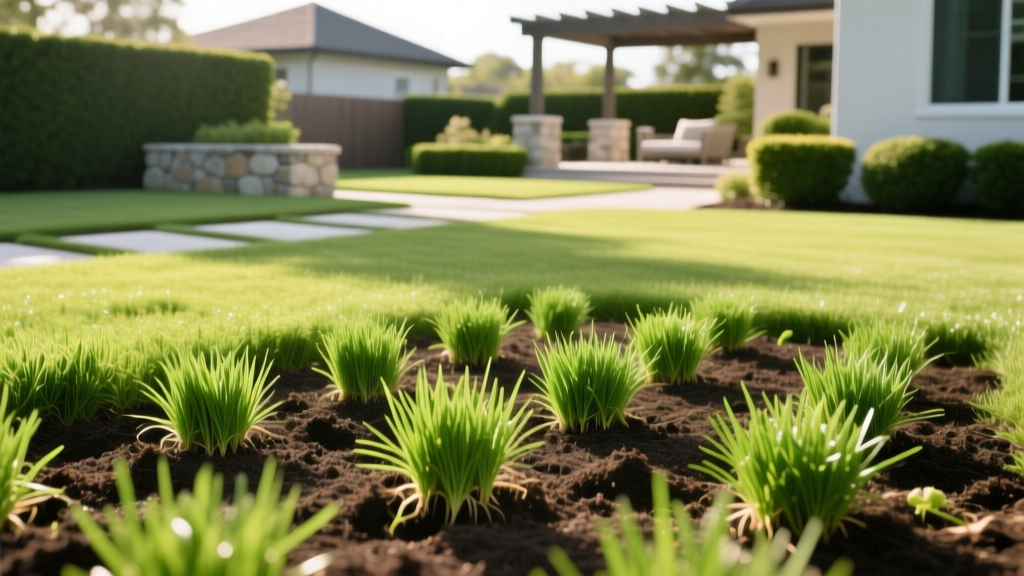
Planting Bermuda Plugs: Spacing, Timing, and Care Guide
The Strategic Advantage of Bermuda Plugs
Bermuda grass (Cynodon dactylon) is a highly aggressive warm-season turf that spreads via above-ground stolons and below-ground rhizomes. While seeding is cheap and sod offers instant gratification, planting Bermuda plugs occupies a highly strategic middle ground. Plugs—typically sold as 2-inch or 3-inch square cores of mature turf in trays of 50 to 72—provide the genetic certainty of sod at a fraction of the cost, while establishing much faster and more reliably than seed.
According to turfgrass specialists at Clemson University Extension, vegetative planting (plugs or sprigs) is the only way to establish improved, hybrid Bermuda cultivars like 'TifTuf', 'Latitude', or 'Yukon', which do not produce viable seeds. Even for common Bermuda, plugs bypass the vulnerable 30-day germination and seedling phase, dropping mature, weed-competitive root systems directly into your soil.
Establishment Method Decision Matrix
| Method | Cost per 1,000 sq ft | Time to Full Coverage | Labor & Risk Profile |
|---|---|---|---|
| Bermuda Seed | $15 – $30 | 4 – 6 months | Low physical labor, high risk of washout, bird predation, and weed competition. |
| Bermuda Plugs | $120 – $220 | 2 – 4 months | Moderate physical labor (digging), low risk of failure if watered correctly. |
| Bermuda Sod | $450 – $700+ | Instant (3 weeks to root) | Extremely high physical labor (heavy lifting), requires flawless soil leveling. |
Pre-Planting Soil Preparation
Bermuda grass thrives in well-draining soils with a pH between 6.0 and 7.0. Because plugs are planted into bare soil, this is your only opportunity to fix subterranean issues before the stolons weave a dense mat that makes core aeration difficult.
Pro-Tip: The 4-Inch Till Rule
Do not simply poke holes into compacted clay. Rototill the planting area to a depth of 4 inches, incorporating 1 inch of organic compost or coarse builder's sand if your soil fails a percolation test. Bermuda roots will stall and rot in heavy, unamended clay pans.
Do not simply poke holes into compacted clay. Rototill the planting area to a depth of 4 inches, incorporating 1 inch of organic compost or coarse builder's sand if your soil fails a percolation test. Bermuda roots will stall and rot in heavy, unamended clay pans.
Rake the area perfectly level. Uneven ground will cause water to pool around certain plugs, leading to crown rot, while leaving others stranded on high mounds where they will desiccate. Apply a starter fertilizer high in phosphorus (such as a 10-18-10 NPK ratio) at a rate of 1 lb of nitrogen per 1,000 sq ft to stimulate immediate root growth.
Step-by-Step Planting Protocol
Timing is critical. Plant Bermuda plugs only when soil temperatures at a 2-inch depth are consistently above 65°F, which typically aligns with late spring or early summer. Planting too early in cool, wet spring soil invites fungal pathogens like Pythium root rot.
- Grid the Lawn: Use a string line and marking paint to create a grid based on your desired spacing (see spacing matrix below).
- Extract the Core: Use a manual bulb planter or a specialized plugger tool to remove a soil core that exactly matches the depth of your plug tray.
- Seat the Plug: Drop the plug into the hole. Critical: The top of the plug's soil line must be perfectly flush with the surrounding bare soil. Burying the Bermuda crown will suffocate it; leaving it elevated will expose the roots to air.
- Firm the Soil: Step on the edges of the hole or use the back of a rake to press the surrounding soil firmly against the plug roots, eliminating air pockets.
- Roll and Water: Go over the entire area with a lightweight lawn roller half-filled with water to ensure soil-to-root contact, then water immediately.
The Spacing vs. Timeline Matrix
Your budget and patience will dictate your spacing. Remember that Bermuda spreads laterally; you are buying time, not just coverage.
| Spacing Interval | Plugs per 1,000 sq ft | Estimated Cost (at $60/tray of 72) | Time to Full Knit |
|---|---|---|---|
| 6 Inches (Aggressive) | ~400 plugs | $330 - $360 | 60 – 90 days |
| 12 Inches (Standard) | ~100 plugs | $85 - $100 | 3 – 4 months |
| 18 Inches (Budget) | ~45 plugs | $40 - $50 | 5 – 6 months |
The 60-Day Establishment Watering Schedule
Newly planted plugs have a tiny root mass. They cannot pull water from deep in the soil profile. Overwatering causes rot; underwatering causes the plug to shrink and detach from the surrounding soil.
- Days 1–14 (Root Initiation): Water 2 to 3 times daily for 5–10 minutes per zone. The goal is to keep the top 1 inch of soil constantly moist but not muddy. Never let the plug crown dry out.
- Days 15–30 (Stolon Emergence): Reduce frequency to once daily for 15 minutes. You should see pale green runners (stolons) reaching out across the bare soil. The roots are now anchoring the plug.
- Days 31–60 (Deep Rooting): Transition to deep, infrequent watering. Apply 1 inch of water twice a week. This forces the rhizomes to dive deep into the soil profile to chase the moisture gradient.
Fertilization and the 90-Day Weed Control Ban
Once the plugs begin sending out lateral runners (usually week 3 or 4), shift to a high-nitrogen fertilizer (e.g., 24-2-11 or 29-0-4) at a rate of 1 lb of nitrogen per 1,000 sq ft every 4 to 6 weeks during the growing season. This fuels the aggressive stolon growth required to knit the lawn together.
WARNING: The Pre-Emergent Herbicide Trap
Do NOT apply pre-emergent herbicides (like prodiamine or dithiopyr) for at least 90 days after planting plugs. Pre-emergents work by inhibiting cell division in germinating seeds, but they also inhibit root cell division at the nodes of Bermuda stolons. If you apply pre-emergent too early, the runners will crawl across the soil but fail to root down, leaving you with a weak, easily torn turf mat. Hand-pull weeds or use careful post-emergent spot treatments (like Quinclorac) during the establishment phase.
Do NOT apply pre-emergent herbicides (like prodiamine or dithiopyr) for at least 90 days after planting plugs. Pre-emergents work by inhibiting cell division in germinating seeds, but they also inhibit root cell division at the nodes of Bermuda stolons. If you apply pre-emergent too early, the runners will crawl across the soil but fail to root down, leaving you with a weak, easily torn turf mat. Hand-pull weeds or use careful post-emergent spot treatments (like Quinclorac) during the establishment phase.
Troubleshooting Common Plug Failures
Why are my plugs turning brown in the center?
If the outer edges are green but the center of the plug is browning, this is typically transplant shock or mild desiccation of the oldest leaves. As long as the base of the plant (the crown) is firm and white/green, the plug is alive and pushing new growth. If the entire plug pulls out of the ground with zero resistance and the roots are black and slimy, you have Pythium root rot caused by overwatering in poorly draining soil.
Why aren't the runners spreading?
According to research from Texas A&M AgriLife Extension, Bermuda requires full sun (minimum 8 hours of direct, unfiltered sunlight). If your plugs are in a shaded area, they will survive but will not spread aggressively. Additionally, a lack of nitrogen or soil compaction will stall lateral growth. If the soil around the plugs feels like concrete, use a hand fork to gently fracture the soil between the plugs to give the stolons a path of least resistance.
Can I mow the lawn while plugs are establishing?
Yes, but with strict parameters. Wait until the plugs have rooted firmly (usually 14–21 days; test by gently tugging on the grass blades). Set your mower to a high setting (1.5 to 2 inches) and ensure your blades are razor-sharp. Dull mower blades will rip young, shallow-rooted plugs completely out of the ground. As the stolons knit together, you can gradually lower the mowing height to your desired level (typically 0.5 to 1.5 inches for hybrid Bermudas).
"The success of a plugged Bermuda lawn isn't determined by the day you plant it, but by the 60 days that follow. Consistent moisture and aggressive nitrogen are the twin engines of stolon growth."

