Grass Types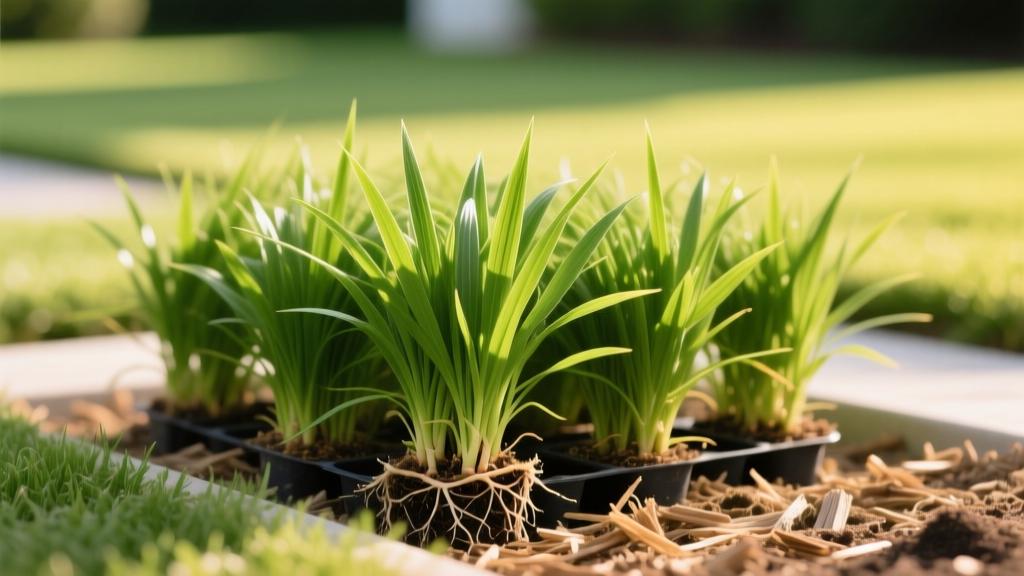
Palmetto St Augustine Grass Plugs: Planting & Care Guide
Why Choose Palmetto St. Augustine for Plug Establishment?
Establishing a shade-tolerant, cold-hardy lawn doesn't always require the massive upfront investment of full sod coverage. Palmetto St Augustine grass plugs offer a highly effective, cost-efficient alternative for homeowners looking to cultivate a premium warm-season turf. Developed for superior shade tolerance and colder climate resilience, the Palmetto cultivar thrives in USDA Hardiness Zones 7b through 11, outperforming older varieties like Floratam in low-light environments and surviving winter dips that would kill standard St. Augustine.
Because St. Augustinegrass produces very little viable seed, vegetative propagation via plugs, sprigs, or sod is mandatory. Plugs are 2x2 inch or 3x3 inch squares of mature turf and soil. When planted correctly, Palmetto's aggressive above-ground stolons will knit together, creating a dense, dark green carpet. According to the Clemson University Home & Garden Information Center, St. Augustine is the most shade-tolerant warm-season grass, and the Palmetto cultivar pushes this boundary even further, requiring only 3 to 4 hours of direct or filtered sunlight daily.
Cultivar Comparison: Palmetto vs. Traditional Varieties
| Feature | Palmetto St. Augustine | Floratam St. Augustine | CitraBlue St. Augustine |
|---|---|---|---|
| Leaf Blade Texture | Fine, soft, dark green | Coarse, wide, medium green | Medium-fine, blue-green |
| Shade Tolerance | Excellent (3-4 hrs sun) | Poor to Moderate (5-6 hrs sun) | Very Good (4 hrs sun) |
| Cold Hardiness | High (Zones 7b-11) | Low (Zones 9-11) | High (Zones 8-11) |
| Thatch Production | Moderate | High | Low to Moderate |
Soil Preparation and Site Grading
The single most common reason Palmetto St Augustine grass plugs fail to establish is inadequate soil preparation. St. Augustine stolons root at the nodes; if the soil surface is compacted or heavily thatched from previous grass, the nodes cannot penetrate the earth to draw moisture.
Begin by killing all existing vegetation using a non-selective herbicide like glyphosate. Wait 10 to 14 days for the vegetation to die completely, then rototill the area to a depth of 4 to 6 inches. Palmetto prefers a slightly acidic to neutral soil pH between 6.0 and 7.5. If your soil test indicates a pH below 5.5, incorporate agricultural lime at the rate of 50 lbs per 1,000 square feet during the tilling process. For heavy clay soils, amend with 2 inches of organic compost to improve drainage and prevent the plugs from sitting in waterlogged conditions, which invites Pythium root rot.
The Starter Fertilizer Requirement
Do not use high-nitrogen lawn fertilizers on newly planted plugs. Nitrogen pushes top growth at the expense of root development. Instead, apply a starter fertilizer high in phosphorus (the middle number on the N-P-K ratio) to stimulate rapid root and stolon node growth. A formula like 10-18-10 or 5-10-5 applied at a rate of 1 lb of actual phosphorus per 1,000 square feet is ideal. Broadcast the fertilizer evenly over the tilled soil and rake it into the top 2 inches before planting.
Spacing Guidelines for Palmetto St Augustine Grass Plugs
Spacing dictates how quickly your lawn will fill in and how much you will spend. As of 2026, commercial plug trays typically cost between $0.65 and $0.95 per plug. The Texas A&M AgriLife Extension notes that St. Augustine spreads rapidly via stolons during the peak summer heat, allowing for wider spacing if you are patient.
- High-Density (6x6 inches): Requires 4 plugs per square foot. Best for high-traffic areas or steep slopes where immediate erosion control is needed. Expect full coverage in 6 to 8 weeks during peak summer. Cost: ~$2.60 - $3.80 per sq ft.
- Standard Density (9x9 inches): Requires 1.7 plugs per square foot. The optimal balance of cost and speed. Expect full coverage in 10 to 14 weeks. Cost: ~$1.10 - $1.60 per sq ft.
- Economy Density (12x12 inches): Requires 1 plug per square foot. Best for large, shaded areas or budget-conscious projects. Expect full coverage in 4 to 6 months. Cost: ~$0.65 - $0.95 per sq ft.
When planting, use a plug auger or a hand trowel to dig holes exactly the size of the plug's root ball. The crown of the plug (where the grass blades meet the roots) must sit perfectly flush with the surrounding soil grade. Planting too deep will bury the crown and cause rot; planting too high will expose the roots to drying winds. Firm the soil around each plug with your hands to eliminate air pockets.
The 30-Day Plug Rooting and Watering Matrix
Palmetto plugs have a very small soil mass and will dry out in hours if exposed to direct sun and wind. The first 30 days are critical for node rooting. Follow this strict watering matrix to ensure survival without drowning the turf.
| Days Post-Planting | Watering Frequency | Duration per Zone | Visual Indicator |
|---|---|---|---|
| Days 1 to 10 | 2 to 3 times daily | 5 to 8 minutes | Soil surface is constantly damp; plugs never wilt. |
| Days 11 to 20 | 1 time daily | 10 to 15 minutes | Stolons begin reaching outward; soil dries slightly between waterings. |
| Days 21 to 30 | Every 2 to 3 days | 20 to 30 minutes | Plugs resist gentle upward tug; deep roots are established. |
Pro Tip: To test if your plugs have rooted, gently grasp a few grass blades and pull straight up. If the plug lifts easily out of the hole, it has not rooted. Continue the daily watering schedule for another 5 to 7 days.
Critical Maintenance and Chemical Pitfalls
Once the Palmetto St Augustine grass plugs have rooted and the stolons begin to bridge the gaps between holes, maintenance shifts from establishment to long-term turf management. However, several common chemical and mechanical mistakes can derail a newly plugged lawn.
The Pre-Emergent Herbicide Warning
This is the most frequent cause of plug failure in new lawns. Pre-emergent herbicides like atrazine, pendimethalin, and prodiamine work by creating a chemical barrier in the top inch of soil that stops cell division in germinating seeds. Unfortunately, these chemicals also inhibit the cell division required for St. Augustine stolon nodes to root into the soil. Never apply a pre-emergent herbicide within 60 days before or 90 days after planting Palmetto plugs. If weeds become a problem during establishment, use targeted spot-treatments with a post-emergent selective herbicide labeled safe for St. Augustine, or hand-pull the weeds.
Mowing and Thatch Management
Palmetto has a finer leaf blade and a lower growth habit than Floratam, meaning it requires a different mowing strategy. Set your mower deck to 2.5 to 3.5 inches. Cutting Palmetto lower than 2 inches will scalp the turf, expose the soil to weed seeds, and severely reduce its shade tolerance. Because Palmetto produces moderate thatch, avoid over-applying nitrogen fertilizer. Limit nitrogen applications to 2 to 4 lbs per 1,000 square feet annually, split into three or four applications between May and September. If the thatch layer exceeds 0.5 inches, use a power rake or core aerator in late spring to restore soil oxygen flow.
Troubleshooting Common Plug Failures
- Yellowing Leaves with Green Veins: This is a classic sign of iron chlorosis, common in high-pH soils (above 7.5). Apply a chelated iron spray (Fe-EDDHA) directly to the foliage for a rapid green-up, and amend the soil with elemental sulfur to lower the pH long-term.
- Plugs Turning Brown and Shrinking: Usually caused by underwatering or planting the plugs too high, exposing the root crown to the air. Ensure the plug is flush with the soil and increase watering frequency.
- Fungal Lesions on Leaves: Brown patch or gray leaf spot can attack stressed plugs. Ensure you are watering in the early morning (before 8 AM) so the grass blades dry before nightfall. If the disease persists, apply a systemic fungicide containing azoxystrobin or propiconazole.
Establishing a lawn from Palmetto St Augustine grass plugs requires patience and precise execution during the first month. By respecting the cultivar's specific spacing, watering, and chemical sensitivities, you will cultivate a dense, shade-defying turf that outlasts and outperforms traditional St. Augustine varieties for decades.