Grass Types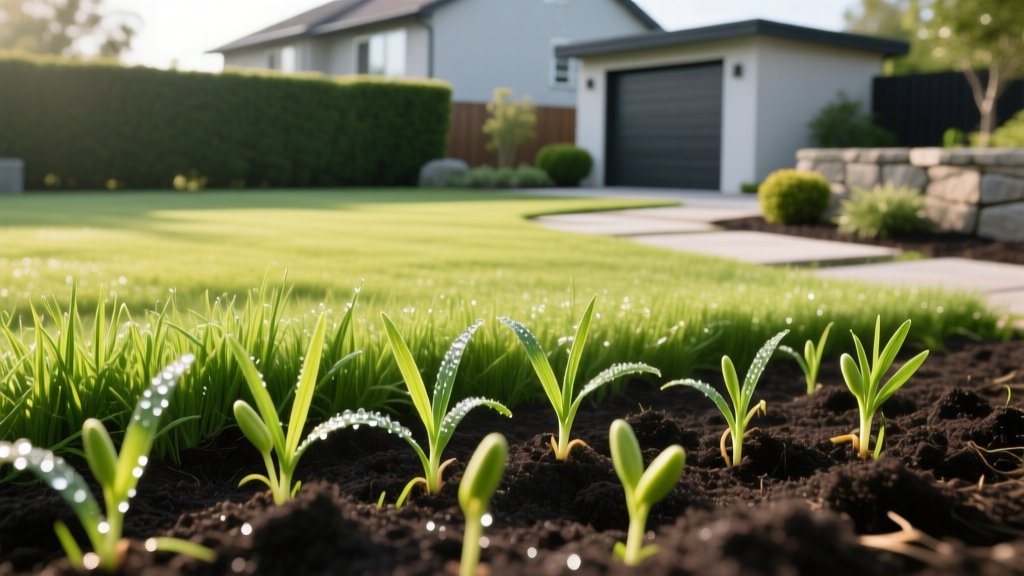
Planting Perennial Rye Seed: Steps for Rapid Lawn Establishment
Why Choose Perennial Ryegrass for Your Lawn?
Perennial ryegrass (Lolium perenne) is the undisputed champion of rapid germination and high-traffic durability. Unlike Kentucky bluegrass, which can take 21 to 28 days to sprout, perennial rye seed typically germinates in 5 to 10 days under optimal conditions. This aggressive establishment rate makes it an ideal choice for homeowners needing quick soil stabilization, rapid overseeding results, or a durable playing surface for active yards.
However, perennial ryegrass operates with a bunch-type growth habit rather than spreading via rhizomes or stolons. This means it will not naturally fill in bare spots on its own after initial establishment, requiring occasional overseeding. To maximize its wear tolerance and disease resistance, modern turfgrass science heavily relies on endophyte-enhanced cultivars. When purchasing your seed, always verify the seed tag for high endophyte levels, which provide natural resistance to surface-feeding insects like chinch bugs and sod webworms.
Expert Insight: Avoid cheap 'pasture' or 'forage' ryegrass blends. Turf-type perennial ryegrass cultivars are specifically bred for finer leaf blades, darker green coloration, and lower vertical growth rates, drastically reducing your weekly mowing time.
Optimal Timing: When to Plant Perennial Rye Seed
Timing is the most critical variable in cool-season grass establishment. Perennial ryegrass thrives when soil temperatures are consistently between 50°F and 65°F, which typically corresponds to daytime air temperatures of 60°F to 75°F.
- Primary Window (Late Summer to Early Fall): Planting 45 days before your region's first estimated hard frost is ideal. Fall planting allows the root system to develop deeply before the heat stress of the following summer, while naturally falling autumn leaves provide a slight mulching effect that retains moisture.
- Secondary Window (Early Spring): Spring planting is viable but riskier. Seedlings will face immediate heat stress as summer approaches, and you will be competing with aggressive spring weed flushes like crabgrass.
According to turfgrass researchers at Purdue University's Turfgrass Science program, fall-established cool-season lawns exhibit up to 40% deeper root mass by their first summer compared to spring-seeded equivalents, drastically improving drought survival.
Pre-Planting Soil Preparation Matrix
Perennial rye seed requires intimate seed-to-soil contact to germinate properly. Simply throwing seed over compacted dirt guarantees failure. Before seeding, conduct a professional soil test and amend according to the matrix below.
| Soil Parameter | Ideal Target | Corrective Amendment |
|---|---|---|
| Soil pH | 6.0 to 7.0 | Apply pelletized limestone (if below 6.0) or elemental sulfur (if above 7.0) |
| Phosphorus (P) | 25 to 50 ppm | Incorporate a high-phosphorus starter fertilizer (e.g., 10-18-10) into the top 2 inches |
| Potassium (K) | 100 to 150 ppm | Apply muriate of potash (0-0-60) if deficient to boost cold and drought tolerance |
| Organic Matter | 3% to 5% | Till in 1 to 2 inches of screened compost over heavy clay or sandy soils |
Step-by-Step Seeding and Germination Protocol
Follow this exact sequence to ensure maximum seed viability and uniform establishment.
Step 1: Site Grading and Tilling
For a completely new lawn, rototill the soil to a depth of 4 to 6 inches. Rake the area to remove rocks, debris, and large dirt clods. Grade the soil so it slopes away from your home's foundation at a minimum drop of 1 inch per foot for the first 10 feet to prevent water pooling.
Step 2: Calculating and Applying Seed
For new lawn establishment, apply perennial rye seed at a rate of 5 to 10 lbs per 1,000 square feet. If you are overseeding an existing thin lawn, reduce the rate to 3 to 5 lbs per 1,000 square feet. Use a calibrated rotary broadcast spreader, splitting your seed volume in half. Apply the first half walking horizontally across the yard, and the second half walking vertically. This cross-hatch pattern eliminates striping and missed spots.
Step 3: Seed-to-Soil Contact
According to guidelines published by Penn State Extension, seed left on the surface is highly vulnerable to bird predation and desiccation. Lightly rake the seeded area with a leaf rake to incorporate the seed no deeper than 1/8 to 1/4 inch into the soil. Follow this by running an empty lawn roller over the area to press the seed firmly into the soil profile.
Step 4: Starter Fertilizer and Pre-Emergent
Immediately after rolling, apply a turf starter fertilizer containing a minimum of 1.0 lb of actual nitrogen per 1,000 sq ft, alongside quick-release phosphorus to fuel initial root shoots. If weed pressure is a concern, you can safely apply a pre-emergent containing mesotrione (commonly sold under the brand name Tenacity). Unlike traditional pre-emergents like prodiamine that will kill germinating ryegrass, mesotrione selectively targets broadleaf weeds and crabgrass while being completely safe for cool-season grass seedlings.
Warning: Never use standard pre-emergent herbicides (prodiamine, dithiopyr) within 60 days of planting perennial rye seed. These chemicals inhibit root cell division and will permanently stunt or kill your new grass.
Post-Planting Care: The First 30 Days
The first month dictates the long-term survival of your turf. Perennial ryegrass has a shallow, immature root system during this phase and cannot survive even brief periods of drought.
The 14-Day Germination Watering Schedule
You must keep the top 1/2 inch of soil consistently moist, but never soggy. Set your irrigation system to run 3 to 4 times per day for 5 to 10 minutes per zone. The goal is to apply roughly 0.1 inches of water per session. If the seed dries out for even a few hours during the germination window, the sprouted radicle (first root) will desiccate and die.
Transitioning to Deep Watering
Once the grass reaches 1 inch in height (usually around day 14 to 18), reduce watering frequency to once daily, but increase the duration to apply 0.25 inches of water. By day 30, transition to the standard cool-season schedule: watering deeply 2 to 3 times per week to encourage roots to chase moisture deeper into the soil profile.
First Mowing
Wait to mow until the perennial ryegrass reaches 3 inches in height. Set your mower deck to 2.5 inches and ensure the blade is freshly sharpened. A dull blade will tear the tender young grass leaves, creating jagged white tips that invite fungal pathogens.
Common Establishment Failures and Troubleshooting
Even with meticulous preparation, environmental variables can disrupt establishment. Use this diagnostic guide to correct issues early.
- Symptom: Seed washes away after heavy rain.
Cause & Fix: Poor grading or lack of seed incorporation. Apply a thin layer of straw mulch (not hay, which contains weed seeds) at a rate of 1 bale per 1,000 sq ft to hold soil in place, or use a hydraulic tackifier for sloped areas. - Symptom: Seedlings sprout but quickly collapse, turning dark and mushy.
Cause & Fix: Pythium blight (damping-off disease), caused by overwatering and poor air circulation in high humidity. Immediately reduce watering frequency, allow the surface to dry slightly between sessions, and apply a preventative fungicide containing chlorothalonil or propiconazole. - Symptom: Uneven, patchy germination.
Cause & Fix: Spreader calibration errors or seed buried too deeply. Ryegrass seed lacks the energy to push through more than 1/2 inch of soil. Ensure you are not topdressing with heavy compost immediately after seeding.
By adhering to precise soil temperatures, utilizing endophyte-enhanced seed, and strictly managing the 30-day moisture window, your perennial ryegrass will establish a dense, wear-resistant turf capable of handling heavy foot traffic within its first growing season.