Grass Types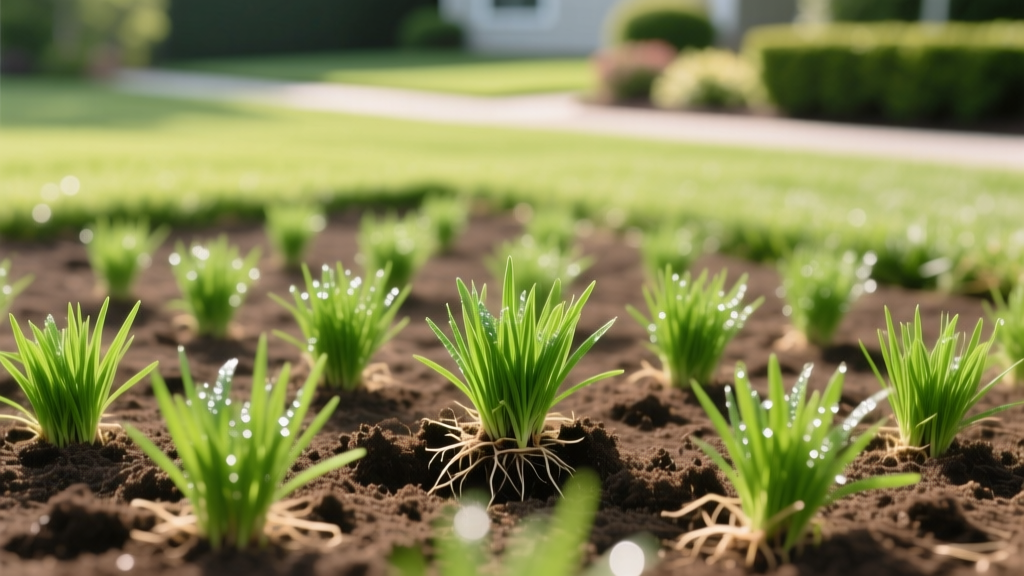
Plugging Zoysia Grass: Spacing, Soil Prep, and Establishment
Plugging zoysia grass is a strategic compromise between the high upfront cost of solid sod and the slow, weed-prone nature of seeding. While a pallet of Meyer zoysia sod costs $450–$600 per 450 square feet in 2026, buying 50-count trays of plugs for $45–$65 each drastically reduces material costs. However, success hinges on precise spacing, aggressive weed management, and strict irrigation protocols during the first 90 days. Because zoysia spreads via above-ground stolons and below-ground rhizomes, proper initial placement dictates how quickly the lawn will knit together into a dense, traffic-tolerant turf.
Selecting the Right Zoysia Cultivar for Plugs
Not all zoysia species spread at the same rate. Choosing a slow-growing cultivar for a plugging project will extend your establishment timeline by an entire growing season. According to NC State TurfFiles, cultivar selection should be based on your specific site conditions and patience level.
- Meyer (Z-52): The industry standard. Medium-textured blade, excellent cold tolerance, and a moderate spread rate. Ideal for full-sun lawns in transition zones.
- Zeon: A fine-bladed cultivar with superior shade tolerance and an aggressive lateral spread rate. Zeon plugs will fill in 20% to 30% faster than Meyer, making it highly efficient for plugging projects.
- Emerald: A very dense, fine-bladed hybrid. While beautiful, Emerald is notoriously slow to establish and spread. Avoid using Emerald for plugging unless you are willing to wait two full growing seasons for complete coverage.
- Geo: Offers excellent shade tolerance and a deep green color, with a spread rate comparable to Zeon. Highly recommended for partially shaded yards.
The Mathematics of Plug Spacing and Coverage
The distance between your plugs directly impacts your material budget, labor time, and the date your lawn reaches full coverage. The standard plug size is 2 to 3 inches in diameter. Below is the exact mathematical breakdown for a 1,000-square-foot area.
| Spacing Grid | Plugs per 1,000 sq ft | Est. Material Cost (2026) | Time to Full Coverage |
|---|---|---|---|
| 6 inches | 4,000 | $1,600 - $2,400 | 10 - 14 weeks |
| 9 inches | 1,777 | $710 - $1,060 | 16 - 20 weeks |
| 12 inches | 1,000 | $400 - $600 | 24 - 36 weeks |
| 18 inches | 444 | $175 - $265 | 2+ growing seasons |
Expert Recommendation: For most residential lawns, a 9-inch spacing grid offers the optimal balance of cost and establishment speed. It provides enough bare soil between plugs to minimize initial rhizome competition while ensuring the lawn closes before the first frost.
Step-by-Step Soil Preparation
Zoysia plugs will fail to establish if they are forced to compete with existing weed roots or planted in compacted, unamended clay. Follow this exact preparation sequence:
- Eradicate Existing Vegetation: Apply a non-selective herbicide containing 41% glyphosate to the area. Wait a full 14 days for complete translocation and death of existing weeds and grass.
- Core Aeration and Tilling: Rototill the soil to a depth of 4 to 6 inches. This breaks up compaction and allows the zoysia rhizomes to penetrate deeply.
- Soil Testing and Amendment: Zoysia thrives in a soil pH between 6.0 and 6.5. If your soil test indicates a pH below 5.8, incorporate pelletized limestone at a rate of 50 lbs per 1,000 sq ft. If the pH is above 7.0, apply elemental sulfur to lower it.
- Starter Fertilizer Application: Immediately before planting, apply a high-phosphorus starter fertilizer. A formulation like 10-18-10 applied at a rate that delivers 1 lb of Nitrogen per 1,000 sq ft will provide the phosphorus necessary for rapid root development.
Planting Technique and Depth Control
Use a dedicated 3-inch manual plugger or a 2-inch auger bit attached to a cordless drill to dig your holes. The most critical variable during planting is depth control.
The Crown Rule: The crown of the zoysia plug (the point where the green blades transition into white roots) must sit perfectly level with the surrounding soil grade. Planting the plug even 1/4 inch too deep will bury the crown, leading to stem rot and plug death. Planting it 1/4 inch too shallow exposes the upper roots to rapid desiccation in the summer sun.
After dropping the plug into the hole, backfill with the native soil and step firmly on the edges to eliminate air pockets. Do not pack soil directly over the top of the plug's crown.
Irrigation and Post-Planting Weed Strategy
Newly planted zoysia plugs have a severely restricted root mass. They cannot access deep soil moisture and will die within 48 hours if the top inch of soil dries out during peak summer temperatures.
The 90-Day Watering Matrix
- Days 1–14: Water twice daily (morning and early afternoon) for 10–15 minutes per zone. The goal is to keep the top 2 inches of soil consistently moist, not saturated.
- Days 15–30: Reduce to once daily in the early morning for 20 minutes. This encourages the roots to begin stretching downward.
- Days 31–90: Transition to deep, infrequent watering. Apply 1 inch of water per week, split into two sessions. This trains the zoysia to develop deep, drought-tolerant rhizomes.
⚠️ CRITICAL WARNING: Pre-Emergent Herbicides
Do NOT apply pre-emergent herbicides (such as Prodiamine or Dithiopyr) before or immediately after plugging zoysia. These chemicals create a barrier that inhibits cell division in roots, which will severely stunt or kill your new plugs as they attempt to send out rhizomes. Wait until the plugs have firmly rooted and begun spreading laterally (typically 8 to 10 weeks) before applying pre-emergents. For early weed control, hand-pull broadleaf weeds or use a selective post-emergent like Quinclorac once the plugs show active lateral growth.
Troubleshooting Common Plug Failures
Even with meticulous preparation, environmental factors can cause plug failure. Identifying the symptom early allows for rapid correction.
- Symptom: Plugs turn yellow and pull up easily with no root resistance.
Cause: White grub damage or poor soil contact. Grubs will sever the new roots immediately. Inspect the soil around the plug for C-shaped white larvae. If present, apply a fast-acting curative insecticide containing Trichlorfon. - Symptom: Plugs turn brown from the center outward, with a water-soaked appearance at the base.
Cause: Pythium blight or Rhizoctonia (Brown Patch) caused by overwatering and poor drainage. Reduce irrigation frequency immediately and apply a systemic fungicide containing Azoxystrobin. - Symptom: Plugs remain green but show zero lateral spread after 6 weeks.
Cause: Phosphorus deficiency or extreme soil compaction. Conduct a secondary soil test. If phosphorus is low, apply a liquid foliar fertilizer with a high middle number (e.g., 10-30-10) to bypass soil lock-up.
Frequently Asked Questions
Can I plug zoysia into an existing thin lawn?
Technically yes, but it is highly discouraged. Existing grass, even if thin, will shade out the new zoysia plugs and outcompete them for water and nutrients. For a successful plugging project, you must start with a completely bare, tilled seedbed. If you must thicken an existing zoysia lawn, core aeration followed by heavy nitrogen fertilization is a more effective strategy than plugging.
What is the best time of year to plug zoysia?
The optimal window is late spring to early summer, specifically when soil temperatures at a 2-inch depth consistently reach 65°F to 70°F. In the southeastern United States, this typically falls between May 15 and June 15. Planting in late summer (August or September) risks the plugs failing to establish a sufficient root system before the first winter frost, leading to severe winterkill.
How soon can I mow newly plugged zoysia?
Do not mow the area until the plugs have rooted firmly and the lateral stolons have begun to bridge the gap between holes. When you do mow for the first time, ensure the mower blades are razor-sharp to prevent tearing the young stolons, and set the deck height to 2 inches. As noted by Clemson Extension, dull mower blades will shred zoysia leaf tips, inviting fungal pathogens into the vulnerable new growth.