Grass Types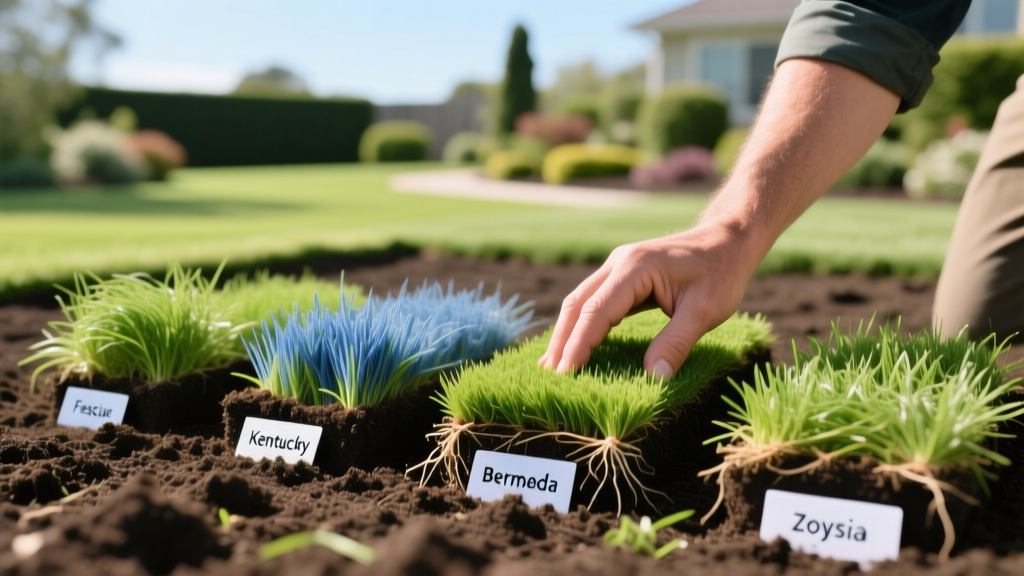
How to Choose and Prep the Best Topsoil for Sod Installation
Installing sod over unamended native clay or compacted fill dirt is the leading cause of turf failure within the first 18 months. While sod provides an instant lawn, its shallow initial root system requires a highly specific soil environment to establish a deep, drought-tolerant profile. Selecting the right topsoil for sod is not simply about buying the cheapest dirt from a local supplier; it requires matching the soil texture, pH, and cation exchange capacity (CEC) to your specific turfgrass species.
The Science of the Sod-Soil Interface
When you lay sod, you are placing a mature root mat directly onto a new soil horizon. If the underlying topsoil is too dense, or if there is a sharp textural discontinuity between the sod's thatch layer and the topsoil, water will perch at the interface. This creates a saturated zone that rots roots in summer and freezes them in winter.
According to Penn State Extension, the ideal topsoil for sod installation must facilitate rapid water infiltration while retaining enough moisture to sustain the turf between irrigation cycles. A sandy loam texture (approximately 60% sand, 30% silt, and 10% clay) with 3% to 5% organic matter provides the optimal balance of drainage and nutrient retention for the majority of warm- and cool-season grasses.
Matching Topsoil Profiles to Specific Turfgrass Species
Different grass species have evolved to thrive in distinct soil chemistries. Applying a generic topsoil blend without considering your sod type can lead to chronic nutrient lockout or fungal diseases. Use the matrix below to specify your topsoil order to your supplier.
| Turfgrass Species | Ideal Soil pH | Preferred Texture | Drainage Requirement | Organic Matter Target |
|---|---|---|---|---|
| Bermudagrass | 5.8 - 7.0 | Sandy Loam | High (Infiltration > 2 in/hr) | 2% - 4% |
| Tall Fescue | 5.5 - 7.5 | Loam to Clay Loam | Moderate (Infiltration 1 in/hr) | 3% - 5% |
| Zoysiagrass | 5.5 - 7.0 | Sandy Loam / Loam | Moderate to High | 2% - 4% |
| St. Augustinegrass | 5.0 - 8.5 | Loam / Clay Loam | Moderate (Tolerates heavier soils) | 3% - 5% |
| Kentucky Bluegrass | 6.0 - 7.5 | Loam | Moderate | 4% - 6% |
Evaluating Topsoil Quality at the Supplier
Never purchase bulk topsoil sight unseen. Topsoil is an unregulated commodity in many municipalities, meaning suppliers can legally sell you subsoil mixed with construction debris. When inspecting a topsoil pile at the landscape yard, perform these three field tests:
1. The Ribbon Test (Texture Analysis)
Take a handful of moist soil and squeeze it between your thumb and forefinger to form a ribbon. If the ribbon breaks before reaching 1 inch, it is a loam or sandy loam (ideal for most sod). If it forms a ribbon longer than 2 inches without breaking, it contains too much clay and will compact under the weight of the sod and foot traffic.
2. The Smell Test (Anaerobic Detection)
High-quality topsoil should smell earthy, like a forest floor after rain. If the soil smells like rotten eggs or sulfur, it has been stockpiled too long in an anaerobic state. This indicates the presence of hydrogen sulfide and a lack of oxygen, which will severely stunt sod root establishment.
3. The Debris Check
Sift a handful of soil through your fingers. While small pebbles are acceptable, avoid soil loaded with asphalt chunks, drywall, or excessive woody debris. Large wood chips tie up soil nitrogen as they decompose, causing the newly laid sod to yellow from nitrogen deficiency.
Step-by-Step Topsoil Preparation Protocol
Proper installation requires integrating the new topsoil with the native subgrade to prevent a hardpan layer. Follow this exact sequence for a 1,000-square-foot lawn area.
Step 1: Subgrade Scarification
Remove all existing weeds and debris. Using a rear-tine rototiller, scarify the native subsoil to a depth of 2 to 3 inches. This breaks up the compaction layer left by home builders and creates a mechanical bond between the subsoil and the incoming topsoil.
Step 2: Topsoil Blending and Amendment
Spread 4 to 6 inches of your screened topsoil over the scarified subgrade. Based on a preliminary university soil test (typically $30-$45 via your local cooperative extension), incorporate amendments. If the pH is below 5.5, apply 50 lbs of pelletized lime per 1,000 sq ft. If drainage is poor, mix in 1 cubic yard of expanded shale or coarse horticultural sand per 1,000 sq ft.
WARNING: The Fluffy Soil Trap
Freshly dumped topsoil is highly aerated. If you lay sod immediately without allowing the soil to settle, the topsoil will compact naturally over the next 30 days, causing the sod to sink, creating uneven grading and pooling water. Always water the topsoil heavily and let it settle for 48 hours before final grading and sodding.
Step 3: Laser Grading and Settlement
After the 48-hour settlement period, use a landscape rake and a lawn leveling drag mat to achieve a final grade that slopes away from the home's foundation at a minimum 2% drop (1/4 inch per foot). The final soil surface should be exactly 1 inch below the height of your sidewalks and driveways to account for the thickness of the sod mat.
2026 Cost Breakdown: Bulk Topsoil vs. Amendments
Budgeting for soil preparation requires accounting for material, delivery, and amendment costs. Based on early 2026 landscape supply averages, here is what homeowners should expect to pay for a standard 1,000-square-foot project requiring roughly 15 cubic yards of topsoil (to achieve a 4.5-inch depth after settling):
- Bulk Screened Topsoil: $40 - $65 per cubic yard (Material only)
- Bulk Delivery Fee: $75 - $120 per truckload (up to 20 yards)
- Finished Compost (for blending): $50 - $75 per cubic yard
- Pelletized Lime (50 lb bag): $8 - $12 per bag
- Elemental Sulfur (50 lb bag): $35 - $45 per bag
- Professional Rototiller Rental: $65 - $90 per day
Pro Tip: Order a 70/30 topsoil-compost blend directly from the supplier to save on the labor of manually mixing compost into the topsoil on-site. This blend usually costs $5 to $10 more per yard but guarantees uniform organic matter distribution.
Troubleshooting Sod Failure Post-Installation
Even with excellent topsoil, environmental factors can cause establishment issues. Use this diagnostic framework to identify and correct problems within the first 60 days.
Symptom: Sod Rolls Shrink and Expose Seams
Cause: Under-watering combined with high-sand topsoil. Sandy loam drains rapidly, and if the sod is not watered deeply enough to push moisture through the root mat and into the topsoil, the edges of the sod rolls will desiccate and shrink.
Fix: Increase irrigation frequency to 3-4 times daily for 10-minute intervals during the first two weeks to keep the topsoil interface constantly moist without flooding it.
Symptom: Yellowing Despite Adequate Watering
Cause: Nitrogen tie-up or pH-induced iron chlorosis. If the topsoil supplier included excessive uncomposted wood mulch, soil microbes are consuming all available nitrogen to break down the carbon. Alternatively, a topsoil pH above 7.5 locks up iron, particularly in St. Augustine and Zoysia grasses.
Fix: Apply a quick-release, water-soluble nitrogen fertilizer (like 21-0-0 ammonium sulfate) at 1 lb of nitrogen per 1,000 sq ft. If soil tests confirm high pH, apply chelated iron sprays immediately to restore green color while planning a long-term sulfur amendment strategy.
For comprehensive regional guidelines on soil preparation and turfgrass selection, consult the University of Minnesota Extension or your local state agricultural office. Proper topsoil selection is a one-time investment that dictates the health, water requirements, and resilience of your lawn for the next two decades.