Grass Types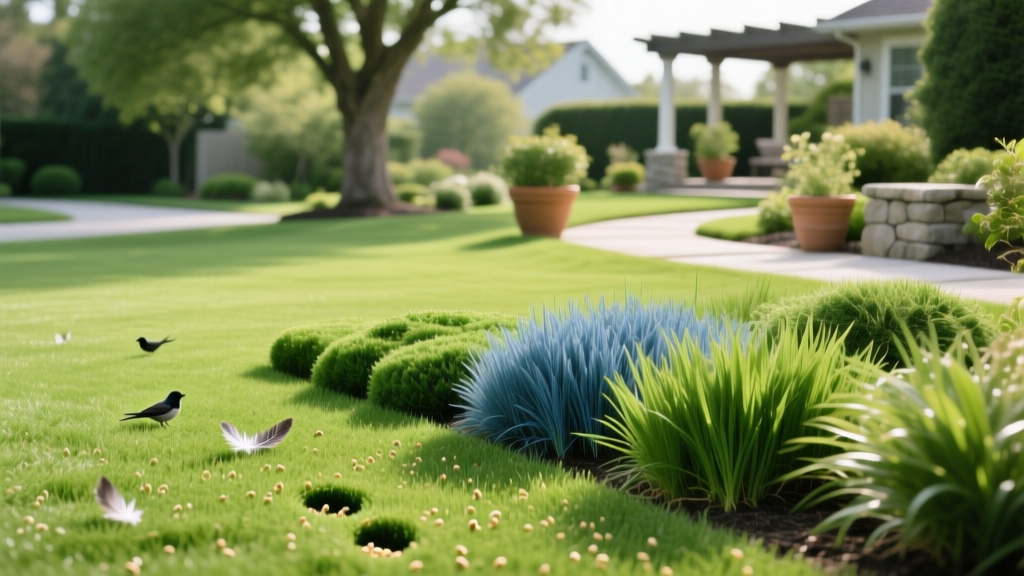
How to Prevent Birds From Eating Grass Seed After Overseeding
The Foraging Trigger: Why Birds Target Fresh Seed
When you core aerate and overseed, you inadvertently create a visual buffet for local bird populations. Species like European starlings, house sparrows, and mourning doves are highly efficient visual foragers. According to research from the Cornell Lab of Ornithology, birds are drawn to the high contrast of dark seed against light, disrupted soil. They do not just eat what is on the surface; they will actively scratch through aeration holes to extract Kentucky Bluegrass (KBG) and Tall Fescue seeds, destroying up to 40% of your seed investment within 48 hours if left unprotected.
Stopping this behavior requires a multi-tiered approach that combines physical exclusion, sensory deterrence, and proper seed placement. Relying on a single method, like throwing straw over the top, is rarely enough to deter a determined flock.
Warning: Never use hay as a seed cover. Hay contains agricultural weed seeds (like crabgrass and thistle) that will germinate alongside your turf. Always specify weed-free straw or use alternative mulches.
Physical Barrier Matrix: Netting, Mulch, and Burlap
Physical barriers offer the highest success rate for seed protection. The UMass Amherst Extension recommends covering seed to retain moisture and hide it from foraging wildlife. Below is a cost and efficacy breakdown of the most reliable physical barriers for a standard 1,000 square foot lawn area.
| Barrier Type | Cost per 1,000 sq ft | Bird Efficacy | Primary Drawback |
|---|---|---|---|
| 3/4" Polypropylene Netting | $35 - $45 | 99% | Requires removal before first mow |
| Weed-Free Wheat Straw | $8 - $12 | 60% | Blows away in high winds; hides seedling emergence |
| Penn Mulch (Recycled Paper) | $25 - $30 | 85% | Can form a crust if applied too thickly |
| Burlap Rolls | $40 - $55 | 95% | Heavy to transport; requires stapling |
For maximum protection on sloped lawns or areas with heavy bird traffic, 3/4-inch UV-stabilized polypropylene netting is the industry standard. Secure the perimeter and seams every 3 feet using 4-inch steel landscape staples, ensuring a 6-inch overlap at all joints so birds cannot slip through the gaps.
Chemical Deterrents: Methyl Anthranilate Application
If netting is impractical for your lawn's layout, chemical repellents offer a strong secondary defense. The most effective active ingredient for turfgrass is methyl anthranilate, a non-toxic, food-grade grape extract used in commercial bird control (sold under brand names like Bird Shield and Avian Control).
Methyl anthranilate irritates the trigeminal nerve in birds, making the seed taste incredibly bitter and causing mild nasal irritation, while remaining completely safe for mammals, pets, and soil biology.
Application Protocol for Seed Treatment
- Mixing Rate: Combine 2 to 4 fluid ounces of methyl anthranilate concentrate per 1 gallon of water.
- Seed Coating: For maximum efficacy, spray the liquid directly onto your grass seed in a wheelbarrow and mix thoroughly with a rake *before* broadcasting. Allow the seed to dry for 2 hours so it doesn't clump in your spreader.
- Post-Seed Application: If you have already seeded, apply the mixture over the lawn using a 2-gallon pump sprayer at a rate of 1 gallon per 1,000 square feet.
- Reapplication: The chemical breaks down under UV light and washes away with moisture. Reapply after 1/2 inch of rainfall or every 7 days until the grass reaches 1.5 inches in height.
The Rake-In and Roll Method (Cultural Control)
Birds cannot eat what they cannot see. The Purdue Turfgrass Science program emphasizes that proper seed-to-soil contact not only improves germination rates but drastically reduces avian predation. Different grass species require specific planting depths to remain hidden while still receiving adequate light for germination.
Pro Tip: After broadcasting your seed, use a leaf rake turned upside down (tines facing up) to lightly drag the seed into the top 1/4 inch of soil. Follow this with a lightweight lawn roller filled halfway with water to press the seed firmly into the soil profile.
- Kentucky Bluegrass: Requires light to germinate. Plant at exactly 1/4 inch deep. Do not bury deeper, or germination will stall.
- Tall Fescue & Perennial Ryegrass: Larger seeds can be planted slightly deeper, at 1/2 inch, which naturally hides them from surface-scratching birds.
- Fine Fescues: Very small seeds; surface sow and rely entirely on a mulch or netting cover, as raking will bury them too deep.
The Decoy and Distract Protocol
If you are dealing with a massive flock migration or a persistent local population, exclusion and repellents may need to be paired with distraction. Set up a "sacrificial feeding zone" at least 50 feet away from your newly seeded area.
Use a standard ground feeder or scatter cheap cracked corn and white proso millet in a designated corner of your property. Birds are opportunistic; if they find a concentrated, easy-to-access food source that requires zero scratching or foraging effort, the dominant flock members will claim that spot, reducing the number of birds actively patrolling your fresh seedbed.
7-Day Seed Protection Playbook (1,000 sq ft)
- Day 1 (Prep & Treat): Core aerate the lawn. Coat 5 lbs of Tall Fescue seed with 4 oz of methyl anthranilate mixed in a spray bottle. Let dry for 2 hours.
- Day 2 (Sow & Hide): Broadcast the treated seed using a drop spreader. Drag the area with an inverted leaf rake to bury seed 1/2 inch deep. Roll the lawn.
- Day 3 (Cover): Lay down 3/4" polypropylene netting over the entire 1,000 sq ft area. Secure edges with 4-inch steel staples every 3 feet. Set up the decoy cracked corn station 50 feet away.
- Day 4-6 (Water & Monitor): Water lightly 3 times a day for 10 minutes to keep the top inch of soil moist. Check the netting perimeter daily to ensure wind hasn't lifted the edges.
- Day 7 (Evaluate): Check for germination (white root tips emerging). If birds are still congregating near the netting, reapply a liquid methyl anthranilate spray directly over the netting to deter them from landing on the mesh.
Troubleshooting Edge Cases
Heavy Rain Washouts
If a severe thunderstorm hits within 48 hours of seeding, the physical force of the water can expose buried seed and wash mulch away. If you used straw, you will likely need to re-rake and re-apply. Netting prevents seed washout by breaking the kinetic energy of the raindrops before they hit the soil surface. If a washout occurs, do not simply throw more seed on top of the mud; wait for the soil to dry slightly, rake the exposed seed back in, and re-cover.
Birds Ignoring Methyl Anthranilate
In rare cases, highly habituated urban bird populations may tolerate the bitter taste of methyl anthranilate if food sources are scarce. If you observe birds eating treated seed, you must switch to a physical barrier immediately. Chemical repellents are a deterrent, not an absolute block; only netting provides 100% exclusion.
Expert FAQ
Will reflective tape or scarecrows keep birds away from my seed?
Visual deterrents like Mylar reflective tape, fake owls, and scarecrows only work for 24 to 48 hours. Birds are highly intelligent and quickly realize that a stationary object poses no physical threat. Once they habituate to the visual scare tactic, they will return to the seed. Rely on physical netting or chemical taste aversion instead.
When is it safe to remove the bird netting?
Leave the netting in place until the new grass seedlings reach a height of 1.5 to 2 inches. At this stage, the root system is established enough to withstand light bird traffic, and the dense green canopy eliminates the visual contrast of bare soil that originally attracted the foragers. Remove the netting carefully by pulling it straight up to avoid uprooting tender seedlings caught in the mesh.