Grass Types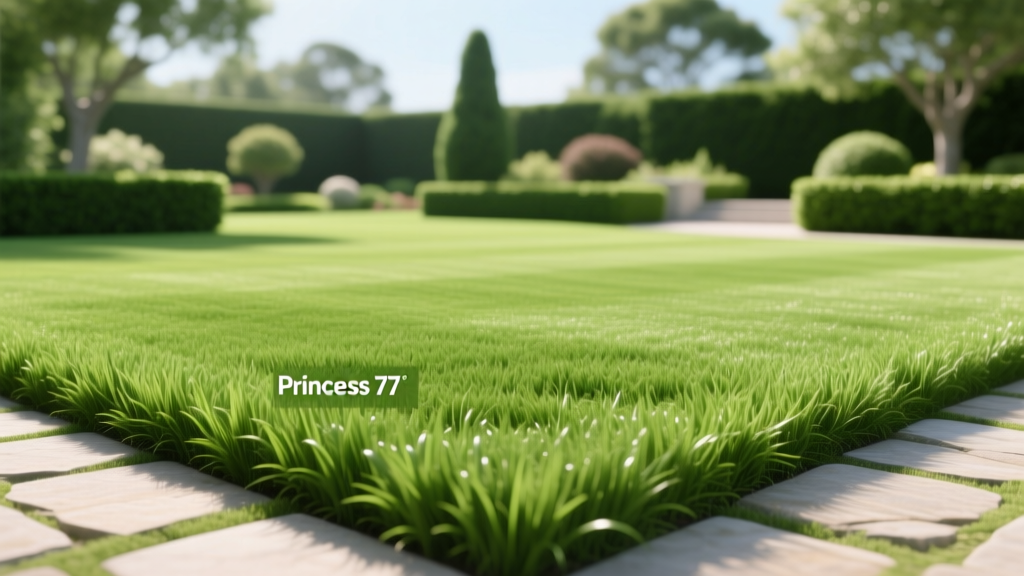
Princess 77 Bermuda Seed: The Ultimate Planting and Care Guide
For decades, homeowners seeking a premium, golf-course-quality bermudagrass lawn were forced to rely on expensive vegetative planting methods like sodding or sprigging. The introduction of advanced F1 hybrid cultivars changed the economics of warm-season lawn establishment. Among these, Princess 77 bermuda seed stands out as a top-tier choice, bridging the gap between the convenience of seeding and the dense, fine-textured aesthetics of vegetative hybrids like Tifway 419.
Establishing a lawn from seed requires precise timing, strict soil temperature monitoring, and aggressive moisture management. This guide details the exact agronomic protocols for planting, germinating, and maintaining Princess 77 to ensure a dense, drought-tolerant warm-season turf.
The Genetics and Profile of Princess 77
Unlike older open-pollinated seeded bermudagrasses (such as Sahara or Cheyenne), Princess 77 is a true F1 hybrid. This means it is the result of a controlled cross between two distinct parent lines, yielding 'hybrid vigor'—specifically, a darker green genetic color, finer leaf blade, and superior lateral density. Because it is an F1 hybrid, seed production is complex and highly regulated, which is why Princess 77 commands a higher price point (typically $18 to $28 per pound) compared to standard seeded varieties.
Cultivar Quick Specs: Princess 77
- Leaf Texture: Fine to medium-fine (superior to most seeded varieties)
- Genetic Color: Dark green (requires less nitrogen to maintain color than Riviera)
- Drought Tolerance: Excellent (deep stolon and rhizome network)
- Cold Tolerance: Moderate (Hardy in USDA Zones 7b through 11)
- Establishment Rate: Aggressive lateral spread once germinated
Princess 77 vs. Other Premium Seeded Bermudagrasses
When selecting a high-end seeded bermuda, turf managers typically compare Princess 77 against Yukon and Riviera. According to data from the National Turfgrass Evaluation Program (NTEP), each cultivar serves a slightly different microclimate and aesthetic need.
| Feature | Princess 77 | Yukon | Riviera |
|---|---|---|---|
| Primary Strength | Overall turf density and dark color | Extreme cold tolerance and traffic | Cold tolerance and shade adaptation |
| Spring Green-Up | Mid-season | Early | Early to Mid |
| Seed Cost (Approx.) | $18 - $28 / lb | $12 - $18 / lb | $14 - $20 / lb |
| Ideal Mowing Height | 0.5' to 1.5' | 0.5' to 2.0' | 0.75' to 2.0' |
Site Preparation: The Stale Seedbed Technique
Bermudagrass seed is incredibly small (approximately 1.5 million seeds per pound). It cannot compete with aggressive summer annual weeds like crabgrass or nutsedge during the 14-to-21-day germination window. To ensure a pure stand of Princess 77, utilize the 'stale seedbed' method 30 days before your target planting date.
- Till and Grade: Rototill the top 4 inches of soil. Rake to establish the final grade, ensuring a 1% to 2% slope away from foundations for drainage.
- Water and Wait: Irrigate the bare soil to encourage the first flush of weed seeds to germinate.
- Eradicate: Apply a non-selective, post-emergent herbicide (like glyphosate) or use a flame weeder to kill the germinated weeds. Do not till the soil again after this step, as tilling will bring new weed seeds to the surface.
- Soil Amendment: Based on a soil test, incorporate necessary amendments. Princess 77 thrives in a soil pH between 6.0 and 6.5. If your pH is below 5.8, apply pelletized limestone at the rate recommended by your local university extension office and lightly rake it into the top 0.5 inches of soil.
Seeding Rates, Timing, and Germination Protocols
The success of Princess 77 hinges entirely on soil temperature and seed-to-soil contact. Bermudagrass is a strict warm-season species; planting in cool spring soil will result in seed rot or fatal fungal damping-off.
CRITICAL WARNING: Pre-Emergent Herbicides
Do not apply pre-emergent herbicides (such as prodiamine or pendimethalin) within 60 days prior to seeding Princess 77. These chemicals will inhibit the germination of your bermudagrass seed just as effectively as they stop weeds. Wait until the new lawn has been mowed at least three times before applying any pre-emergent.
Exact Seeding Parameters
- Timing: Plant when daytime air temperatures are consistently above 80°F and nighttime temperatures stay above 60°F. In the transition zone, this is typically late May through June. In the deep south, April through August is viable.
- Soil Temperature: Must be a minimum of 65°F at a 2-inch depth. Use a digital soil probe thermometer to verify.
- Seeding Rate: Apply 2.0 to 3.0 lbs of raw Princess 77 seed per 1,000 square feet. If using a heavily clay-coated/pelleted seed, increase the rate by 30% to account for the weight of the coating.
- Application: Use a rotary or drop spreader. Split your seed lot in half and apply in a crisscross pattern (North-South, then East-West) to prevent striping.
- Incorporation: Do not bury the seed. Lightly drag the area with a lawn broom or a piece of chain-link fence to cover the seed with no more than 1/8 to 1/4 inch of soil. Roll the area with a light water-ballast lawn roller to ensure firm seed-to-soil contact.
Post-Germination Moisture and First-Year Maintenance
Bermudagrass seed lacks the endosperm energy reserves of larger cool-season seeds like fescue. If the seed dries out even once during the first 10 days after imbibition (water uptake), the embryo will die.
The 30-Day Watering Matrix
| Days Post-Planting | Watering Frequency | Duration / Goal |
|---|---|---|
| Days 1 - 10 | 3 to 5 times daily | 3-5 minutes per cycle. Keep top 1/2 inch of soil constantly moist, not flooded. |
| Days 11 - 21 | 2 times daily | 5-8 minutes per cycle. Begin encouraging roots to stretch downward. |
| Days 22 - 30 | 1 time daily | 10-15 minutes. Transitioning to deep, infrequent watering. |
| Day 31+ | 2 to 3 times per week | 30-45 minutes. Deliver 1 inch of water per week including rainfall. |
Fertilization for Seedlings
At the time of seeding, apply a starter fertilizer high in phosphorus (e.g., 10-18-10) at a rate of 1.0 lb of nitrogen per 1,000 sq ft to fuel root development. Once the Princess 77 seedlings reach 1.5 inches in height (usually around day 21), apply a fast-release nitrogen source like ammonium sulfate (21-0-0) at 0.5 lbs of nitrogen per 1,000 sq ft to trigger aggressive lateral stolon growth.
Long-Term Warm-Season Care Strategies
Once established, Princess 77 requires a specific maintenance regimen to maintain its fine texture and prevent thatch accumulation, a common issue with aggressive F1 hybrids.
- Mowing: For optimal density, mow at 0.75 to 1.0 inches using a reel mower. If using a standard rotary mower, maintain a height of 1.25 to 1.5 inches to prevent scalping. Never remove more than 1/3 of the leaf blade in a single cut.
- Thatch Management: Princess 77 produces heavy stolon and rhizome mass. Core aerate annually in early summer (June) when the grass is actively growing. If thatch exceeds 0.5 inches, use a vertical mower (dethatcher) in mid-summer, followed by a heavy nitrogen application to aid recovery.
- Winter Dormancy: In Zones 7 and 8, Princess 77 will go dormant and turn brown after the first hard frost. To maintain a green lawn year-round, overseed the dormant bermuda in October with perennial ryegrass at a rate of 5 to 8 lbs per 1,000 sq ft. Avoid overseeding with tall fescue, as it will compete with the bermuda during spring green-up and cause severe thinning.
Frequently Asked Questions
Can I overseed an existing thin lawn with Princess 77 seed?
Yes, but success depends on canopy reduction. You must scalp the existing turf down to 0.5 inches, bag the clippings, and aggressively core aerate or slice-seed the area to ensure the Princess 77 seed reaches the soil surface. If the existing canopy shades the seed, germination will fail.
How long does it take for Princess 77 to fully cover a bare lawn?
Under optimal summer temperatures (85°F+) and strict watering, germination occurs in 7 to 10 days. Complete lateral coverage (filling in the spaces between seedlings) typically takes 60 to 90 days from the date of planting.
Is Princess 77 resistant to dog urine spots?
No bermudagrass is entirely immune to the high nitrogen and salt concentration in dog urine. However, because Princess 77 has an aggressive lateral growth habit via stolons, it will recover and fill in urine-burned spots much faster than cool-season grasses or slower-growing seeded bermudas, usually repairing itself within 2 to 3 weeks during peak summer growth.