Grass Types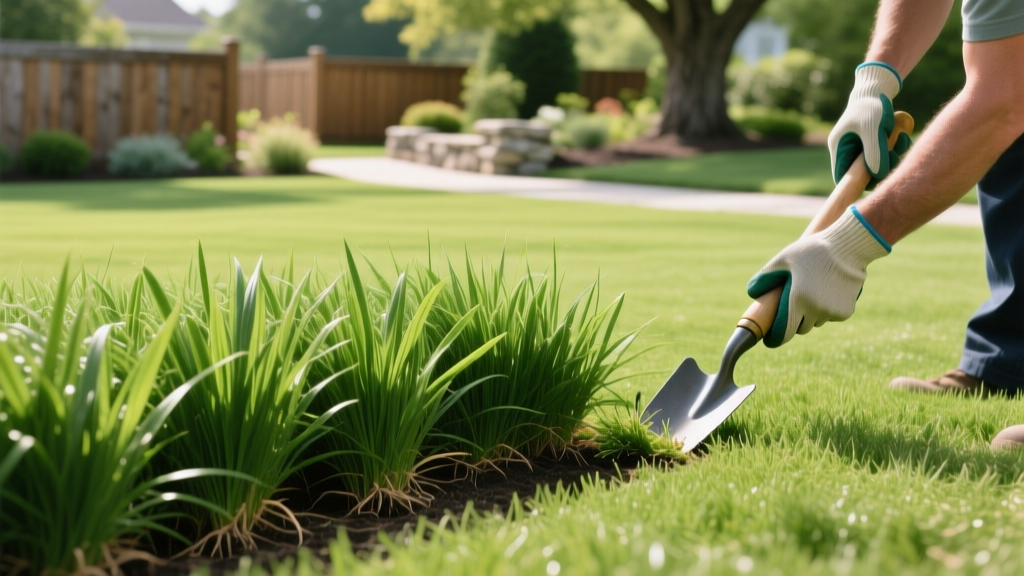
Raleigh St Augustine Grass: Complete Care and Establishment Guide
The Transition Zone Champion: Understanding Raleigh St. Augustine
For homeowners in the challenging transition zone and the coastal Southeast, finding a warm-season grass that survives freezing winter temperatures while thriving in humid summers is a persistent struggle. Raleigh St. Augustine grass, released by North Carolina State University, remains the premier cold-tolerant cultivar for these exact conditions. Unlike its more cold-sensitive cousins, Raleigh can survive winter lows in USDA Hardiness Zones 7b and 8a, making it a staple in the Carolinas, coastal Virginia, and parts of the deep South.
Beyond its cold hardiness, Raleigh was specifically selected for its resistance to St. Augustine Decline (SAD), a devastating viral disease that causes severe chlorosis and turf thinning in susceptible varieties like Floratam. However, achieving the dense, dark-green carpet Raleigh is famous for requires precise agronomic management. Mismanaging mowing heights or over-applying nitrogen will quickly invite fungal pathogens and thatch buildup.
Raleigh St. Augustine Quick Specs
- Hardiness Zones: 7b through 10
- Shade Tolerance: Moderate (Requires minimum 4 hours direct sunlight)
- Drought Tolerance: Moderate (Goes dormant under severe stress)
- Wear/Traffic Tolerance: Low to Moderate (Not ideal for heavy dog or sports traffic)
- Establishment Method: Sod, Plugs, or Sprigs (Commercial seed is not viable)
- Optimal Soil pH: 6.0 to 7.5
Cultivar Comparison: Raleigh vs. Other St. Augustine Varieties
Before committing to Raleigh, it is critical to understand how it stacks up against modern patented cultivars. While newer varieties have improved shade tolerance, Raleigh remains unmatched for cold survival and SAD resistance in its specific geographic niche.
| Feature | Raleigh | Palmetto | Floratam | CitraBlue |
|---|---|---|---|---|
| Cold Tolerance | Excellent (Zone 7b) | Good (Zone 8a) | Poor (Zone 8b+) | Good (Zone 8a) |
| Shade Tolerance | Moderate | Excellent | Poor | Good |
| SAD Virus Resistance | Highly Resistant | Susceptible | Resistant | Resistant |
| Leaf Blade Width | Medium-Coarse | Fine | Very Coarse | Medium |
| 2026 Avg. Sod Cost | $0.55 - $0.75 / sq ft | $0.65 - $0.85 / sq ft | $0.45 - $0.60 / sq ft | $0.70 - $0.90 / sq ft |
Site Preparation and Establishment Protocols
Because St. Augustinegrass does not produce viable commercial seed, Raleigh must be established vegetatively. Sodding is the most reliable method for instant erosion control and weed suppression, while plugging is a cost-effective alternative for smaller, defined areas.
Step-by-Step Sodding Procedure
- Soil Testing and Amendment: Conduct a soil test via your local cooperative extension. Raleigh requires a pH between 6.0 and 7.5. If your soil pH exceeds 7.8, the grass will suffer from severe iron chlorosis (yellowing). Apply elemental sulfur at a rate of 1 to 2 lbs per 1,000 sq ft to lower alkaline soils prior to planting.
- Tilling and Grading: Rototill the top 4 to 6 inches of soil. Incorporate 2 inches of organic compost to improve moisture retention in sandy coastal soils. Rake the surface smooth, ensuring a slight grade away from the foundation to prevent water pooling.
- Laying the Sod: Stagger the sod seams in a brick-laying pattern to prevent water channels from forming. Push the edges tightly together without overlapping. According to NC State Extension, tight seams are critical to prevent the stolons from drying out before they root.
- Rolling and Initial Irrigation: Run a half-filled water-weighted lawn roller over the new sod to eliminate air pockets and ensure intimate soil-to-root contact. Immediately apply 1 inch of water to saturate the soil profile beneath the sod.
The Annual Raleigh St. Augustine Maintenance Matrix
Maintaining Raleigh requires a seasonal approach. Over-fertilizing in the late fall or early spring can lead to devastating fungal outbreaks, particularly Large Patch (Rhizoctonia solani).
| Season | Nitrogen Application | Irrigation Strategy | Weed & Pest Focus |
|---|---|---|---|
| Early Spring (Mar-Apr) |
0.0 lbs N/1000 sq ft. Wait until the grass is 50% green and actively growing. | Water only to prevent severe desiccation. 0.5 inches/week. | Apply pre-emergent (prodiamine) by Feb 15. Watch for Large Patch fungus. |
| Summer (May-Aug) |
0.5 to 1.0 lbs N/1000 sq ft every 6-8 weeks. Use slow-release polymer-coated urea. | Deep, infrequent watering. 1.0 to 1.5 inches/week, applied in 1-2 sessions. | Monitor for Southern Chinch Bugs. Treat with bifenthrin if damage appears. |
| Early Fall (Sep-Oct) |
0.5 lbs N/1000 sq ft in early Sept only. Stop nitrogen 6 weeks before first expected frost. | Reduce to 0.75 inches/week as evapotranspiration drops. | Apply post-emergent broadleaf herbicides (e.g., atrazine) for cool-season weeds. |
| Winter (Nov-Feb) |
0.0 lbs N/1000 sq ft. Do not fertilize dormant St. Augustine. | Natural rainfall is usually sufficient. Water if soil is bone dry for 3+ weeks. | Spot treat winter annuals. Avoid heavy foot traffic on dormant turf. |
Mowing Parameters and Thatch Management
The single most common mistake homeowners make with Raleigh St. Augustine is mowing it too short. Scalping this grass removes its photosynthetic leaf area and exposes the vulnerable stolons to direct sun and cold stress.
- Optimal Height: Maintain Raleigh at 3.0 to 4.0 inches. In heavily shaded areas, increase the height to 4.0 to 4.5 inches to maximize light capture.
- The One-Third Rule: Never remove more than one-third of the leaf blade in a single mowing. If the grass reaches 5 inches, set the mower to 3.5 inches, then lower it gradually over the next two mowings.
- Mower Type: Always use a rotary mower with a sharp blade. Reel mowers tend to snag and tear the coarse, creeping stolons of St. Augustinegrass, leading to ragged, disease-prone leaf tips.
- Thatch Control: Raleigh produces moderate thatch. If the thatch layer exceeds 0.5 inches, use a vertical mower (verticutter) or core aerator in late May when the grass is aggressively growing. Never dethatch during dormancy or peak summer heat stress.
Troubleshooting: TARR, Chinch Bugs, and Iron Chlorosis
Even with perfect mowing, Raleigh is susceptible to specific biological and environmental stressors. Identifying the exact failure mode is critical for selecting the right treatment.
Warning: Take-All Root Rot (TARR) vs. Brown Patch
TARR (caused by Gaeumannomyces graminis) is frequently misdiagnosed as Brown Patch. TARR attacks the roots, causing the stolons to pull up easily from the soil with blackened, rotted roots. Brown Patch attacks the leaf blades, causing distinct tan lesions. Treating TARR with standard Brown Patch fungicides will fail. For TARR, the Texas A&M Agrilife Extension recommends applying azoxystrobin-based fungicides preventatively in the fall and spring, combined with sphagnum peat moss topdressing to lower surface pH.
Southern Chinch Bugs: While Raleigh has moderate resistance compared to older varieties, it is not immune. Chinch bugs thrive in hot, dry, sunny areas near driveways and sidewalks. Look for yellowing halos that turn brown and die. Part the grass at the margin of the damaged area and look for tiny black-and-white insects. Treat localized infestations with liquid bifenthrin or lambda-cyhalothrin, ensuring you water the product into the thatch layer immediately after application.
Iron Chlorosis: If your Raleigh lawn turns a pale, uniform yellow while the leaf veins remain green, you are likely dealing with iron deficiency induced by high soil pH. According to University of Florida IFAS, applying liquid chelated iron (Fe-EDDHA formulation is best for high pH soils) at 2 to 4 ounces per 1,000 sq ft will provide rapid, temporary greening. For a long-term fix, you must lower the soil pH using elemental sulfur.
Expert Verdict: Is Raleigh Right for Your Lawn?
Raleigh St. Augustine remains an elite choice for homeowners in the Carolinas and the upper coastal South who need a cold-hardy, SAD-resistant lawn that can handle moderate shade. If you live in USDA Zone 8b or further south, you may be better served by newer cultivars like CitraBlue or Palmetto, which offer superior shade tolerance and finer leaf textures. However, for those battling freezing winter snaps and the SAD virus, Raleigh's proven resilience and relatively affordable sod pricing make it an unbeatable investment for a durable, lush landscape.