
Grass Types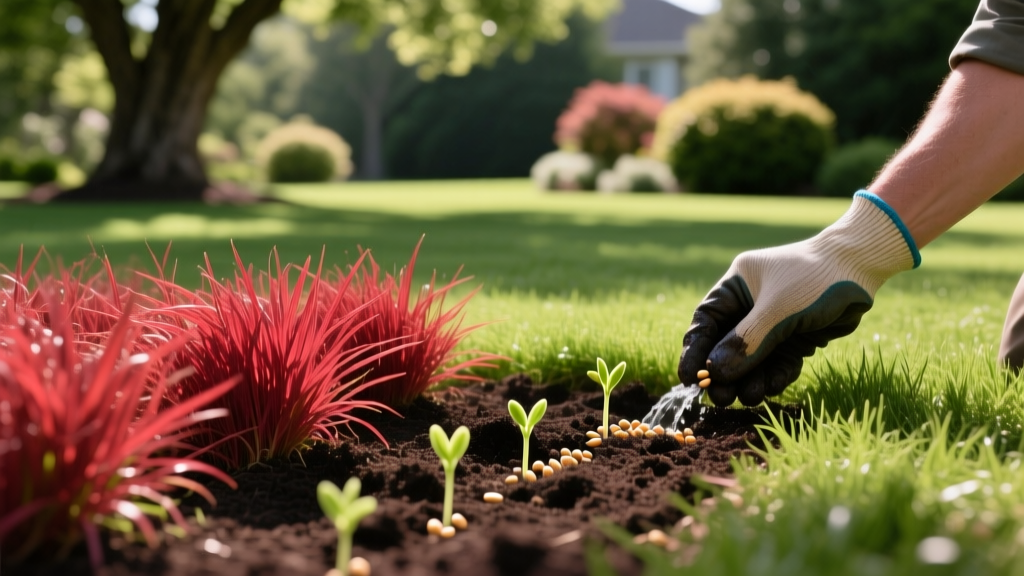
Step-by-Step Red Fescue Grass Maintenance for Shaded Lawns
The Low-Input Philosophy of Red Fescue
Red fescue grass (Festuca rubra)—which includes creeping, chewings, and hard fescue subspecies—is the ultimate cool-season grass for low-input, shaded environments. Unlike Kentucky bluegrass, which demands heavy irrigation, frequent mowing, and high nitrogen levels, red fescue thrives on a "less is more" approach. Over-managing this fine-bladed grass is the leading cause of turf failure, as excessive fertilizer and water invite disease and weaken the root system.
According to Penn State Extension, fine fescues possess the highest shade tolerance of all cool-season turfgrasses and require significantly lower maintenance budgets. This step-by-step maintenance protocol is engineered specifically for the biological needs of red fescue, ensuring deep roots, disease resistance, and year-round density.
The Red Fescue Grass Maintenance Calendar
Timing is critical for cool-season grasses. Red fescue experiences peak growth in the cool temperatures of spring and fall, while it naturally slows down or goes dormant during the heat of summer. Use this calendar to align your maintenance tasks with the grass's natural growth cycles.
| Season | Primary Focus | Specific Actions & Measurements |
|---|---|---|
| Early Spring | Cleanup & Light Feeding | Rake winter debris. Apply 0.25 lbs N/1000 sq ft if turf is pale. Begin mowing at 2.5 inches. |
| Late Spring | Weed Control & Height Adjustment | Apply broadleaf herbicides if necessary. Raise mowing height to 3.0 inches. Transition to deep watering. |
| Summer | Stress Management & Dormancy | Mow at 3.5 inches. Allow to go dormant (brown) OR water deeply (1 inch/week). Do not fertilize. |
| Early Fall | Core Aeration & Overseeding | Aerate compacted zones. Overseed bare spots at 4-5 lbs/1000 sq ft. Apply 1.0 lbs N/1000 sq ft. |
| Late Fall | Root Building & Winterization | Apply final slow-release nitrogen (0.5 lbs N/1000 sq ft). Continue mowing until growth stops. |
Step 1: Precision Mowing Techniques for Fine Fescues
The fine, needle-like blades of red fescue grass are highly susceptible to tearing. Mowing with a dull blade shreds the leaf tips, causing a white, hazy appearance across the lawn and creating entry points for fungal pathogens like dollar spot.
- Target Height: Maintain a mowing height between 2.5 and 3.5 inches. In heavily shaded areas (less than 4 hours of direct sunlight), push the height to 3.5 or 4.0 inches to maximize the leaf surface area available for photosynthesis.
- The One-Third Rule: Never remove more than one-third of the grass blade in a single pass. If your target height is 3 inches, mow when the grass reaches 4.5 inches.
- Blade Maintenance: Sharpen your mower blades every 20 to 25 hours of use. For a standard half-acre lawn, this means sharpening roughly twice per growing season.
- Clipping Management: Always leave clippings on the lawn. Red fescue produces minimal thatch, and returning clippings provides up to 25% of the turf's annual nitrogen requirement naturally.
Step 2: Targeted Irrigation and Drought Management
Red fescue has exceptional drought tolerance compared to other cool-season species, but its watering strategy requires a binary decision from the homeowner: maintain summer green or allow summer dormancy.
Option A: Maintaining Summer Color
If you choose to keep the lawn green through July and August, you must water deeply and infrequently. Apply 1 to 1.25 inches of water per week, ideally split into two sessions (e.g., 0.6 inches on Monday and Thursday). Use a rain gauge or empty tuna cans placed in the sprinkler zone to measure exact output. Shallow, daily watering forces roots to stay near the surface, making the grass highly vulnerable to heat stress and grub damage.
Option B: Summer Dormancy (The Recommended Approach)
UMass Amherst Extension notes that fine fescues can survive extended dry periods by entering dormancy. The grass will turn brown, but the crowns remain alive. If you choose dormancy, apply 0.25 inches of water every three weeks solely to keep the crowns hydrated. Do not attempt to "wake up" a dormant lawn with heavy watering in mid-August; this triggers weak, shallow growth right before fall.
Step 3: Low-Input Fertilization Strategy
Red fescue grass requires only 1.0 to 2.0 pounds of actual nitrogen per 1,000 square feet annually. Over-fertilizing, particularly in spring, leads to excessive top growth at the expense of root development, leaving the lawn defenseless against summer heat.
Fertilizer Selection Framework
Spring (April/May): Apply 0.25 to 0.5 lbs N/1000 sq ft only if the lawn shows nitrogen deficiency (pale green/yellowing). Use a quick-release source like ammonium sulfate for a rapid green-up.
Fall (September/October): Apply 1.0 to 1.5 lbs N/1000 sq ft. This is the most critical feeding of the year. Use a slow-release, polymer-coated urea or methylene urea product. This fuels root carbohydrate storage for winter survival and early spring green-up without causing a flush of vulnerable leaf tissue.
Step 4: Thatch Management and Core Aeration
⚠️ WARNING: The Thatch Trap
Never use a power dethatcher (vertical mower) on red fescue grass. Fine fescues produce very little thatch because their lignin content breaks down rapidly. Power raking will severely tear the shallow crowns and rhizomes of creeping red fescue, destroying the turf stand and opening the soil to aggressive summer weeds like crabgrass.
Instead of dethatching, rely on core aeration to manage soil compaction, which is the primary enemy of fine fescues. Perform core aeration in early fall (late August to mid-September) when the grass is entering its peak growth phase. Use a machine that pulls 2-to-3-inch deep plugs with hollow tines. Leave the plugs on the lawn to decompose; they introduce soil microbes that naturally break down any minor thatch layers.
Step 5: Overseeding with Endophyte-Enhanced Cultivars
When overseeding thin areas, standard red fescue seed is no longer sufficient. Modern turfgrass breeding has introduced endophytes—beneficial fungi (Epichloë festucae) that live symbiotically within the grass plant. According to NC State TurfFiles, endophyte-enhanced fine fescues produce alkaloids that naturally deter surface-feeding insects like chinch bugs and sod webworms, while simultaneously improving drought tolerance.
Look for specific, tested cultivars rather than generic "shade mix" bags. Top-performing chewings and creeping red fescue cultivars include:
- 'Shoreline' (Chewings Fescue): Exceptional shade tolerance and dark green color.
- 'Spartan II' (Hard/Creeping Fescue): Superior drought resistance and fine texture.
- 'Beacon' (Strong Creeping Red Fescue): Aggressive rhizome spread for quick bare-spot recovery.
Overseed at a rate of 4 to 5 pounds per 1,000 square feet. Ensure seed-to-soil contact by raking lightly before spreading, and keep the top inch of soil consistently moist for the 14-21 days required for germination.
Troubleshooting Common Red Fescue Issues
Issue 1: Red Thread Disease
Symptoms: Irregular tan patches with pinkish-red, thread-like fungal structures (sclerotia) extending from the leaf tips, usually appearing in cool, wet spring or fall weather.
The Fix: Red thread (Laetisaria fuciformis) is almost always a symptom of nitrogen deficiency. Apply a light dose of quick-release nitrogen (0.25 lbs N/1000 sq ft). The grass will outgrow the disease within 7 to 10 days. Fungicides are rarely necessary for home lawns.
Issue 2: Summer Patch / Necrotic Ring Spot
Symptoms: Perfectly circular patches of dead, straw-colored grass appearing in mid-to-late summer, often with a "frog-eye" appearance (a healthy tuft of grass in the center of the dead ring).
The Fix: This is a root-rot disease exacerbated by heat stress and compacted soil. Prevent it by maintaining a 3.5-inch mowing height, avoiding spring nitrogen applications, and ensuring deep, infrequent watering. If the disease is severe, overseed the affected rings in early fall with endophyte-enhanced chewings fescue, which shows higher genetic resistance to the Magnaporthiopsis poae fungus.

