
Grass Types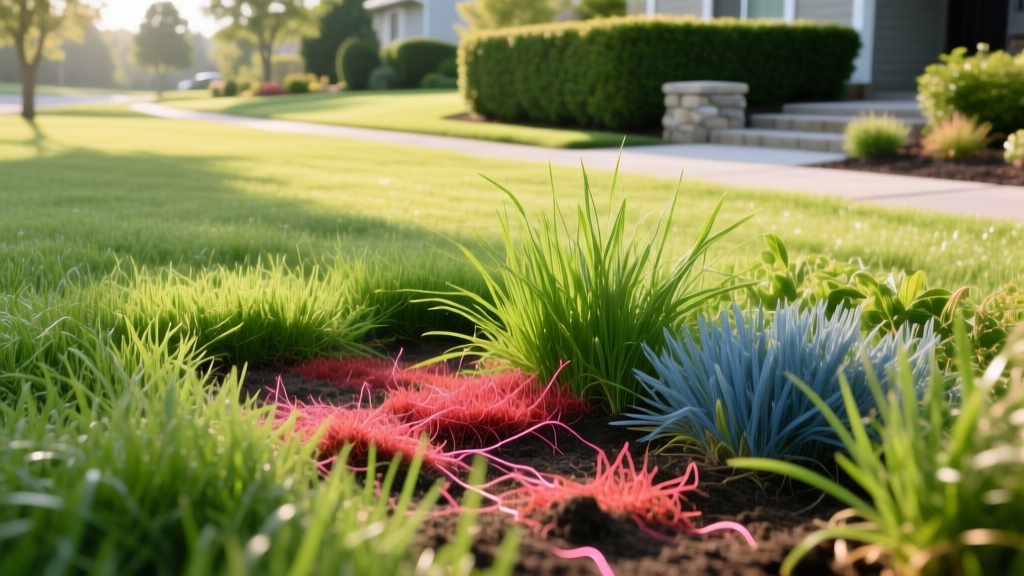
Red Thread Turf Disease: Beginner Guide to Lawn Treatment
Red thread turf disease, caused by the fungal pathogen Laetisaria fuciformis, is one of the most common and visually striking lawn ailments affecting cool-season grasses. Despite its alarming appearance—characterized by pinkish-red, thread-like structures extending from grass blades—it rarely kills the entire plant. Instead, it causes severe cosmetic blighting that leaves lawns looking thin, patchy, and neglected. For homeowners managing cool-season lawns, understanding the environmental triggers and precise treatment protocols is essential for restoring turf density and color.
Spotting the Signs: Red Thread Turf Identification
Accurate identification is the first step in effective management. Red thread typically manifests during periods of high humidity and moderate temperatures, specifically when daytime highs range between 60°F and 75°F, and nighttime lows remain above 55°F. Prolonged leaf wetness, often from heavy dew, evening irrigation, or continuous light rain, creates the ideal microclimate for fungal sporulation.
Look for irregularly shaped patches of blighted grass ranging from 2 to 6 inches in diameter. Upon closer inspection, particularly in the early morning when dew is present, you will observe the namesake sclerotia: pinkish-red, gelatinous, thread-like fungal structures extending 1/4 to 3/4 of an inch from the leaf tips. As the disease progresses and the grass dries, these threads turn brittle and pale pink or tan, resembling bleached straw.
⚠️ Diagnostic Warning: Do not confuse red thread with dollar spot (Clarireedia jacksonii) or pink snow mold (Microdochium nivale). Dollar spot presents with distinct hourglass-shaped lesions on the leaf blade and white cobweb-like mycelium, while pink snow mold occurs primarily under snow cover or in near-freezing temperatures. Red thread uniquely features the prominent pink sclerotia extending from the leaf tips without distinct mid-blade lesions.
The Culprits: Which Grass Types Get Red Thread?
While Laetisaria fuciformis can infect a wide variety of turfgrasses, it shows a strong preference for specific cool-season species, particularly when those grasses are under-fertilized. According to pathology profiles from Penn State Extension, the disease is most severe in lawns dominated by perennial ryegrass and fine fescues.
| Grass Species | Susceptibility Level | Optimal Infection Temp Range |
|---|---|---|
| Perennial Ryegrass | High | 65°F - 75°F |
| Fine Fescues (Creeping Red, Chewings) | High | 60°F - 70°F |
| Kentucky Bluegrass | Moderate | 65°F - 75°F |
| Tall Fescue | Low to Moderate | 65°F - 75°F |
Step-by-Step Treatment Protocol
Treating red thread turf requires a two-pronged approach: correcting nutritional deficiencies and, if necessary, applying targeted fungicides. The University of Minnesota Extension emphasizes that red thread is fundamentally a disease of low-nitrogen environments.
Step 1: Correct Nitrogen Deficiencies
In 80% of residential cases, a single application of fast-acting nitrogen will halt the disease and stimulate the grass to outgrow the blighted leaf tips. Apply a quick-release nitrogen source, such as Ammonium Sulfate (21-0-0), at a rate of 0.5 lbs of actual Nitrogen per 1,000 square feet.
Application Math: To deliver 0.5 lbs of N using a 21-0-0 fertilizer, divide 0.5 by 0.21. You must apply exactly 2.38 lbs of the granular product per 1,000 square feet. Water the lawn immediately after application to move the nitrogen into the soil profile and prevent leaf burn.
Step 2: Fungicide Selection and Application
If nitrogen application does not resolve the issue within 14 days, or if the infection is historically severe, a fungicide application is warranted. For residential lawns, products containing Azoxystrobin (a strobilurin fungicide) are highly effective.
- Consumer Option: Scotts DiseaseEX Lawn Fungicide (0.31% Azoxystrobin). Apply at the curative rate of 4 lbs per 1,000 sq ft. As of 2026, a 10 lb bag costs approximately $40 to $45 and covers 2,500 sq ft at the curative rate.
- Professional Option: Syngenta Heritage SC (liquid azoxystrobin) or BASF Xzemplar (fluxapyroxad). Liquid applications provide faster foliar uptake and require precise calibration of a backpack sprayer at 1.5 to 2.0 gallons of water per 1,000 sq ft to ensure adequate coverage.
Step 3: Cultural and Environmental Controls
Fungicides and nitrogen will fail if the microclimate remains conducive to fungal growth. Implement the following cultural adjustments:
- Optimize Irrigation Timing: Shift watering schedules to between 4:00 AM and 8:00 AM. This allows the grass blades to dry rapidly once the sun rises, minimizing the leaf wetness duration that Laetisaria fuciformis requires to infect tissue.
- Adjust Mowing Height: Raise your mower deck to 3.0 or 3.5 inches. Taller grass shades the soil, reducing surface humidity and promoting deeper root growth, which improves overall plant vigor.
- Manage Thatch and Soil pH: Red thread thrives in acidic soils (pH below 6.0) and excessive thatch layers (>0.5 inches). Conduct a soil test; if pH is low, apply pelletized limestone at the recommended rate to raise it to 6.5. Core aerate in the early fall to break up thatch and improve soil drainage.
Prevention: Choosing Resistant Cultivars
If you are overseeding or establishing a new lawn in a region prone to red thread, selecting genetically resistant cultivars is the most cost-effective long-term strategy. The National Turfgrass Evaluation Program (NTEP) regularly trials turfgrass varieties for disease resistance. When purchasing seed, look for these specific, highly-rated cultivars rather than generic 'contractor grade' mixes:
- Kentucky Bluegrass: 'Midnight', 'Everglade', 'Blue Note', and 'Award'. These cultivars exhibit dense growth habits and high genetic resistance to foliar pathogens.
- Perennial Ryegrass: 'Vampire', 'Razor', 'Pangea', and 'Firenza'. Avoid older, susceptible varieties like 'Linn' or generic annual ryegrass, which act as disease magnets.
- Fine Fescues: 'Shoreline' (creeping red fescue) and 'Spartan II' (hard fescue) show superior performance in low-input, shaded environments where red thread is prevalent.
Frequently Asked Questions
Will red thread kill my lawn completely?
No. Red thread is primarily a foliar disease that blights the leaf tips but rarely attacks the crown or root system of the plant. Once environmental conditions dry out or nitrogen is applied, the grass will recover and push new, healthy growth from the crown. The damage is almost entirely cosmetic.
Should I bag my grass clippings if my lawn has red thread?
If the infection is severe, bagging clippings for one or two mowing cycles can help reduce the volume of fungal sclerotia and infected tissue left on the lawn surface. However, if the disease is mild, leaving clippings is acceptable, as the nitrogen returned to the soil from decomposing clippings can actually aid in the lawn's recovery.
Can I apply nitrogen and fungicide on the same day?
Yes, granular nitrogen and granular fungicides (like Scotts DiseaseEX) can be applied simultaneously using a broadcast spreader, provided you calibrate the spreader for the combined weight or apply them in two separate passes to ensure even distribution. Always water the lawn immediately after application to activate both products and move them into the soil and thatch layer.

