Grass Types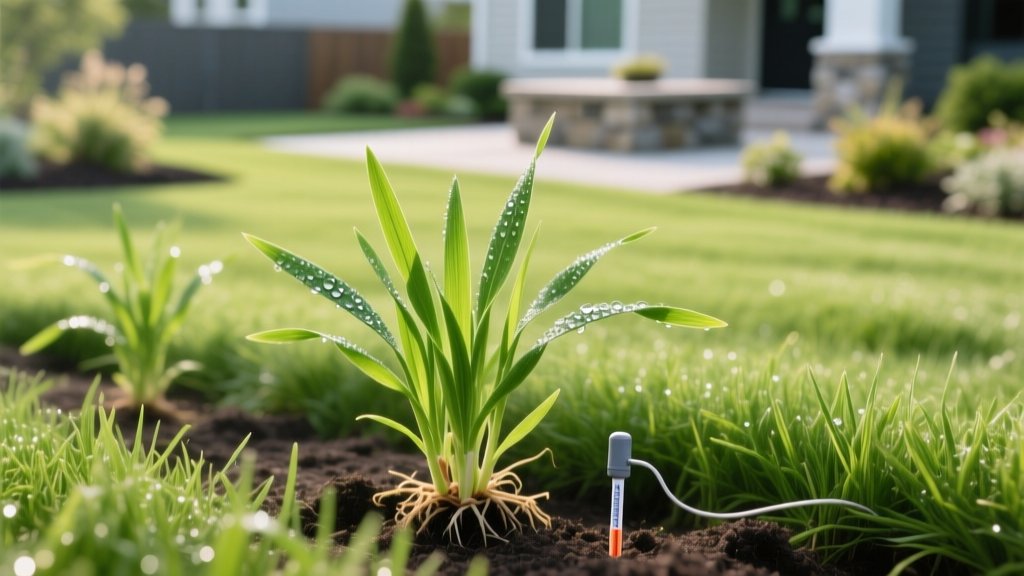
When to Plant Rye Grass: Regional Timing & Soil Temp Guide
The Biological Trigger: Soil Temperature Over Air Temperature
Determining exactly when to plant rye grass requires ignoring ambient air temperature and focusing strictly on soil temperature. Ryegrass (Lolium species) seeds require a 2-inch soil temperature between 50°F and 65°F for optimal germination. Planting when soil temperatures exceed 70°F drastically increases the risk of Pythium blight and seedling damping-off, while planting below 45°F delays germination and leaves seeds vulnerable to frost heave and bird predation.
Measurement Protocol: Do not guess based on the weather app. Use a digital soil probe thermometer inserted exactly 2 inches deep into the turf canopy. Take readings at 8:00 AM in both shaded and sun-exposed areas of your yard for three consecutive days. When the average stabilizes at 65°F or below, your planting window is open.
Annual vs. Perennial Ryegrass: Timing and Purpose Matrix
Before checking your calendar, you must identify whether you are planting annual ryegrass (Lolium multiflorum) or perennial ryegrass (Lolium perenne). Their biological lifespans dictate entirely different planting strategies and regional applications.
| Feature | Annual Ryegrass (e.g., 'Gulf') | Perennial Ryegrass (e.g., 'Caddieshack', 'Triton') |
|---|---|---|
| Primary Use | Temporary winter color over dormant warm-season lawns | Permanent cool-season lawns, high-traffic sports turf |
| Target Regions | Deep South, Sunbelt (Zones 8-10) | North, Transition Zone (Zones 3-7) |
| Seed Rate (Overseeding) | 5 - 8 lbs per 1,000 sq ft | 8 - 12 lbs per 1,000 sq ft |
| Germination Speed | 5 - 7 days | 7 - 10 days |
| Spring Die-Off | Naturally dies when soil hits 75°F | Survives summer; requires active management |
Regional Planting Calendars for Ryegrass
According to turfgrass extension data from Texas A&M AgriLife Extension and NC State TurfFiles, planting dates shift by approximately one week for every 100 miles of latitude change. Use the following regional baselines as your starting point.
The South and Sunbelt (USDA Zones 8-10)
In the Deep South, ryegrass is almost exclusively used to overseed warm-season grasses like Bermudagrass and Zoysiagrass.
- Target Window: Late September through mid-October.
- Soil Temp Goal: Wait until the soil temperature at a 2-inch depth drops consistently below 70°F.
- Edge Case: If you are in South Florida or the Gulf Coast, delay planting until late October or early November to avoid severe heat stress and fungal pathogens.
The Transition Zone (USDA Zones 6-7)
The Transition Zone (spanning from Northern California through the Midwest to Virginia) experiences the most volatile autumn weather.
- Target Window: Late August to mid-September.
- Application: Primarily used for establishing permanent perennial ryegrass lawns or athletic fields. Annual ryegrass is rarely used here except for temporary winter erosion control on construction sites.
- Warning: Planting perennial ryegrass after October 1st in this zone often results in insufficient root development before the first hard freeze, leading to winter kill.
The Northern Tier (USDA Zones 3-5)
In northern climates, ryegrass is utilized as a permanent cool-season turf component, often blended with Kentucky bluegrass and fine fescues.
- Target Window: Mid-August to early September.
- Seed Rate: 15 - 20 lbs per 1,000 sq ft for bare soil establishment.
- Strategy: You must plant earlier here to ensure the grass undergoes at least two full mowing cycles and establishes a 3-inch root system before snow cover arrives.
Step-by-Step Overseeding Timeline for Warm-Season Lawns
Overseeding Bermudagrass with ryegrass requires a precise 14-day operational sequence to ensure the ryegrass establishes without permanently damaging the underlying warm-season turf. The UC Statewide IPM Program emphasizes that poor seed-to-soil contact is the primary cause of overseeding failure.
- Day 1: Scalp the Lawn. Lower your mower deck to 0.5 inches. Bag the clippings. This removes the Bermudagrass canopy, allowing sunlight to reach the soil and warming the seedbed slightly to encourage ryegrass germination.
- Day 2: Core Aeration (Optional but Recommended). Use a core aerator to pull 2-to-3-inch plugs. This relieves summer soil compaction and creates micro-trenches for the ryegrass seed to settle into.
- Day 3: Seed Application. Calibrate a broadcast spreader to deliver 5 to 8 lbs of annual ryegrass seed per 1,000 sq ft. Split the seed in half and apply in a crisscross pattern (North-South, then East-West) to eliminate striping.
- Day 3 (Post-Seed): Topdress. Apply a 1/8-inch layer of screened compost or topsoil over the seed. This retains moisture and protects seeds from birds.
- Days 4-14: The Moisture Cycle. Ryegrass seed must never dry out during germination. Program your irrigation controller to run 3 to 4 times daily for 3 to 5 minutes per zone. Once seedlings reach 1 inch, reduce frequency to once daily but increase duration to 15 minutes to encourage deeper rooting.
Common Timing Mistakes & Failure Modes
Critical Warning: The Spring Transition Trap
Many homeowners successfully plant ryegrass in October but fail to manage the spring transition. If you overseed Bermudagrass with perennial ryegrass instead of annual, the perennial variety will not die off when summer heat arrives. It will aggressively compete with the waking Bermudagrass for water and nutrients, causing severe thinning and bare patches in your warm-season lawn by July. Always verify the seed tag to ensure you purchased Lolium multiflorum (Annual) for southern overseeding.
Many homeowners successfully plant ryegrass in October but fail to manage the spring transition. If you overseed Bermudagrass with perennial ryegrass instead of annual, the perennial variety will not die off when summer heat arrives. It will aggressively compete with the waking Bermudagrass for water and nutrients, causing severe thinning and bare patches in your warm-season lawn by July. Always verify the seed tag to ensure you purchased Lolium multiflorum (Annual) for southern overseeding.
Frequently Asked Questions
Can I plant ryegrass in the spring?
Spring planting (dormant seeding in late winter or early spring) is only recommended for perennial ryegrass in northern zones (Zones 3-5) to repair winter damage. It should never be done in the South, as the newly germinated annual ryegrass will immediately face heat stress and die within 60 days, wasting your time and money.
How long does it take for ryegrass to fully establish?
While germination occurs in 5 to 10 days, full functional establishment—where the turf can withstand regular foot traffic and standard mowing heights of 1.5 to 2 inches—takes 45 to 60 days under optimal soil temperatures and consistent nitrogen fertilization (apply 0.5 lbs of Nitrogen per 1,000 sq ft at day 21 post-germination).