Grass Types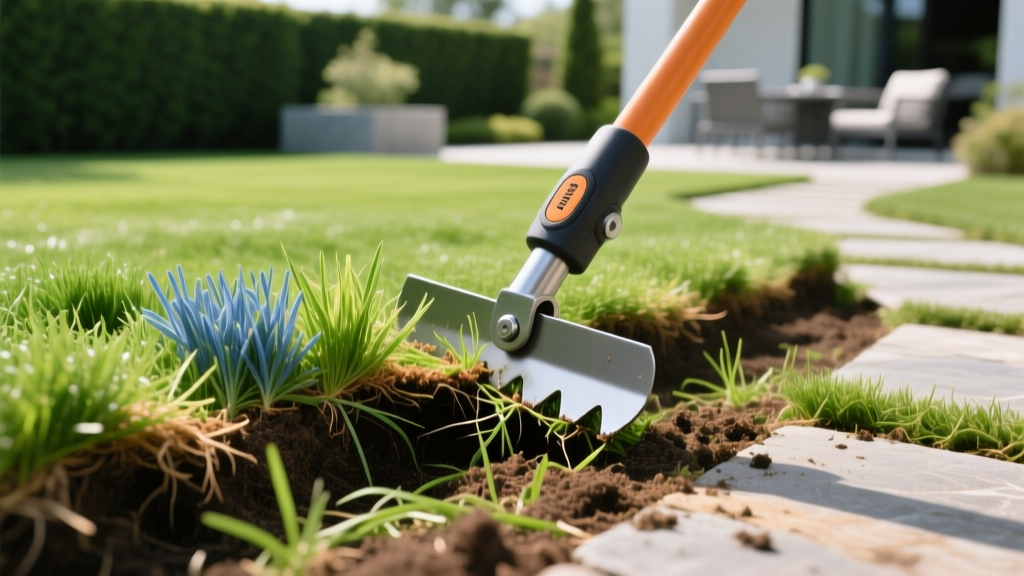
How to Use a Remove Turf Tool for Severe Weed Infestations
The 50% Threshold: When Spot Treatment Fails
In the pest and weed removal playbook, selective herbicides are your first line of defense. However, when invasive weeds like torpedograss, quackgrass, or creeping bentgrass exceed 50% of your total lawn coverage, chemical spot-treatments become economically and ecologically inefficient. At this threshold, the existing grass type is entirely compromised, and the soil seed bank is heavily saturated with weed propagules. Total lawn renovation is required.
Selecting the correct remove turf tool is the first critical step in this renovation process. Unlike standard tilling, which chops rhizomes into hundreds of viable fragments that will re-sprout within weeks, a dedicated turf removal tool slices beneath the thatch and root zone, extracting the weed network intact. According to the University of Minnesota Extension, complete removal of the existing sod is the most effective method for eliminating deep-rooted perennial weeds before establishing a new, competitive grass type.
Compare the Best Remove Turf Tool Options for Renovation
Not all removal methods are created equal. The tool you choose depends on your budget, the size of the infested area, and the specific root depth of the target weed. Below is a comparison matrix of the primary tools used by turf professionals in 2026.
| Tool Category | Specific Model / Type | Estimated Cost (2026) | Max Cutting Depth | Best Target Weeds |
|---|---|---|---|---|
| Walk-Behind Sod Cutter | Billy Goat SC182H | $150/day (Rent) or $3,800 (Buy) | 2.5 inches | Quackgrass, Johnsongrass, Dallisgrass |
| Stand-On Sod Cutter | Turfco T3100 | $225/day (Rent) or $14,500 (Buy) | 3.0 inches | Torpedograss, Common Bermudagrass |
| Manual Turfing Iron | Fiskars 32-inch Steel | $45 (Buy) | Variable (Manual) | Creeping Charlie, Small patch spot-removal |
| Non-Selective Herbicide | Glyphosate (41% AI) | $35 per gallon | N/A (Foliage only) | Annual weeds, shallow stoloniferous weeds |
For homeowners dealing with rhizomatous weeds, renting a walk-behind sod cutter like the Billy Goat SC182H provides the highest return on investment. Manual turfing irons are strictly reserved for perimeter edging or isolated patches under 50 square feet, as the physical labor required to extract deep rhizomes by hand leads to fatigue and missed root fragments.
The Complete Turf Removal Playbook for Rhizomatous Weeds
Using a remove turf tool requires precise calibration. If the blade is set too shallow, you leave the lower rhizomes in the soil. If set too deep, you bring up sterile subsoil, destroy soil structure, and create massive disposal headaches. Follow this exact sequence for optimal extraction.
Step 1: Pre-Removal Hydration Protocol
Do not attempt to cut dry soil. Dry soil causes the sod cutter blade to chatter, resulting in jagged, uneven strips that break apart during rolling. Apply exactly 1 inch of water per day for three consecutive days prior to removal. Your target is a soil moisture level of 20-25% in the top three inches. The soil should hold together when squeezed in a fist but crumble easily when poked. This ensures the weed mat stays intact as a single, continuous ribbon during extraction.
Step 2: Blade Depth Calibration
Identify your primary weed enemy and adjust the remove turf tool accordingly:
- Stoloniferous Weeds (Creeping Bentgrass, Creeping Charlie): Set the blade depth to 1.0 to 1.5 inches. These weeds spread primarily at the soil surface or just below the thatch layer.
- Deep Rhizomatous Weeds (Quackgrass, Torpedograss, Bermudagrass): Set the blade depth to 2.0 to 2.5 inches. Quackgrass rhizomes can penetrate up to 4 inches deep, but the vast majority of the viable energy stores are concentrated in the top 2.5 inches of the soil profile.
Step 3: The Grid Pattern Cut and Extraction
Run the sod cutter in parallel passes spaced 12 inches apart. Once a row is cut, use a flat spade to sever the strip every 4 to 5 feet. Roll the strips tightly with the weed foliage facing inward. Crucial: Do not shake the soil off the roots. The soil clinging to the rhizomes contains the weed's energy reserves; shaking it merely redistributes weed seeds and rhizome fragments back into your renovation zone.
⚠️ Critical Warning: The 10% Rule
Research indicates that leaving just 10% of quackgrass or bermudagrass rhizomes in the soil will result in a 100% re-infestation rate within a single growing season. If you are using a remove turf tool on highly aggressive perennials, you must follow up the mechanical removal with a targeted application of a non-selective herbicide on any visible regrowth 14 days later.
Research indicates that leaving just 10% of quackgrass or bermudagrass rhizomes in the soil will result in a 100% re-infestation rate within a single growing season. If you are using a remove turf tool on highly aggressive perennials, you must follow up the mechanical removal with a targeted application of a non-selective herbicide on any visible regrowth 14 days later.
Post-Removal Soil Solarization and Grass Selection
Once the infested turf is physically removed and hauled off-site, the exposed soil bed is highly vulnerable to the remaining weed seed bank. The UC Davis Integrated Pest Management program highly recommends soil solarization for renovations conducted between June and August.
Lay 2-mil clear polyethylene sheeting directly over the moist, bare soil. Bury the edges 6 inches deep to create an airtight seal. Leave the plastic in place for 4 to 6 weeks. This process traps solar radiation, raising the top 2 inches of soil temperature to 120°F–140°F, effectively cooking weed seeds, soil-borne nematodes, and fungal pathogens like Pythium. Avoid using black plastic, as it only raises soil temperatures by a few degrees and fails to achieve the thermal kill threshold required for resilient weed seeds.
Selecting Competitive Grass Types for Re-Establishment
The final phase of the playbook is establishing a grass type dense enough to naturally suppress future weed germination through light competition and allelopathy. Your selection must align with your climate zone and the specific micro-environment of your yard.
- Cool-Season Zones (Transition & North): Opt for modern Turf-Type Tall Fescue (TTTF) blends. Cultivars like 'Titan Ultra' or 'Rhambler' feature aggressive tillering and deep root systems that outcompete annual bluegrass and crabgrass. Seed at a rate of 8 to 10 lbs per 1,000 sq ft.
- Warm-Season Zones (Deep South): Choose vegetative or seeded Bermudagrass cultivars with high lateral spread rates. 'TifTuf' bermudagrass establishes rapidly and forms a canopy so dense that it physically blocks weed seedling emergence. If laying sod, ensure the soil grade is perfectly leveled before installation to prevent water pooling, which invites sedges.
"A successful renovation relies entirely on the completeness of the initial removal. The remove turf tool is not just a clearing mechanism; it is the foundational step that dictates the success of the new grass establishment." — Turfgrass Management Best Practices, 2026 Edition
When seeding your newly solarized soil, apply a starter fertilizer containing mesotrione (e.g., Scotts Turf Builder Starter Food for New Grass Plus Weed Preventer). Mesotrione is one of the only pre-emergent herbicides safe to use at the exact time of cool-season grass seeding, providing a critical 30-day chemical barrier against crabgrass and broadleaf weeds while your new turf type germinates and anchors into the soil profile.