Grass Types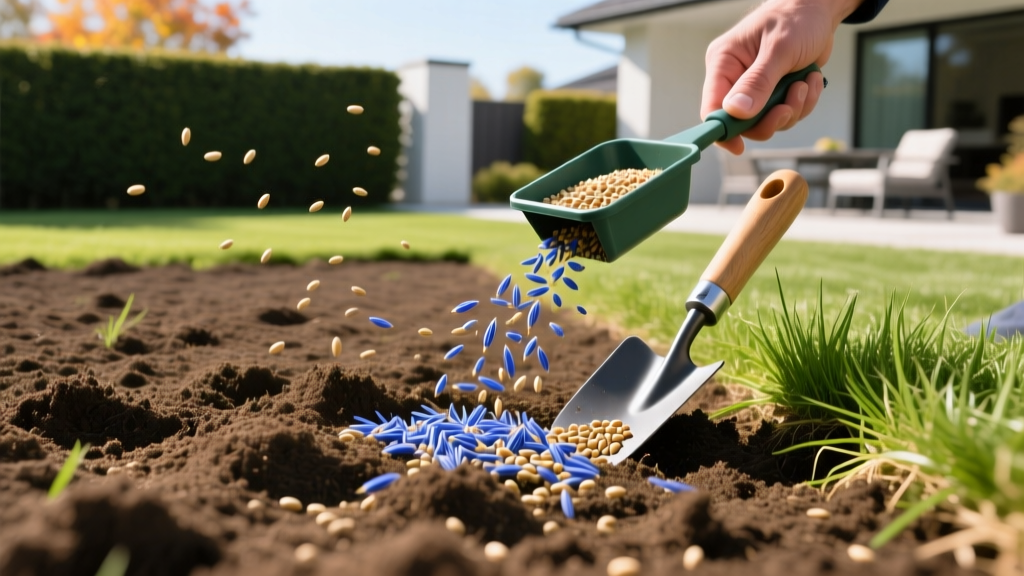
Reseeding Grass: Exact Timings, Seed Rates, and Soil Prep Steps
Reseeding grass is not simply tossing seed over an existing lawn. While overseeding addresses minor thinning, reseeding is a targeted renovation strategy for lawns with 50% or more bare soil, severe compaction, or failing turfgrass stands. Success hinges on precise soil temperature management, accurate seed-to-soil contact, and strict watering protocols. This guide details the exact agronomic steps required to establish a dense, resilient turf canopy.
The Science of Timing: Soil Temperature Thresholds
Air temperature is a unreliable metric for seed germination. Grass seed requires specific soil temperatures at the 2-inch depth to trigger enzymatic activity and radicle emergence. Planting outside these windows results in seed rot, predation, or stalled germination.
Cool-Season Grasses (Tall Fescue, Kentucky Bluegrass, Perennial Ryegrass)
Target Soil Temperature: 50°F to 65°F.
Optimal Planting Window: Late summer to early fall (typically 4-6 weeks before the first expected frost). Spring reseeding is a secondary option but risks heat stress and crabgrass competition before roots establish.
Target Soil Temperature: 50°F to 65°F.
Optimal Planting Window: Late summer to early fall (typically 4-6 weeks before the first expected frost). Spring reseeding is a secondary option but risks heat stress and crabgrass competition before roots establish.
Warm-Season Grasses (Bermudagrass, Zoysia, Centipedegrass)
Target Soil Temperature: 65°F to 75°F.
Optimal Planting Window: Late spring to early summer, when nighttime air temperatures consistently stay above 60°F.
Target Soil Temperature: 65°F to 75°F.
Optimal Planting Window: Late spring to early summer, when nighttime air temperatures consistently stay above 60°F.
Use a digital soil probe thermometer rather than guessing based on the calendar. According to Penn State Extension, fall reseeding for cool-season grasses capitalizes on warm soil and cool air, which prioritizes root development over top-growth and minimizes weed competition.
Calculating Seed Rates and Selecting Cultivars
Applying too much seed causes overcrowding, leading to weak, spindly seedlings that die off during the first heat wave. Applying too little leaves gaps for weed invasion. Seed rates vary drastically by species due to seed size and tillering capacity.
| Grass Species | Reseeding Rate (lbs / 1,000 sq ft) | Germination Window | Top 2026 Cultivar Picks |
|---|---|---|---|
| Tall Fescue (TTTF) | 6.0 - 8.0 lbs | 7 - 14 days | Jonathan Green Black Beauty, Pennington Smart Seed |
| Kentucky Bluegrass | 1.5 - 2.5 lbs | 21 - 30 days | Midnight KBG, Bewitched KBG |
| Perennial Ryegrass | 5.0 - 7.0 lbs | 5 - 10 days | Palmer IV, Fiesta IV |
| Bermudagrass (Seeded) | 1.0 - 2.0 lbs (hulled) | 10 - 21 days | Yukon, Sahara II |
Premium Turf-Type Tall Fescue (TTTF) blends currently cost between $7.00 and $12.00 per pound. Avoid cheap 'contractor grade' mixes, which often contain annual ryegrass or weedy forage grasses as filler. For deep-shade reseeding, look for blends specifically incorporating fine fescues like creeping red fescue or chewings fescue.
Soil Preparation: The Make-or-Break Phase
Seed-to-soil contact is the single most critical variable in reseeding grass. Seed resting on top of thatch or compacted dirt will dry out and die within hours of germination.
Step 1: Thatch Management and Aeration
If your thatch layer exceeds 0.5 inches, rent a power dethatcher. Following dethatching, perform core aeration. Set the aerator tines to pull plugs 2 to 3 inches deep, spacing holes 2 to 3 inches apart. Leave the plugs on the lawn; they will break down and introduce soil microbes to the surface.
Step 2: Bare Spot Scarification and Topdressing
For completely bare patches, use a steel landscape rake to aggressively scarify the top 1/4 inch of soil, creating micro-furrows. Apply a 1/4-inch layer of screened compost or peat moss over the area. This topdressing retains moisture and provides a sterile, nutrient-rich germination bed.
Warning: The Pre-Emergent Trap
Do not reseed grass if you have applied a pre-emergent herbicide (like prodiamine or dithiopyr) within the last 90 to 120 days. Pre-emergents create a chemical barrier that stops cell division in germinating seeds. If you must reseed in spring after a pre-emergent application, you will need to physically break the barrier by heavily aerating and topdressing with fresh compost.
Do not reseed grass if you have applied a pre-emergent herbicide (like prodiamine or dithiopyr) within the last 90 to 120 days. Pre-emergents create a chemical barrier that stops cell division in germinating seeds. If you must reseed in spring after a pre-emergent application, you will need to physically break the barrier by heavily aerating and topdressing with fresh compost.
Fertilizer Protocols and Seeding Execution
New grass seedlings lack the root mass to forage for nutrients in the subsoil. A starter fertilizer is mandatory for rapid establishment. Look for an N-P-K ratio high in phosphorus (the middle number), such as 18-24-12 or 10-18-10, unless a recent soil test indicates your phosphorus levels are already excessive. Products like Scotts Turf Builder Starter Food for New Grass (24-25-4) or Jonathan Green Green-Up Starter (12-25-12) are formulated specifically for this phase, costing roughly $45 to $55 per 50lb bag.
Application Sequence:
- Apply the starter fertilizer evenly using a rotary spreader.
- Broadcast half of your grass seed in a north-south direction, and the other half in an east-west direction to ensure uniform coverage.
- Lightly drag a leaf rake or a piece of chain-link fence over the seeded area to mix the seed and fertilizer into the top 1/8 inch of the compost/soil bed.
- Apply a thin layer of seed mulch (like PennMulch or clean, weed-free straw) to retain moisture and protect against bird predation. Avoid hay, which introduces thousands of weed seeds to your new lawn.
Precision Watering and Post-Germination Care
Watering protocols must shift as the grass matures. According to the University of Minnesota Extension, the goal during the first 14 to 21 days is to keep the top 1/2 inch of soil consistently moist, but never saturated.
- Days 1-14 (Germination Phase): Water 2 to 3 times daily for 5 to 10 minutes per zone. Use an oscillating sprinkler on a timer to ensure consistency. If the seed dries out even once during radicle emergence, it will die.
- Days 15-28 (Seedling Phase): Once seedlings reach 1 inch tall, reduce watering to once daily for 15 to 20 minutes. This encourages roots to stretch deeper into the soil profile to chase the moisture.
- Day 30+ (Establishment Phase): Transition to deep, infrequent watering—providing 1 to 1.5 inches of water per week, divided into two sessions.
The First Mow and the 'Tug Test'
Do not mow based on a calendar date. Wait until the new grass reaches roughly 3.5 to 4 inches in height. Before mowing, perform the 'tug test': gently pull upward on a handful of seedlings. If they resist and hold firmly in the soil, the root system is established enough to withstand the shear force of mower wheels. Set your mower deck high (3 to 3.5 inches for tall fescue) and ensure the blade is freshly sharpened to prevent tearing the tender new tissue.
Common Reseeding Failure Modes
Even with perfect execution, environmental factors can derail establishment. Recognizing these failure modes early allows for rapid intervention.
1. Pythium Damping Off
If seedlings emerge but suddenly collapse, turn brown, and look water-soaked at the soil line, you are likely dealing with Pythium blight (damping off). This fungal pathogen thrives in hot, humid conditions combined with overwatering and poor drainage. Fix: Immediately reduce watering frequency, improve airflow, and apply a systemic fungicide containing azoxystrobin or propiconazole.
2. Seed Washout and Erosion
Heavy thunderstorms can wash seed and topdressing into low areas or storm drains. Fix: On slopes greater than a 15% grade, abandon standard straw. Use rolled erosion control blankets (like jute netting) pinned to the soil with landscape staples to hold the seed bed in place during heavy rain events.
3. Allelopathic Inhibition
If you are reseeding grass under or near mature trees, be aware that some species (like black walnut or certain eucalyptus) exude chemicals that inhibit grass seed germination. Fix: Remove fallen leaves immediately, increase the compost topdressing layer to 1/2 inch to create a physical buffer, and select highly shade-tolerant fine fescue cultivars.
By adhering to exact soil temperatures, precise seed rates, and rigorous moisture management, you can transform a failing, patchy lawn into a dense, durable turfgrass stand capable of withstanding seasonal stressors.