
Grass Types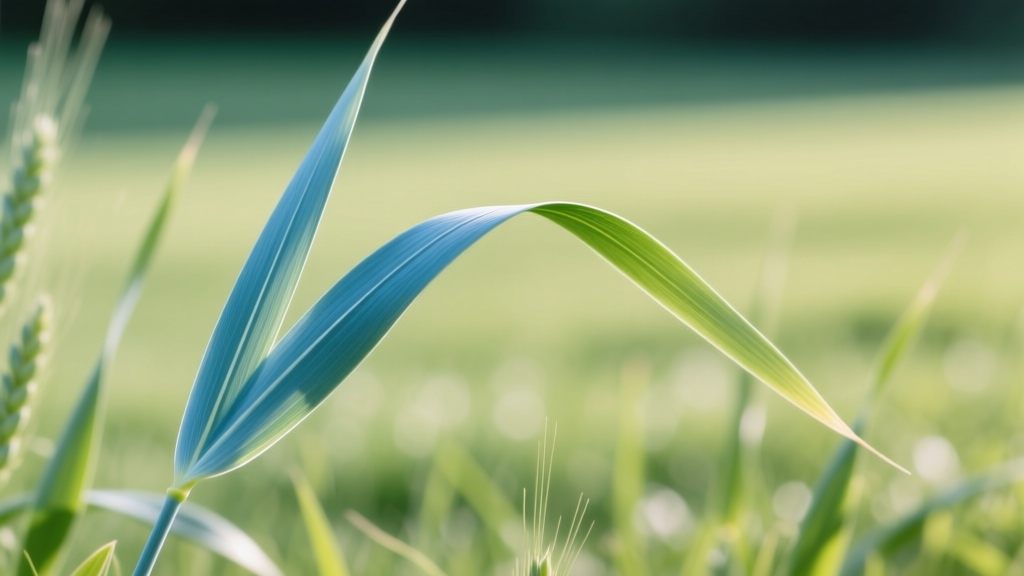
What Does Rye Grass Look Like? Visual Lawn ID Guide
Core Botanical Identifiers: How to Spot Ryegrass
Homeowners and turf managers frequently ask what does rye grass look like when trying to diagnose an unexpected patch of thick, fast-growing turf. Ryegrass (Lolium species) is a cool-season bunchgrass that lacks rhizomes or stolons, meaning it spreads exclusively through seed and tillering rather than creeping horizontally. To accurately identify it, you must examine four specific botanical structures.
1. Leaf Blade and Texture
The leaf blade of ryegrass is typically 2 to 6 millimeters wide and features a prominent, parallel vein structure on the adaxial (top) surface. The most reliable visual cue is the abaxial (underside) surface, which is distinctly glossy and smooth. When sunlight hits a mature ryegrass lawn, the undersides of the leaves reflect light, giving the turf a noticeable sheen that is absent in most other cool-season grasses.
2. Vernation (The Bud Stage)
Vernation refers to how the youngest, unexpanded leaf is folded inside the shoot. Ryegrass exhibits folded vernation. If you pinch the base of the stem (the shoot) between your fingers, it will feel distinctly flat or compressed, unlike the round, cylindrical feel of grasses with rolled vernation.
3. Ligule and Auricles
Pulling the leaf collar away from the stem reveals the ligule and auricles, which are the ultimate diagnostic tools for turfgrass identification. Ryegrass features a membranous, truncate (blunt-tipped) ligule that is 1 to 2 millimeters long. More importantly, it possesses prominent, claw-like auricles that actively clasp the stem. These auricles are soft and slightly curved, wrapping around the culm like tiny fingers.
Expert Diagnostic Tip: If you are struggling to see the auricles, gently pull the leaf blade away from the stem and look at the collar region with a 10x jeweler's loupe. The presence of clasping, claw-like auricles combined with a flat, compressed stem base confirms Lolium species 99% of the time.
Annual vs. Perennial Ryegrass: A Visual Comparison
While both belong to the same genus, annual ryegrass (Lolium multiflorum, also known as Italian ryegrass) and perennial ryegrass (Lolium perenne) have distinct visual and behavioral differences. Perennial ryegrass is a staple in northern lawn mixes and overseeding blends, while annual ryegrass is often used as a temporary nurse crop or winter cover, though it frequently appears as a weed in residential lawns.
| Diagnostic Trait | Perennial Ryegrass (L. perenne) | Annual Ryegrass (L. multiflorum) |
|---|---|---|
| Lifespan | 3 to 5+ years (persistent bunchgrass) | 1 year (completes lifecycle and dies) |
| Leaf Tip Shape | Blunt or slightly rounded | Sharp and pointed |
| Seed Head Awns | Absent (awns do not protrude from seed) | Present (distinct, bristle-like awns on seeds) |
| Color | Dark, rich green | Lighter, yellowish-green (lime green) |
| Growth Rate | Moderate (establishes in 7-14 days) | Extremely rapid (establishes in 5-7 days) |
| Common Cultivars | 'Palmer IV', 'Dark Horse', 'Barry' | 'Gulf', 'Marshall' (often generic seed) |
The Lookalike Diagnostic Tree: Ruling Out Imposters
Ryegrass is commonly confused with other coarse-bladed, cool-season grasses. Use this decision framework to rule out the most common imposters based on visual and tactile evidence.
Suspect: Tall Fescue (Festuca arundinacea)
- The Test: Pinch the stem base. Is it round or flat?
- The Verdict: If the stem feels round (rolled vernation) and there are no clasping auricles, it is Tall Fescue, not ryegrass. Tall fescue also has a much wider leaf blade (up to 12mm) and a rough, sandpaper-like texture on the top surface.
Suspect: Quackgrass (Elymus repens)
- The Test: Dig up the root system and check the seed heads.
- The Verdict: Quackgrass also has folded vernation and auricles, making it the closest visual relative. However, quackgrass auricles are sharply pointed and stiff, not soft and claw-like. Furthermore, quackgrass spreads via aggressive, white, underground rhizomes, whereas ryegrass is strictly a bunchgrass with a fibrous, yellowish root mass.
Suspect: Kentucky Bluegrass (Poa pratensis)
- The Test: Examine the tip of the leaf blade.
- The Verdict: If the leaf tip is boat-shaped (like the prow of a canoe) and the grass has underground rhizomes, it is Kentucky Bluegrass. KBG also lacks auricles entirely and has a much finer leaf texture than ryegrass.
Real-World Management: Why is it in Your Lawn?
Understanding what rye grass looks like is only half the battle; knowing why it is there dictates your management strategy. Ryegrass typically appears in residential lawns under three scenarios:
- Intentional Overseeding: Perennial ryegrass is heavily used to overseed warm-season lawns (like Bermuda or Zoysia) in the fall for winter color, or mixed into Kentucky Bluegrass lawns for rapid erosion control and wear tolerance.
- Contaminated Seed Mixes: Cheap, big-box-store grass seed blends often contain annual ryegrass as a low-cost filler. It germinates quickly, giving the illusion of success, but dies off in the summer heat, leaving bare patches.
- Pre-Emergent Failure: Annual ryegrass seeds blow in from neighboring fields or roadsides and germinate in early fall or early spring when soil temperatures hover between 50°F and 65°F.
Eradication Protocols for Unwanted Ryegrass
If ryegrass is acting as a weed in your primary turf, removal requires precise chemical timing. Because it is a bunchgrass, it cannot be choked out by lateral growth from your desired turf.
Herbicide Warning: Do not apply non-selective herbicides like glyphosate if the ryegrass is mixed with your desired cool-season turf; it will kill both. Selective control requires specific active ingredients tailored to your primary grass type.
- For Kentucky Bluegrass Lawns: Apply mesotrione (sold as Tenacity) at a rate of 5 fluid ounces per acre. Mesotrione acts as a bleaching herbicide, inhibiting photosynthesis in the ryegrass while the KBG remains largely unaffected. Expect the ryegrass to turn stark white before dying within 14 to 21 days. Cost for a professional application averages $45 to $75 per visit, or $35 for a DIY bottle covering 4,000 sq ft.
- For Warm-Season Lawns (Bermuda/Zoysia): If annual ryegrass is lingering in the spring transition, use fluazifop (sold as Ornamec or Fusilade II). This aryloxyphenoxypropionate herbicide selectively targets cool-season grasses without harming dormant or actively growing warm-season turf.
- Pre-Emergent Defense: To stop annual ryegrass seeds from germinating in the fall, apply dithiopyr (Dimension) in late August when soil temperatures at a 2-inch depth drop to 70°F. Dithiopyr offers early post-emergent control, meaning it will kill ryegrass seedlings even if they have just sprouted their first leaf.
Accurate identification is the foundation of turf management. By checking the folded vernation, glossy leaf undersides, and clasping auricles, you can confidently identify ryegrass and deploy the correct cultural or chemical controls to maintain a pristine lawn. For further botanical reference, consult the Penn State Extension Turfgrass Guide or utilize the Purdue University Turfgrass Identification Tool to cross-reference your specimens.

