
Grass Types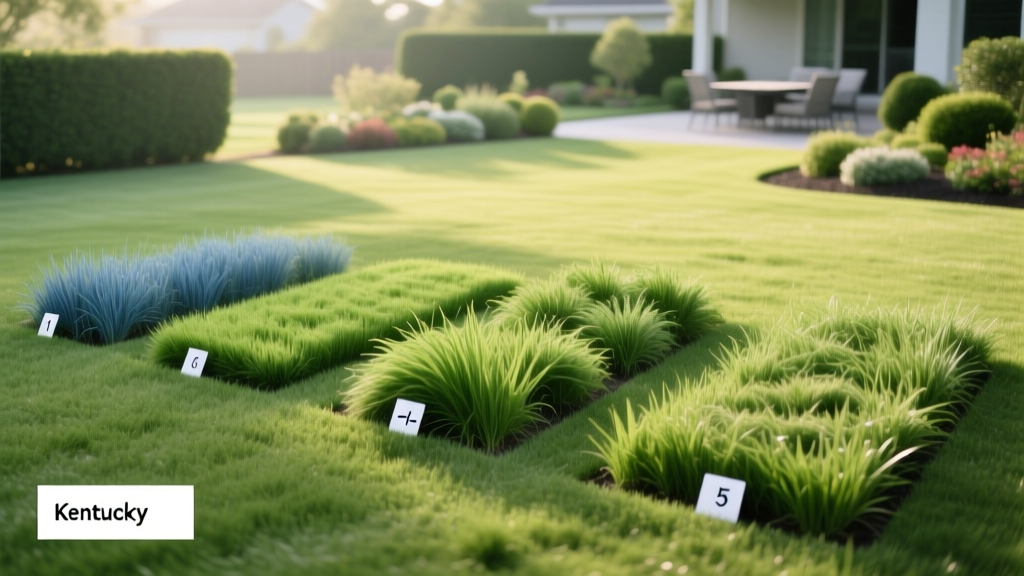
Scotts Turf Builder Weed & Feed: 5 Spot-Treatment Rules
The Granular Misconception: Why Spot-Treating Requires a Strategy
Applying granular Scotts Turf Builder Weed & Feed as a localized spot-treatment is one of the most common homeowner errors in lawn care. By design, granular weed and feed products are formulated for broadcast application. The active herbicides—typically a blend of 2,4-D, Quinclorac, and Dicamba—require physical contact with the moist foliage of broadleaf weeds to be absorbed. When homeowners attempt to "spot treat" by tossing handfuls of granules onto isolated weed patches, they inevitably over-apply nitrogen to the surrounding grass, causing fertilizer burn, while the herbicide granules bounce off dry weed leaves and fail to kill the target.
However, targeted application is possible if you treat the product as a zone-specific broadcast rather than a true spot-treatment. If you are dealing with localized heavy infestations in specific zones of your yard, you must follow strict adherence to moisture, calibration, and grass-type compatibility. Below are the 5 critical rules for using Scotts Turf Builder Weed & Feed effectively in 2026, ensuring you eliminate weeds without destroying your turf.
⚠️ Critical Warning: Never use standard Scotts Turf Builder Weed & Feed on St. Augustinegrass, Centipedegrass, or Carpetgrass. The 2,4-D and Dicamba formulation will cause severe phytotoxicity, resulting in yellowing, stunting, and eventual death of these warm-season species. For those grasses, you must use a specialized Atrazine-based or Penoxsulam-based product.
Grass Type Compatibility Matrix
Before opening the bag, verify your turf species. The 2026 formulations of Scotts Weed & Feed are optimized for specific cool-season and warm-season grasses. Applying the wrong chemical profile to your lawn is the fastest way to require a complete renovation.
| Grass Species | Compatibility | Optimal Application Window | Temperature Ceiling |
|---|---|---|---|
| Tall Fescue | Highly Compatible | Early Fall (Sept) / Late Spring (May) | 85°F (29°C) |
| Kentucky Bluegrass | Highly Compatible | Early Fall / Late Spring | 85°F (29°C) |
| Perennial Ryegrass | Highly Compatible | Early Fall / Late Spring | 85°F (29°C) |
| Bermudagrass | Conditionally Safe | Late Spring (Post green-up) | 90°F (32°C) |
| Zoysiagrass | Conditionally Safe | Late Spring / Early Summer | 90°F (32°C) |
| St. Augustinegrass | LETHAL - DO NOT USE | N/A | N/A |
| Centipedegrass | LETHAL - DO NOT USE | N/A | N/A |
The 5 Rules for Targeted Weed & Feed Application
Rule 1: Leverage Morning Dew for Foliar Adhesion
Granular herbicides are coated onto the exterior of the fertilizer prill. For the 2,4-D to transfer from the prill to the weed, the weed leaf must be wet. Apply the product early in the morning when heavy dew is present, or immediately after a light irrigation. If you apply granular weed and feed to dry foliage at 2:00 PM on a Tuesday, the granules will simply fall to the soil surface, rendering the "weed" portion of the product entirely useless while the nitrogen feeds the grass.
Rule 2: Precision Spreader Calibration
When targeting a specific zone (e.g., a front yard heavily infested with clover while the back yard is clean), you must calibrate your spreader to avoid overlapping passes. Overlapping granular weed and feed doubles the nitrogen load, causing severe tip burn.
- Scotts Rotary Spreaders (EdgeGuard): Set to 5.5
- Scotts Drop Spreaders (Classic): Set to 8.0
- Application Rate: 2.8 lbs per 1,000 square feet.
Pro Tip: If you are only treating a 2,000 sq. ft. zone, weigh out exactly 5.6 lbs of product on a digital kitchen scale before loading the hopper. Do not rely on visual estimates.
Rule 3: Respect the Temperature Ceilings
Volatile herbicides like Dicamba and 2,4-D can vaporize and drift onto non-target ornamental plants, trees, and garden beds when temperatures exceed 85°F for cool-season grasses, or 90°F for warm-season grasses. According to Penn State Extension, applying systemic broadleaf herbicides during heat stress not only causes vapor drift but also severely damages the turfgrass, which is already expending energy to survive the heat. Check your 3-day forecast; if highs are projected above the ceiling, delay application.
Rule 4: The 48-Hour Mowing Buffer
Do not mow for 48 hours before application, and do not mow for 48 hours after.
Why? You need maximum leaf surface area on the weeds to catch the granules. Mowing right before application removes the target foliage. Mowing immediately after application physically removes the herbicide-coated granules before they have time to absorb into the plant tissue.
Rule 5: Delay Post-Application Watering
While the "Feed" (nitrogen) component of the product eventually needs to be watered into the soil to reach the root zone, watering too soon will wash the herbicide off the weed leaves and into the dirt, where it is rapidly degraded by soil microbes. Wait a full 48 hours after application before running your irrigation system or relying on rainfall to activate the fertilizer component.
Target Weed Profile: What It Actually Kills
Scotts Turf Builder Weed & Feed is not a universal herbicide. It is specifically engineered to target broadleaf weeds by mimicking auxin (a plant growth hormone), causing uncontrolled, fatal cell division in dicot plants. It will not kill grassy weeds like Crabgrass, Goosegrass, or Poa Annua.
Expert Insight: "Homeowners frequently confuse yellowing grassy weeds with broadleaf weeds. If you are dealing with Crabgrass, a Weed & Feed product will only fertilize the Crabgrass, making it grow faster and thicker. You must use a product containing Quinclorac at higher concentrations, or a pre-emergent like Dithiopyr, for grassy weed control."
The "Big 5" Broadleaf Targets
- Dandelion (Taraxacum officinale): Highly susceptible. The deep taproot is killed as the 2,4-D translocates downward.
- White Clover (Trifolium repens): Susceptible, but dense patches may require a second application 30 days later due to the stoloniferous growth habit.
- Broadleaf Plantain (Plantago major): Highly susceptible. Look for the leaves to curl and blacken within 7 to 10 days.
- Common Chickweed (Stellaria media): Susceptible, but best treated in early spring or late fall before it sets seed.
- Spurge (Chamaesyce maculata): Moderately susceptible. Prostrate spurge often requires the addition of a liquid spot-treatment if the granular application misses the low-growing foliage.
Economic Breakdown: Granular Zone-Treatment vs. Liquid Spot-Treatment
When deciding whether to use Scotts Turf Builder Weed & Feed for a localized zone or switch to a dedicated liquid spot-spray (like Ortho WeedClear), consider the economics and the nitrogen needs of your lawn. As of early 2026, a 14 lb bag of Scotts Turf Builder Weed & Feed (covering 5,000 sq. ft.) retails for approximately $36.00.
| Metric | Granular Weed & Feed (Zone Broadcast) | Liquid Spot-Treatment (e.g., Trimec) |
|---|---|---|
| Cost per 1,000 sq. ft. | $7.20 | $1.50 - $2.50 |
| Nitrogen Applied | 0.72 lbs N / 1,000 sq. ft. | 0.0 lbs N |
| Best Use Case | Zone has >30% weed coverage AND needs fertilizer. | Zone has <10% isolated weed patches; grass is already green. |
| Application Speed | Fast (Spreader) | Slow (Pump sprayer) |
If your targeted zone is already dark green and growing vigorously, applying granular weed and feed will push excessive top-growth, requiring you to mow twice a week and increasing the risk of fungal diseases like Brown Patch. In that scenario, abandon the granular approach and use a dedicated liquid broadleaf herbicide for true spot-treatment. For comprehensive details on identifying turf diseases exacerbated by over-fertilization, consult the NC State TurfFiles database.
Summary Checklist for Success
- ✅ Identify Grass: Confirmed Tall Fescue, KBG, Ryegrass, Bermuda, or Zoysia.
- ✅ Identify Weed: Confirmed broadleaf (Dandelion, Clover), not grassy (Crabgrass).
- ✅ Check Weather: Morning dew present, 48 hours of no rain forecasted, temps under 85°F.
- ✅ Calibrate: Spreader set to exact manufacturer specifications; product weighed.
- ✅ Wait: No mowing or watering for 48 hours post-application.
By treating Scotts Turf Builder Weed & Feed as a precision zone-management tool rather than a casual spot-treatment, you leverage the dual-action chemistry to eradicate broadleaf weeds while simultaneously driving deep root growth in your desirable turfgrass.

