
Grass Types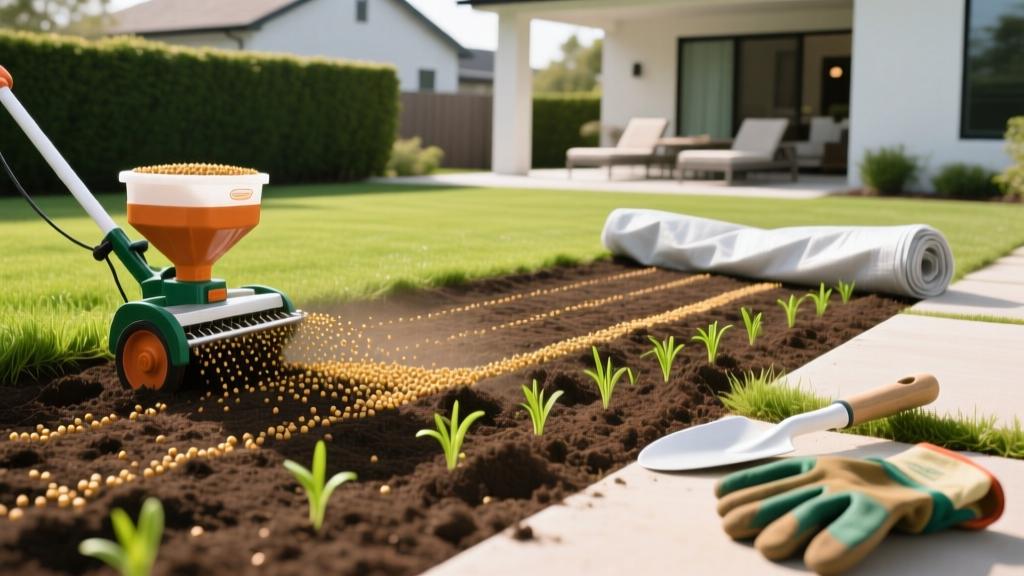
Proven Strategies for Seeding Bermuda Lawn Areas From Scratch
The Thermal Threshold: Why Timing Dictates Success
Establishing a warm-season turf from seed is fundamentally a game of thermodynamics. Unlike sod, which provides an immediate root mass, seeding bermuda lawn areas requires strict adherence to soil temperature thresholds. Bermuda grass (Cynodon dactylon) seed will not germinate in cool soil. The absolute minimum soil temperature required for germination is 65°F at a 2-inch depth, measured at 8:00 AM. For optimal and rapid emergence, target a consistent soil temperature of 70°F to 75°F, which typically corresponds to daytime air temperatures of 80°F to 90°F.
In most of the Sun Belt and Transition Zone, this thermal window opens between late May and early July. Attempting to seed in April often results in seed rot or predation by birds before the soil warms sufficiently. Invest in a digital soil probe thermometer rather than relying on ambient weather apps, as soil retains cold well into late spring.
Hulled vs. Raw Seed: A Cost-Benefit Analysis
When purchasing Bermuda seed, you will encounter two primary processing types: raw (unhulled) and hulled. Understanding the mechanical difference is critical for calculating your budget and watering schedule.
- Raw (Unhulled) Seed: Retains its outer protective husk. It is significantly cheaper (typically $12 to $18 per pound) but requires more water and time to break down the seed coat. Germination takes 14 to 21 days. Apply at a rate of 2 to 3 lbs per 1,000 square feet.
- Hulled Seed: The outer husk has been mechanically removed. It costs more ($30 to $45 per pound) but absorbs water immediately, reducing germination time to 7 to 14 days. Apply at a lower rate of 1 to 2 lbs per 1,000 square feet.
Pro Tip: If you are seeding in late July or August and are racing against the first autumn frost, always choose hulled seed. The accelerated 7-day germination window ensures the turf establishes a viable root system before cool nights stall growth.
Top Cultivars for Seeded Bermuda Lawns
Not all Bermuda seed is created equal. Improved seeded cultivars offer denser canopies, finer leaf blades, and better cold tolerance than common forage varieties. Below is a comparison of the top three commercial-grade seeded cultivars available to homeowners.
| Cultivar | Primary Advantage | Best Region | Est. Cost (Hulled) |
|---|---|---|---|
| Princess 77 | Exceptional density, dark green color, high traffic tolerance | Deep South, high-use residential lawns | $38 - $45 / lb |
| Yukon | Superior cold tolerance, early spring green-up | Transition Zone (OK, AR, TN, NC) | $28 - $35 / lb |
| Riviera | Rapid establishment, decent shade tolerance for a Bermuda | Broad adaptability, quick-fill repairs | $25 - $32 / lb |
Precision Soil Preparation Protocol
Bermuda seed is incredibly small. If sown into compacted soil or buried too deeply, it will fail to emerge. The seedbed must be fine, level, and firm. Follow this exact sequence:
- Clear and Kill: Apply a non-selective systemic herbicide (like a 41% glyphosate solution) to existing vegetation 14 days prior to tilling. Do not till live weeds into the soil, or you will propagate them.
- Till to 4 Inches: Use a rear-tine rototiller to break up the top 4 to 6 inches of soil. This alleviates compaction and allows the nascent taproot to penetrate easily.
- Amend and Grade: Based on a soil test, incorporate necessary amendments. Bermuda thrives at a pH of 6.0 to 6.5. If your pH is below 5.8, till in pulverized agricultural limestone at a rate of 50 lbs per 1,000 sq ft. Rake the area completely smooth, removing all rocks larger than a marble.
- Roll the Seedbed: Use a weighted lawn roller (fill a water-weighted roller to 50% capacity) to firm the soil. You want a surface that yields slightly to a boot heel but does not sink. This prevents the seed from washing into microscopic crevices during watering.
Sowing and the Critical 21-Day Watering Matrix
Calibrate your broadcast spreader to deliver exactly half the required seed rate. Walk the perimeter and then sow the lawn in a North-South pattern. Reload the hopper with the remaining half and sow in an East-West pattern. This cross-hatching eliminates striping and ensures uniform coverage.
Warning: Never cover Bermuda seed with more than 1/8 inch of soil or compost. Lightly dragging a leaf rake upside down over the seed is sufficient to ensure seed-to-soil contact. Burying it deeper than 1/4 inch will result in a 90% germination failure rate.
According to the Clemson University Home & Garden Information Center, moisture management during the first three weeks is the single most critical variable in establishment. The seed must never dry out, but the soil must never become waterlogged.
- Days 1 to 10 (Germination Phase): Water 3 to 4 times daily for 5 minutes per cycle. The goal is to keep the top 1/2 inch of soil constantly moist. Use an oscillating sprinkler or a smart irrigation controller with multi-cycle capabilities.
- Days 11 to 21 (Rooting Phase): Once seedlings reach 1 inch tall, reduce watering to twice daily for 10 minutes. This encourages the roots to stretch downward to seek moisture.
- Day 22+ (Establishment Phase): Transition to a standard deep-and-infrequent schedule: 1 inch of water applied once or twice a week to force roots to a 4-inch depth.
Troubleshooting Establishment Failures
Even with meticulous planning, environmental variables can disrupt establishment. Use this diagnostic framework to correct issues on the fly.
Symptom: Seed washes into clumps or bare patches appear after rain
Cause: Hydroplaning on compacted soil or excessive sprinkler head pressure.
Fix: Apply a thin layer of weed-free straw mulch (1 bale per 1,000 sq ft) or a hydro-mulch tackifier immediately after sowing to bind the seed to the soil surface. Adjust sprinkler heads to emit a fine mist rather than heavy droplets.
Symptom: Seedlings emerge but turn yellow and collapse at the base
Cause: Pythium blight, a water mold that thrives in hot, wet, stagnant conditions.
Fix: The University of California Statewide Integrated Pest Management Program notes that improving surface drainage is paramount. Reduce watering frequency immediately to let the topsoil dry slightly between cycles, and apply a preventative fungicide containing azoxystrobin if the outbreak is severe.
Symptom: Excellent germination, but turf thins out by week 4
Cause: Nitrogen starvation. The endosperm reserves in the seed are exhausted by day 21.
Fix: Apply a starter fertilizer (e.g., 10-18-10) at day 14, delivering 0.5 lbs of actual nitrogen per 1,000 sq ft. Follow up with a balanced 16-4-8 fertilizer at day 30 to fuel lateral stolon growth.
Frequently Asked Questions
Can I apply pre-emergent herbicide before seeding?
No. Pre-emergent herbicides create a chemical barrier that prevents cell division in all seeds, including your Bermuda. You must wait until the new lawn has been mowed at least three times before applying any pre-emergent weed control.
How short should I mow the new Bermuda grass?
Wait until the turf reaches 2 inches in height. Set your mower to 1.5 inches and bag the clippings for the first two mows to allow maximum sunlight penetration to the soil, which stimulates the stolons to spread horizontally and knit the lawn together.

