
Grass Types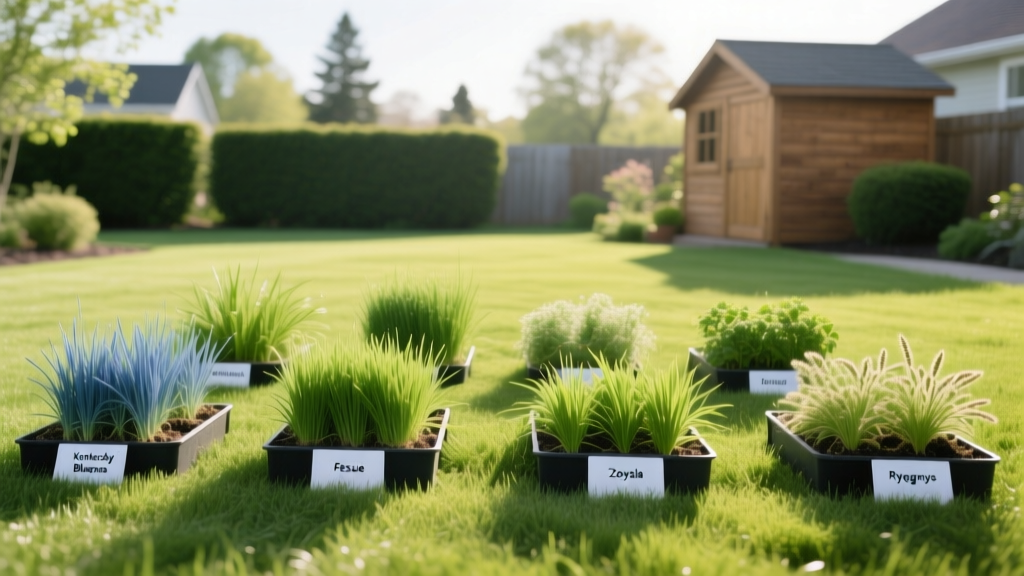
Seeding Grass in Spring: Regional Calendars and Soil Temp Guide
Seeding grass in spring is one of the most misunderstood practices in lawn care. While the warming air and spring rains make it seem like the perfect time to establish a new lawn, the biological reality of turfgrass physiology tells a different story. For cool-season grasses, spring seeding is a high-stakes race against summer heat stress and aggressive weed competition. For warm-season grasses, it is a waiting game for soil temperatures to rise sufficiently. Success requires ignoring the calendar on the wall and focusing entirely on soil thermometers, regional frost dates, and precise chemical timing.
The Soil Temperature Matrix: When to Actually Drop Seed
Air temperature is a poor indicator of germination readiness. Grass seed requires consistent soil warmth at a depth of 2 inches to trigger enzymatic activity and radicle emergence. Dropping seed into cold, wet spring soil invites Pythium blight and seed rot before germination even begins. Use a digital soil probe thermometer to verify these thresholds before spreading seed.
| Grass Type Category | Specific Species | Minimum Soil Temp (2-inch depth) | Optimal Soil Temp Range | Typical Germination Window |
|---|---|---|---|---|
| Cool-Season | Tall Fescue | 50°F (10°C) | 59°F – 72°F | 7 – 12 Days |
| Cool-Season | Kentucky Bluegrass | 50°F (10°C) | 59°F – 68°F | 14 – 28 Days |
| Cool-Season | Perennial Ryegrass | 45°F (7°C) | 50°F – 65°F | 5 – 10 Days |
| Warm-Season | Bermudagrass (Seeded) | 65°F (18°C) | 70°F – 85°F | 10 – 21 Days |
| Warm-Season | Zoysiagrass (Seeded) | 65°F (18°C) | 70°F – 80°F | 14 – 21 Days |
Regional Spring Seeding Calendars
Northern and Transition Zones: The Cool-Season Dilemma
In regions spanning from the Pacific Northwest through the Midwest and into the Northeast, cool-season grasses (Tall Fescue, Kentucky Bluegrass, Ryegrass) dominate. The ideal time to seed these grasses is late summer to early fall. However, if you must perform spring seeding due to winter kill or new construction, your window is exceptionally narrow.
According to the University of Minnesota Extension, spring seeding for cool-season grasses should occur as soon as the soil can be worked and the threat of hard freezes has passed, typically from mid-April to mid-May. The goal is to achieve maximum root depth before July's evapotranspiration rates outpace the shallow root system's ability to draw water. If you seed later than May 15th in the Transition Zone, the immature seedlings will likely perish during their first 95°F+ heatwave.
Southern Zones: The Warm-Season Waiting Game
For homeowners in the Deep South, Southwest, and Southeast growing warm-season grasses, spring seeding is actually the standard practice—but patience is mandatory. Seeding Bermudagrass or Zoysiagrass in March or early April is a waste of money. The soil is simply too cold. Wait until late May or early June, when nighttime air temperatures consistently stay above 65°F and soil temperatures at a 2-inch depth hold steady above 70°F. The UC Statewide IPM Program emphasizes that warm-season seeds will remain dormant and highly susceptible to predation by birds and rodents if sown in cool spring soils.
⚠️ CRITICAL WARNING: The Pre-Emergent Herbicide Trap
The single biggest point of failure for spring seeding is the application of standard crabgrass preventers (Prodiamine or Dithiopyr) in early spring. These chemicals create a non-selective barrier in the top inch of soil that stops all seeds from germinating, including your expensive turf seed.
The Workaround: If you are seeding cool-season grass in spring, you must use a pre-emergent containing Siduron (often sold as Scotts Starter Fertilizer with Crabgrass Preventer). Siduron inhibits crabgrass root development but allows cool-season turf roots to penetrate safely. For warm-season spring seeding, Mesotrione (Tenacity) can be applied at the time of seeding to control weeds without harming Bermuda or Zoysia germination.
Step-by-Step Spring Establishment Protocol
Because spring seedlings face immediate stress from broadleaf weeds and summer heat, your establishment protocol must be flawless. Follow these exact measurements and timeframes.
- Soil Preparation (Slit-Seeding over Aeration): While core aeration is great for fall, doing it in spring brings thousands of dormant weed seeds to the surface. Instead, use a slit-seeder (power seeder) to cut 1/4-inch trenches directly into the soil, dropping the seed into the furrows for optimal soil-to-seed contact.
- Precise Seeding Rates: Do not over-seed to 'fill in faster.' Overcrowding leads to damping-off disease. Apply Tall Fescue at 6 to 8 lbs per 1,000 sq ft. Apply Kentucky Bluegrass at 1 to 2 lbs per 1,000 sq ft. Apply hulled Bermudagrass at 1 to 2 lbs per 1,000 sq ft.
- Starter Fertilizer Application: Spring soil often lacks available phosphorus, which is critical for initial root growth. Apply a starter fertilizer with a high middle number (Phosphorus), such as a 10-18-10 or 18-24-12 NPK ratio, at a rate of 1.0 lb of nitrogen per 1,000 sq ft immediately after seeding.
- Micro-Cycle Irrigation: Grass seed cannot survive drying out for even four hours during the first 14 days. Program your smart irrigation controller for 4 to 6 micro-cycles per day. Each zone should run for only 3 to 5 minutes. This keeps the top 1/2 inch of soil continuously moist without causing seed washout, puddling, or soil compaction.
Cultivar Selection for Spring Seeding Success
When seeding in spring, you do not have the luxury of a 6-month mild establishment period. You need cultivars that exhibit aggressive early vigor and deep rooting to survive the impending summer. Consult the NC State Extension Carolina Lawns guide for region-specific NTEP (National Turfgrass Evaluation Program) data, but prioritize these proven performers:
- Tall Fescue (Transition/North): Look for 'Titan Ultra' or 'G-Titan'. These cultivars exhibit exceptional heat tolerance and establish deep taproots faster than older varieties like Kentucky 31, which is crucial for surviving a summer drought.
- Kentucky Bluegrass (North): 'Award' and 'Blue Note' offer rapid spring germination and aggressive rhizome spread, helping the lawn knit together before crabgrass pressure peaks in July.
- Bermudagrass (South): 'Princess 77' and 'Yukon' are premium seeded cultivars. Yukon is particularly valuable for spring seeding in the upper Transition Zone because of its superior cold tolerance and rapid spring green-up genetics.
Frequently Asked Questions
Can I just throw grass seed on the ground in spring after it rains?
No. Broadcast seeding without soil preparation results in a 10% to 15% germination rate. Spring rains cause surface crusting, and exposed seed will be eaten by birds or washed into storm drains. You must rake the seed into the top 1/8 inch of soil or use a slit-seeder.
When should I mow the new spring-seeded grass for the first time?
Wait until the new grass reaches 3.5 to 4 inches in height, then mow it down to 2.5 or 3 inches. Never remove more than 1/3 of the leaf blade at once. Ensure your mower blade is freshly sharpened; a dull blade will rip immature spring seedlings out of the ground by the roots.
Is it better to use straw or peat moss to cover spring seed?
Straw (specifically weed-free wheat straw, not hay) is excellent for retaining moisture on sloped areas. However, for flat lawns, a thin layer of peat moss or a specialized compost top-dressing is superior. Peat moss holds up to 20 times its weight in water, acting as a slow-release moisture reservoir for the delicate spring seedlings during hot afternoon sun.

