Grass Types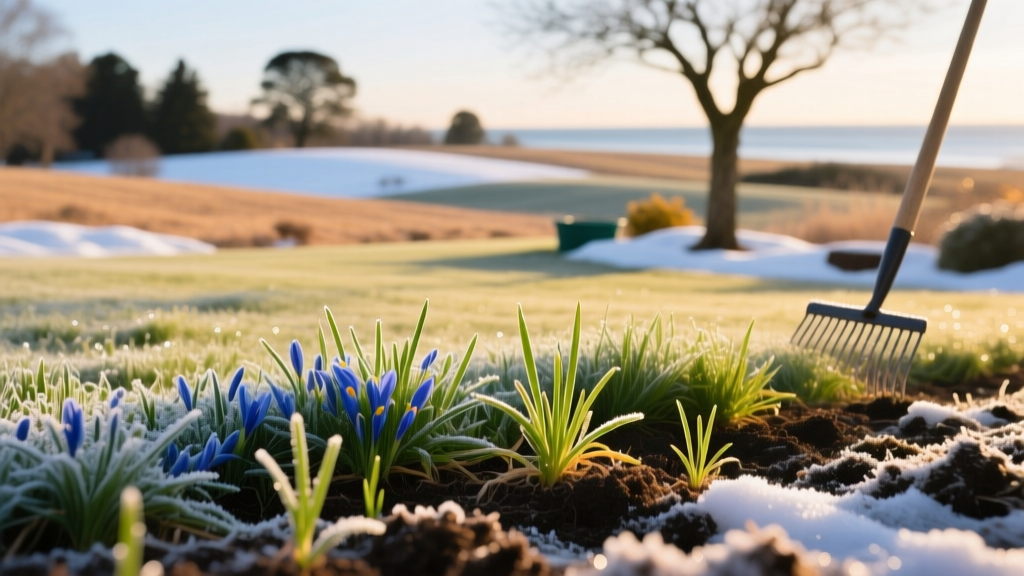
Seeding Lawn Winter: Regional Timing and Dormant Seed Guide
The Mechanics of Dormant Winter Seeding
Winter lawn seeding, scientifically referred to as dormant seeding, is the practice of applying grass seed when soil temperatures are consistently below 40°F (4.4°C). The objective is not immediate germination. Instead, the seed remains dormant in the soil profile, utilizing natural freeze-thaw cycles to work its way into the top 1/4 inch of the soil. When spring soil temperatures finally cross the 50°F threshold, the seed is already positioned in the soil matrix, allowing it to germinate weeks before spring-applied seed.
According to turfgrass research from Penn State Extension, dormant seeding capitalizes on the natural frost heaving of late winter. As water in the soil freezes and expands, it creates micro-fissures. Seed resting on the surface is pulled into these cracks, achieving the critical seed-to-soil contact required for spring germination without the need for mechanical aeration on frozen ground.
Critical Temperature Threshold: You must wait until the soil temperature at a 2-inch depth is consistently below 40°F. If you seed while the soil is still hovering around 45°F–50°F, you risk a 'false spring' germination, where the seed sprouts during a warm December spell and is subsequently killed by a January hard freeze.
Regional Timing Calendars for Winter Seeding
The timing for seeding a lawn in winter depends entirely on your USDA Hardiness Zone and local soil temperature profiles. Below is the precise regional framework for cool-season grasses.
| Region / Zone | Target Seeding Window | Soil Temp Trigger | Primary Grass Types |
|---|---|---|---|
| Upper Midwest (Zones 3-4) | Late November – Mid December | Consistent 35°F or lower | Kentucky Bluegrass, Fine Fescue |
| Northeast (Zones 5-6) | Mid December – Late January | Consistent 38°F or lower | Tall Fescue, Perennial Ryegrass |
| Transition Zone (Zone 7) | Late January – Mid February | Consistent 40°F or lower | Tall Fescue, Kentucky Bluegrass |
| Pacific Northwest (Maritime) | Late November – December | Consistent 40°F or lower | Perennial Ryegrass, Fine Fescue |
Cultivar Selection and Seeding Rates
Not all cool-season grasses perform equally well under dormant conditions. Data from the National Turfgrass Evaluation Program (NTEP) indicates that species with slower, more temperature-dependent germination rates are ideal for winter seeding, as they resist premature sprouting during brief winter thaws.
1. Kentucky Bluegrass (KBG)
- Seeding Rate: 2.0 – 3.0 lbs per 1,000 sq ft.
- Recommended Cultivars: 'Midnight', 'Blue Note', 'Everglade'.
- Winter Performance: Excellent. KBG requires 14–21 days to germinate even in optimal spring conditions, making it highly resistant to false-start germination in January. Its small seed size also allows it to easily settle into soil micro-fissures created by frost heaving.
2. Tall Fescue
- Seeding Rate: 6.0 – 8.0 lbs per 1,000 sq ft.
- Recommended Cultivars: 'Titan Ultra', 'Firewall', 'Rhambler'.
- Winter Performance: Moderate to Good. Tall fescue seed is larger and requires slightly more aggressive freeze-thaw cycles to achieve proper soil burial. It is best paired with a light application of erosion-control mulch if your lawn has a slope greater than 5%.
3. Perennial Ryegrass
- Seeding Rate: 5.0 – 7.0 lbs per 1,000 sq ft.
- Recommended Cultivars: 'Pangea', 'Apple GL', 'Caddyshack'.
- Winter Performance: Risky in Zone 6 and south. Ryegrass can germinate in as few as 5 days if soil temps briefly spike to 45°F. Reserve dormant ryegrass seeding strictly for northern Zone 5 and Zone 4 regions where deep freezes are guaranteed.
Step-by-Step Execution Framework
Executing a dormant seeding requires precise preparation before the ground freezes solid. Follow this sequence to maximize seed-to-soil contact.
- Final Autumn Mow (Late Fall): Drop your mower deck to 1.5 inches for the final cut of the season. This reduces the turf canopy, allowing dormant seed to reach the soil surface rather than getting trapped in dead grass blades.
- Core Aeration (Pre-Freeze): If the ground is not yet frozen, perform a double-pass core aeration. If the ground is already frozen, skip this step and rely entirely on frost heaving. Never attempt to aerate frozen soil; you will damage the tines and the turf crown.
- Calibrate and Apply Seed: Use a rotary broadcast spreader. Apply the seed in two perpendicular directions (north-south, then east-west) to ensure uniform distribution. Premium coated seeds (like those with Apron Maxx fungicide treatment) cost roughly $6–$9 per pound but provide crucial protection against spring Pythium blight.
- Apply Starter Fertilizer (Optional but Recommended): Apply a high-phosphorus starter fertilizer (e.g., 18-24-12) at a rate of 1.0 lb of nitrogen per 1,000 sq ft. The nutrients will remain in the soil matrix and be immediately available to the radicle (first root) upon spring germination.
- Mulch Application: Cover the seed with a weed-free straw alternative like PennMulch or a light layer of compost. Apply at a rate of 1 bale (or 40 lbs of compost) per 1,000 sq ft. This protects the seed from being eaten by foraging winter birds and prevents wind-blown washout.
⚠️ Critical Herbicide Warning: If you dormant seed, you cannot apply standard pre-emergent crabgrass preventers (like Prodiamine/Barricade or Dithiopyr/Dimension) in early spring. These chemicals will kill your newly germinated cool-season grass seed. You must wait until the new grass has been mowed at least three times before applying pre-emergents, or switch to a post-emergent targeted approach using Quinclorac for summer crabgrass control.
Common Failure Modes and Edge Cases
While dormant seeding is highly effective, turf managers frequently encounter three specific failure modes:
1. Slope Washout
On grades exceeding 8%, winter precipitation and spring snowmelt will wash unanchored seed into storm drains. Solution: On slopes, abandon standard straw and use a hydraulic mulch (hydromulch) with a tackifier, or pin down biodegradable jute netting over the seeded area before the first snowfall.
2. The 'False Spring' Kill
In the Transition Zone (Zone 7), a warm February (60°F air temps) can trick Perennial Ryegrass into germinating, only for a March polar vortex to kill the young seedlings. Solution: Transition Zone homeowners should strictly use Kentucky Bluegrass for dormant seeding, as its longer stratification requirement prevents premature germination.
3. Snow Mold Compounding
Applying excessive nitrogen fertilizer late in the winter over a dormant-seeded lawn can promote Typhula Snow Mold if snow cover persists for more than 60 days. Solution: Limit winter-applied nitrogen to 0.5 lbs per 1,000 sq ft if your region historically experiences prolonged snow cover, saving the heavy feeding for when the grass actively breaks dormancy in April.
Cost Breakdown: Dormant vs. Spring Seeding
From an economic perspective, winter seeding offers distinct advantages regarding labor and contractor availability, though material costs remain similar.
| Expense Category | Dormant Winter Seeding (DIY) | Traditional Spring Seeding (DIY) |
|---|---|---|
| Premium Seed (5k sq ft) | $75 – $110 | $75 – $110 |
| Aeration Equipment Rental | $0 (Rely on frost heave) | $60 – $85 (Daily rental) |
| Erosion Mulch | $30 – $45 | $30 – $45 |
| Watering Costs | $0 (Natural spring rain) | $40 – $90 (Irrigation) |
| Total Estimated Cost | $105 – $155 | $205 – $330 |
By leveraging the natural freeze-thaw mechanics of winter and relying on spring rainfall for initial moisture, dormant seeding eliminates the two most expensive and labor-intensive components of lawn establishment: mechanical aeration and supplemental irrigation. For homeowners willing to monitor soil thermometers and time their applications correctly, winter seeding yields a denser, more deeply rooted turf by the time summer heat stress arrives.