
Grass Types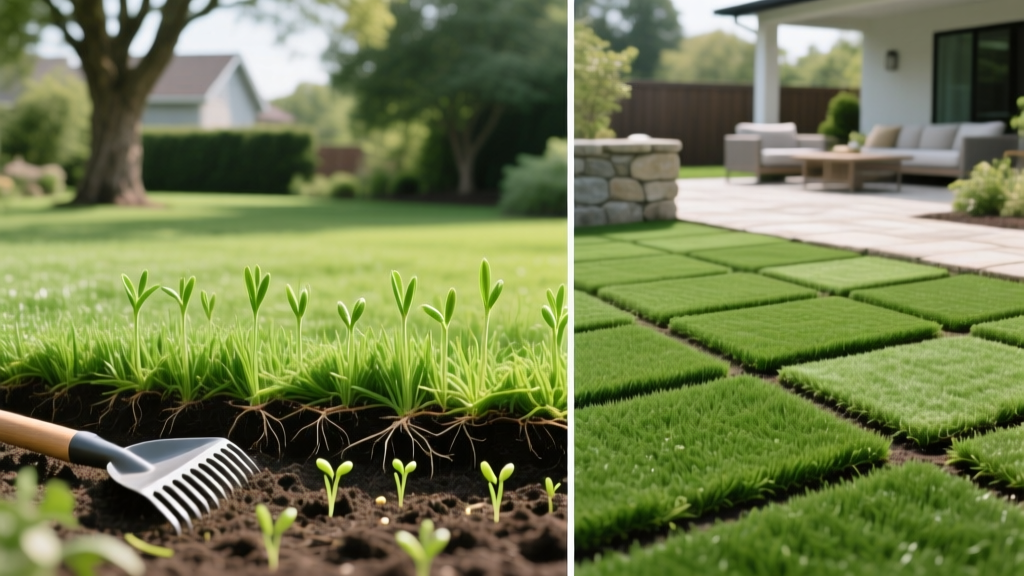
Seeding or Sodding a Lawn: Costs, Timelines, and Establishment
When deciding between seeding or sodding a lawn, homeowners often focus solely on the visual timeline: the instant gratification of a green carpet versus the weeks of waiting for sprouts. However, the true difference lies in the hidden costs, soil preparation requirements, and long-term root establishment dynamics. Both methods require meticulous site preparation, but their ongoing maintenance, material expenses, and vulnerability to environmental stressors diverge significantly after day one.
The Core Dilemma: Seed vs. Sod at a Glance
Before committing to a purchase order, review the baseline metrics for a standard 1,000-square-foot residential yard. These figures reflect average 2026 material and labor markets.
| Metric | Premium Grass Seed | Fresh-Cut Sod |
|---|---|---|
| Material Cost (per 1,000 sq ft) | $60 - $110 | $450 - $850 |
| Soil Prep Requirement | Mandatory (Tilling 4-6 inches) | Mandatory (Tilling 4-6 inches) |
| Time to Usable Surface | 8 to 12 weeks | 2 to 3 weeks |
| Weed Competition Risk | High (No pre-emergent allowed) | Low (Mature turf blocks weeds) |
| Best Planting Window | Early Fall (Cool-season) / Late Spring (Warm-season) | Anytime ground is unfrozen (with heavy irrigation) |
Deep Dive: Seeding a Lawn from Scratch
Seeding offers unparalleled genetic diversity and long-term adaptability. Because the grass germinates and grows in your exact microclimate, the root system develops natively without the transplant shock associated with sod.
True Costs and Material Breakdown
The seed itself is only a fraction of the establishment budget. For a high-quality, weed-free Kentucky Bluegrass or Tall Fescue blend, expect to pay $8 to $12 per pound. You will need 6 to 8 pounds per 1,000 square feet for Tall Fescue, or 2 to 3 pounds for Kentucky Bluegrass.
- Starter Fertilizer: A high-phosphorus starter fertilizer (such as a 10-18-10 N-P-K ratio) is critical for root development, costing roughly $35 per 5,000 sq ft bag.
- Erosion Control: Straw mulch is mandatory to retain moisture and protect seeds from birds. One bale covers roughly 1,000 sq ft and costs $12 to $18. Avoid hay, which introduces thousands of weed seeds into your fresh soil.
- Hydromulch Alternative: For slopes or erosion-prone areas, professional hydroseeding costs between $0.15 and $0.25 per square foot, combining seed, fertilizer, and a tackifying mulch in one slurry.
The 30-Day Germination and Establishment Timeline
Seed requires a strict watering regimen. According to Penn State Extension, newly sown seed must remain constantly moist but not waterlogged. This requires watering 3 to 4 times daily for 5 to 10 minutes per zone during the first 14 days. Once germination occurs, you must gradually transition to deeper, less frequent watering to force the roots downward.
⚠️ Critical Herbicide Warning: You cannot apply standard pre-emergent crabgrass preventers (like Prodiamine or Dithiopyr) when seeding. These chemicals halt cell division and will kill your grass seed. If crabgrass is a concern, use a targeted, seed-safe product containing Siduron (Tupersan) or wait until the new grass has been mowed at least three times before applying standard pre-emergents.
Deep Dive: Sodding for Instant Gratification
Sod is essentially a mature lawn that has been grown on a commercial farm, sliced into 2x4 foot rolls, and shipped to your property. It provides immediate erosion control and an instant aesthetic upgrade, but it comes with severe logistical and biological hurdles.
Hidden Costs of Sod Installation
The quoted price of sod ($0.45 to $0.85 per square foot) rarely includes the logistical nightmare of delivery and installation.
- Pallet Weight: A single pallet of sod covers roughly 450 square feet and weighs between 2,500 and 3,000 pounds depending on soil moisture.
- Delivery Fees: Because of the weight, freight delivery with a liftgate truck typically adds $150 to $300 to your total bill.
- Labor: If you hire a crew, installation labor adds $0.30 to $0.60 per square foot. If doing it yourself, be prepared for intense physical labor; sod must be laid within 24 hours of delivery to prevent the center of the pallet from 'cooking' and dying due to trapped microbial heat.
The Critical 14-Day Rooting Window
The most common failure point for sod is improper watering. Unlike seed, which needs light surface moisture, sod requires deep, heavy watering immediately upon installation. The University of Minnesota Extension recommends applying at least 1 inch of water immediately after laying the sod to ensure the soil beneath is wet to a depth of 4 inches. If the soil beneath the sod dries out, the roots will never penetrate the native soil, resulting in a 'rug effect' where the sod can be easily pulled up months later.
Site-Specific Decision Framework
Use this if/then matrix to determine the optimal establishment method for your specific property constraints:
- IF your yard features steep slopes or heavy clay prone to washing out THEN choose Sod (or hydroseeding with bonded fiber matrix). Standard seed will wash away in the first heavy rain.
- IF your lawn is heavily shaded by mature oak or maple trees THEN choose Seed. Sod farms grow grass in full sun; when transplanted to deep shade, farm-grown sod often experiences severe shock and thins out within one season. A site-specific shade seed blend (like Fine Fescue) will adapt better.
- IF you have young children or large dogs that need immediate yard access THEN choose Sod. Seeded lawns require a strict 8-week traffic ban to prevent uprooting tender seedlings.
- IF you are establishing warm-season grass (Bermuda, Zoysia, Centipede) THEN choose Sod or Plugs. Warm-season grasses grown from seed often lack the genetic uniformity and winter hardiness of vegetatively propagated sod cultivars.
Common Establishment Failures (And How to Avoid Them)
Whether you choose seeding or sodding a lawn, poor soil prep is the great equalizer of failure. Many homeowners attempt to save time by laying sod directly over existing weeds or compacted dirt. This guarantees failure. Both methods require rototilling the top 4 to 6 inches of soil, removing all rocks and debris, and incorporating 2 to 3 cubic yards of organic compost per 1,000 square feet to improve drainage and cation exchange capacity (CEC).
For seeded lawns, the primary biological threat is Pythium blight or damping-off, a fungal disease that turns new seedlings to mush. This is caused by overwatering in high heat. To prevent it, avoid seeding cool-season grasses in the middle of summer. For sod, the primary threat is Rhizoctonia solani (brown patch), which thrives in the humid microclimate trapped between the sod layer and the native soil during the first two weeks of establishment. Fungicide applications may be necessary if laying sod during high-humidity summer months.
Ultimately, seed builds a stronger, more resilient root system over a 12-month period, while sod buys you time and immediate usability at a premium financial and physical cost. Evaluate your budget, your physical capability, and your timeline before breaking ground.

