
Grass Types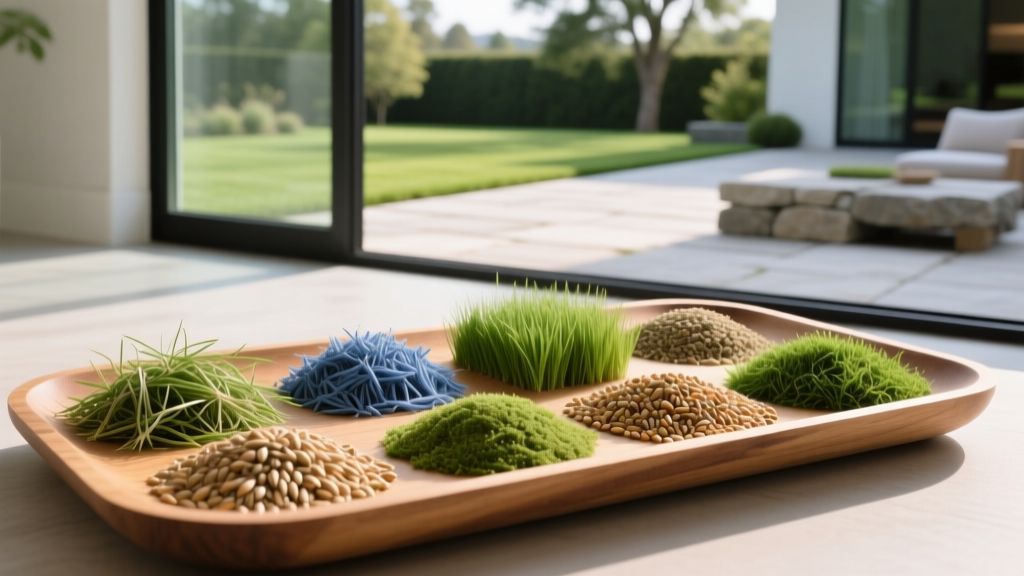
Seeding Straw for New Lawns: Types, Costs, and Application Guide
The Science of Seed-to-Soil Contact and Moisture Retention
Grass seed germination is a race against evaporation. Whether you are establishing a cool-season tall fescue lawn or a warm-season bermudagrass yard, the seed must remain consistently moist for 7 to 21 days. Bare soil exposed to direct sunlight and wind forms a hydrophobic crust within hours, halting germination and killing emerging radicles. Applying seeding straw creates a microclimate at the soil surface. It reduces soil surface temperature by up to 10°F, cuts evaporation rates by 60%, and physically shields vulnerable seeds from foraging birds and wind displacement.
According to University of Minnesota Extension turfgrass specialists, a proper layer of mulch is non-negotiable for slope establishment and high-sand topsoil mixes, which drain too rapidly to hold surface moisture without a protective cover.
The 4 Best Types of Seeding Straw (And What to Avoid)
Not all bales at the garden center are created equal. The term 'straw' refers to the dry stalks left over after a grain crop is harvested. Here is how the primary options break down for lawn establishment:
1. Wheat Straw (The Gold Standard)
Wheat straw is the industry standard for lawn seeding. It is relatively weed-free because the wheat is harvested before most weeds go to seed, and the threshing process removes the grain. It breaks down slowly, providing 6 to 8 weeks of coverage—exactly the timeframe needed for most cool-season grasses to establish. In 2026, expect to pay between $8 and $14 per standard square bale depending on your region and local agricultural yields.
2. Oat Straw
Oat straw is highly absorbent and provides excellent moisture retention. However, it carries a higher risk of introducing weed seeds (like wild oats) into your new lawn. It is a viable secondary option if wheat straw is unavailable, but you should plan for a targeted pre-emergent herbicide application 60 days after your grass has fully established.
3. Barley Straw
Barley straw is slightly more alkaline than wheat or oat straw. It is an excellent choice if you are seeding in highly acidic soils (pH below 5.5) and want a mulch that will mildly buffer the surface pH as it decomposes. It is less common in retail stores and usually requires sourcing directly from local feed stores or agricultural suppliers.
4. Pine Straw (Longleaf or Slash Pine)
Pine straw (often called pine needles) does not mat down like agricultural straw, making it superior for steep slopes where water runoff is a concern. It is highly acidic, making it ideal for lawns in the Southeastern US where soils are naturally alkaline, or when establishing acid-loving groundcovers. It decomposes very slowly, often lasting a full year.
Straw Type Comparison Matrix
| Straw Type | Avg Cost per Bale (2026) | Weed Seed Risk | Best Application Scenario | Decomposition Rate |
|---|---|---|---|---|
| Wheat Straw | $8 - $14 | Very Low | Flat to moderate slopes, standard lawns | 6 - 8 weeks |
| Oat Straw | $7 - $12 | Moderate | High-moisture needs, flat terrain | 4 - 6 weeks |
| Barley Straw | $9 - $15 | Low | Acidic soil correction, rural properties | 6 - 8 weeks |
| Pine Straw | $6 - $10 | None | Steep slopes, erosion control, SE USA | 12+ months |
Calculating Coverage: The Math Behind the Bales
The most common mistake homeowners make is buying too little straw, resulting in patchy germination, or applying too much, which suffocates the seedlings. A standard square bale of wheat straw weighs between 40 and 60 pounds.
- Target Coverage Rate: 1 bale per 1,000 square feet.
- Visual Metric: You should still be able to see roughly 40% to 50% of the bare soil through the straw layer. If the soil is completely hidden, the layer is too thick.
- Depth Equivalent: A properly applied bale over 1,000 sq ft yields a loose depth of about 1/4 to 1/2 inch.
For a standard 5,000 sq ft suburban front yard, you will need exactly 5 bales. Always buy one extra bale to account for wind-scattered areas or thin spots that require patching later in the season.
CRITICAL WARNING: Never Use Hay for Seeding
Hay and straw are not interchangeable. Hay is cut green, cured, and baled specifically for livestock feed. It contains the nutrient-rich seed heads of grasses and legumes. If you spread hay over your new lawn, you are actively planting thousands of agricultural weed seeds (like ryegrass, clover, and timothy) that will aggressively outcompete your expensive turfgrass seed. Straw is the hollow, nutrient-depleted stalk left behind after the grain is removed. Always verify the label says 'Straw' before loading your truck.
Step-by-Step Application Technique
Proper application prevents 'matting'—a condition where wet straw clumps together, forming an impermeable barrier that blocks sunlight and traps fungal pathogens against the soil surface.
- Wait for the Right Conditions: Apply seeding straw immediately after sowing your seed and performing your initial light watering. Do not apply on days with sustained winds over 10 mph.
- Cut the Twine: Use a utility knife to cut the binding twine. Remove the twine completely to prevent it from tangling in your mower blades weeks later.
- The 'Shake and Flick' Method: Grab a handful of straw (about the size of a grapefruit). Shake it loosely in your hands to separate the compressed stalks, then flick your wrist upward and outward, scattering it into the air so it drifts down evenly.
- Walk Backwards: Walk backward over your seeded area to avoid stepping on the freshly applied straw and seed, which can press the seed too deeply into the soil or create bare footprints.
- Secure on Slopes: If your lawn has a grade steeper than 15%, standard straw will wash away in the first heavy rain. Use USDA NRCS recommended straw wattles or biodegradable jute netting pinned over the straw to lock it in place.
Seeding Straw vs. Hydromulch and Peat Moss
While seeding straw is the most cost-effective option, it is not the only mulch available for establishment. Here is how it compares to premium alternatives:
- Hydromulch (Hydroseeding): A slurry of wood fiber, tackifier, and seed sprayed via hose. Excellent for large, steep commercial properties. Cost: $0.15 - $0.30 per sq ft. Overkill and too expensive for standard residential flat lawns.
- Peat Moss: Excellent moisture retention and completely weed-free. However, it is hydrophobic when dry, expensive ($15+ per 3 cu ft bale), and harvesting it raises significant environmental concerns regarding peat bog depletion.
- Penn Mulch (Recycled Paper): Sold in bags as pelletized paper mulch. Expands when wet. Very clean and easy to apply on small patch jobs, but lacks the structural aeration of physical straw stalks, leading to a higher risk of surface crusting.
The Nitrogen Tie-Up Myth: Do You Need to Remove It?
A pervasive myth in lawn care forums is that straw mulch will 'rob' your soil of nitrogen as it decomposes, requiring you to rake it up once the grass sprouts. This is fundamentally incorrect.
'The carbon-to-nitrogen (C:N) ratio of wheat straw is high, often around 80:1. When incorporated into the soil, microbes will indeed tie up available nitrogen to break down that carbon. However, when left on the surface as a mulch, decomposition occurs via a completely different fungal pathway at the soil-air interface. The nitrogen tie-up is restricted to the top millimeter of the soil and does not affect the root zone of your establishing turfgrass.'
— Adapted from Colorado State University Extension Turfgrass Management Guidelines
The Verdict: Do not rake up your seeding straw. Raking will tear out the fragile, newly established root systems of your germinated grass seed. Simply let it decompose naturally. As your grass grows, it will push up through the straw, and your first mowing (once the grass reaches 3 inches) will chop the remaining brittle straw into tiny pieces that will filter down into the soil profile, adding valuable organic matter to your new lawn.

