
Grass Types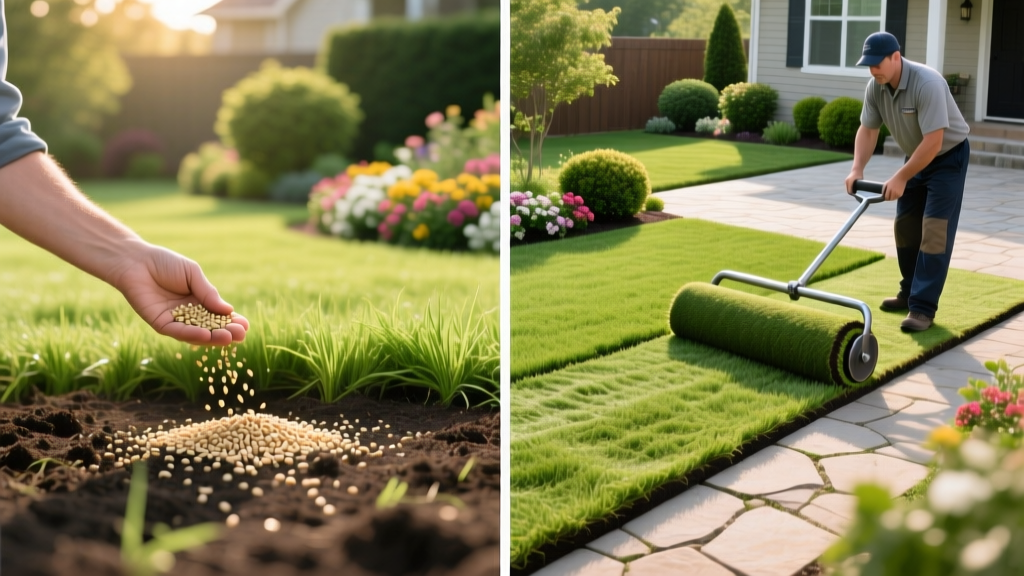
Seeding vs Sod: Cost, Timeline, and Establishment Guide
The Core Dilemma: Genetic Potential vs. Instant Gratification
Choosing between seeding vs sod is rarely just about budget; it is a fundamental decision about lawn genetics, site conditions, and your personal timeline. While sod offers an immediate aesthetic payoff, high-quality seed provides access to elite, disease-resistant cultivars that local sod farms simply cannot match. According to University of Minnesota Extension, the success of either method hinges entirely on soil preparation, yet the long-term performance diverges based on the genetic diversity of the grass you install.
Quick Decision Framework
- Choose Seed If: You want elite NTEP-rated cultivars, have a sloped yard, are on a strict budget, or are establishing a cool-season lawn in early fall.
- Choose Sod If: You need immediate erosion control, are installing in late spring/summer, have high foot-traffic needs within 30 days, or are patching small, specific areas.
The Financial Breakdown: Seeding vs Sod Costs
Pricing for turfgrass materials and labor has shifted significantly. Below is a realistic cost matrix per 1,000 square feet for a standard residential installation, factoring in 2026 material and regional labor averages.
| Cost Factor | Premium Seed Blend | Hydroseeding | Professional Sod Install |
|---|---|---|---|
| Material Cost | $45 - $85 | $120 - $180 | $450 - $750 |
| Soil Prep & Amendments | $150 - $250 | $150 - $250 | $150 - $250 |
| Labor / Installation | $50 - $100 (DIY/Light) | $200 - $350 | $300 - $500 |
| Starter Fertilizer & Mulch | $40 - $60 | Included | $30 - $50 |
| Total per 1,000 sq ft | $285 - $495 | $470 - $780 | $930 - $1,550 |
Note: Sod pricing fluctuates heavily based on proximity to the farm. Transporting heavy pallets of sod (approx. 2,500 lbs per 500 sq ft) incurs severe freight surcharges beyond a 50-mile radius.
Timeline and Establishment: When Can You Walk on It?
The most common misconception in turf establishment is that sod is instantly usable. While it looks mature on day one, its root system has been severed at the farm. It must regenerate roots into your native soil before it can withstand traffic.
Seed Germination and Maturation
- Perennial Ryegrass: Germinates in 5-7 days; light traffic ready in 6-8 weeks.
- Tall Fescue: Germinates in 7-12 days; light traffic ready in 8-10 weeks.
- Kentucky Bluegrass (KBG): Germinates in 14-28 days; requires 12-16 weeks for safe foot traffic.
Sod Rooting (Knitting)
Sod requires 14 to 21 days of strict, daily moisture management to "knit" (anchor roots into the topsoil). However, full structural integrity for heavy use (like dogs running or children playing) takes 6 to 8 weeks. Walking on un-knitted sod causes the seams to shift, tearing the fragile new root hairs and creating permanent dead strips.
Soil Preparation: The Non-Negotiable Baseline
According to Penn State Extension, 90% of establishment failures for both seed and sod trace back to inadequate soil prep. You cannot bypass this step regardless of the method chosen.
Universal Prep Protocol (Both Methods)
- Kill Existing Vegetation: Apply a non-selective herbicide (like glyphosate) or use solarization. Wait 10-14 days for complete die-off.
- Grade and Drain: Ensure a minimum 2% slope away from foundations. Use a landscaping rake to eliminate low spots where water will pool.
- Amend and Till: Spread 1 cubic yard of screened, aged compost per 1,000 sq ft. Rototill to a depth of 4 to 6 inches. This breaks up compaction and integrates organic matter.
- Firm the Seedbed: Use a lightweight water-filled lawn roller to firm the soil. This prevents footprints and uneven settling later.
Where the Methods Diverge
For Seed: You must rake the top 1/4 inch of soil to create micro-grooves for seed-to-soil contact. After spreading seed, apply a thin layer of peat moss or straw mulch (1 bale per 1,000 sq ft) to retain moisture and protect from birds.
For Sod: The soil must be left 1/2 inch lower than adjacent hardscapes (driveways, sidewalks) so the sod thickness sits perfectly flush once laid. Apply a high-phosphorus starter fertilizer (e.g., 10-18-10) directly to the bare soil immediately before unrolling the sod.
Grass Species Availability: Cultivar Quality
This is where seed holds a massive, often overlooked advantage. Local sod farms typically grow "commodity" grasses—older, generic Kentucky Bluegrass or basic Tall Fescue blends that establish quickly in farm fields but lack modern disease resistance.
When buying seed, you can select specific cultivars rated highly by the National Turfgrass Evaluation Program (NTEP). For example, choosing an elite Tall Fescue blend containing 'Titan Ultra' or 'Firenza II' provides built-in resistance to Brown Patch and deep drought tolerance. You simply cannot buy these elite genetics in sod form unless you contract a specialty farm months in advance and pay a massive premium.
Common Establishment Failure Modes
Understanding how these methods fail will help you proactively mitigate risks during your installation.
Seed Failure Modes
- Washout on Slopes: Heavy rain will wash seed and topsoil into drainage ditches. Fix: Use hydromulch or pin down biodegradable erosion control blankets on any slope greater than 15%.
- Desiccation: Seedlings die if the top 1/2 inch of soil dries out even once during the first 21 days. Fix: Program irrigation for 3 to 4 light, 5-minute cycles per day rather than one deep soaking.
- Crusting: Clay soils form a hard crust that prevents delicate shoots from penetrating. Fix: Never skip the compost topdressing and mulch layers.
Sod Failure Modes
- Sod Shrinkage and Gapping: If sod dries out before knitting, the rolls shrink, leaving 1-inch gaps at the seams that fill with weeds. Fix: Butt the edges tightly together during installation and water immediately. Never leave seams exposed to midday sun.
- Air Pockets: Laying sod over uneven, un-rolled soil creates air gaps beneath the turf. The roots hit the air pocket and die, creating localized brown patches. Fix: Roll the newly laid sod with a water-filled roller to ensure intimate contact with the soil below.
- Layering (Stratification): Sod farms harvest with 1/2 inch of their native clay/soil attached. If laid over your sandy loam, this creates a textural discontinuity that blocks water movement. Fix: Score the bottom of the sod rolls with a rake before laying, or ensure your topsoil amendment heavily bridges the textural gap.
Expert Insight: If you are installing a warm-season grass like Zoysia or Bermuda in late spring, sod is almost always the superior choice. Warm-season seeds have erratic germination rates and require soil temperatures consistently above 70°F, making sod the much more reliable establishment method for these specific species.
Final Verdict: Matching Method to Your Landscape
There is no universal winner in the seeding vs sod debate; the correct choice depends entirely on your site parameters. If you have a heavily shaded yard with complex tree root competition, seed allows you to customize a shade-tolerant fine fescue blend that adapts to the microclimate. If you are dealing with a steep, sunny bank prone to immediate erosion, or you need a playable surface for an upcoming event, the premium paid for sod is a justifiable investment in instant stabilization. Evaluate your soil, define your timeline, and select the genetics that will thrive in your specific hardiness zone.

