Grass Types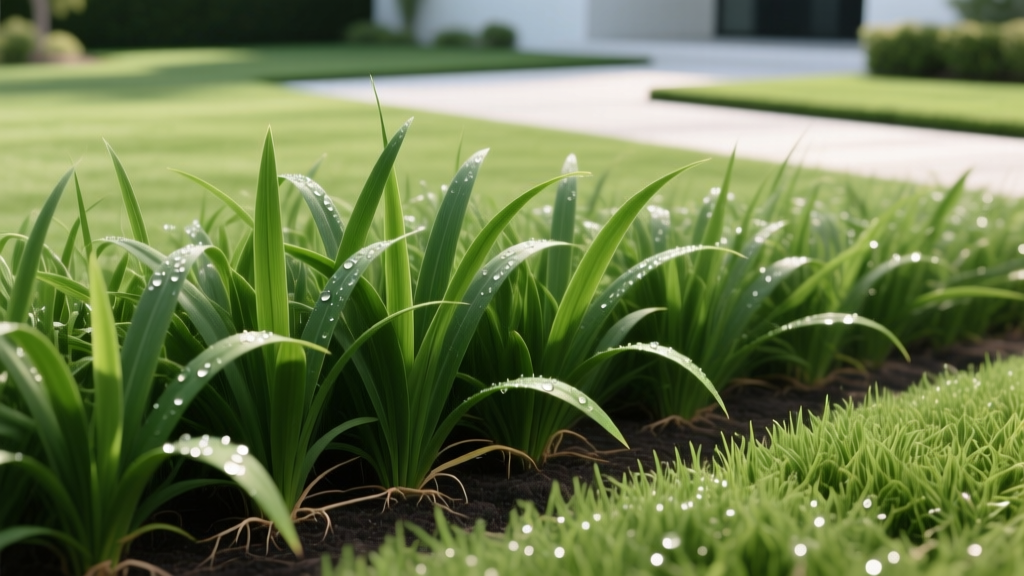
Seville St Augustine Grass Care: Planting, Mowing & Maintenance
The Anatomy of Seville: A Dwarf Cultivar Profile
Seville St Augustine grass (Stenotaphrum secundatum 'Seville') is a semi-dwarf cultivar engineered for homeowners who demand a finer, denser turf in challenging shaded environments. Unlike standard St. Augustine varieties that produce coarse, wide blades and aggressive above-ground stolons, Seville features a compact growth habit, narrower leaf blades, and a distinctly darker emerald-green hue. According to turfgrass research from the University of Florida IFAS, Seville's primary advantage is its superior shade tolerance, thriving in areas receiving only 4 to 5 hours of filtered sunlight daily. However, this dense, low-growing morphology makes it highly susceptible to thatch accumulation and requires a more rigorous maintenance protocol than traditional cultivars.
Cultivar Comparison Matrix: Seville vs. Market Alternatives
Before committing to Seville, evaluate its performance metrics against other leading warm-season St. Augustine cultivars currently dominating the 2026 sod market.
| Trait | Seville | Floratam | CitraBlue |
|---|---|---|---|
| Leaf Texture | Fine, narrow | Coarse, wide | Medium, uniform |
| Shade Tolerance | Excellent | Poor to Fair | Very Good |
| Optimal Mowing Height | 2.0 - 2.5 inches | 3.0 - 4.0 inches | 2.5 - 3.0 inches |
| Thatch Production | High | Moderate | Low to Moderate |
| Chinch Bug Resistance | Low | Low | High |
| Average Sod Cost (2026) | $0.75 - $0.95 / sq ft | $0.50 - $0.65 / sq ft | $0.65 - $0.85 / sq ft |
Establishment Protocols: Sodding vs. Plugging
Seville is rarely established via seed due to low seed viability and genetic instability; it must be vegetatively propagated. For residential lawns, you have two primary installation methods.
Sodding for Instant Coverage
Sodding is the preferred method for Seville, particularly on sloped terrain where erosion is a risk. Expect to pay between $0.75 and $0.95 per square foot for Seville sod in 2026, reflecting its specialized nursery cultivation. Prior to laying sod, till the top 4 inches of soil and incorporate a starter fertilizer with a high phosphorus content (e.g., 10-18-10) to stimulate rapid root development. Roll the sod lightly after installation to eliminate air pockets between the roots and soil.
Plugging for Budget-Conscious Yards
If you are overseeding an existing thin lawn or working with a strict budget, plant Seville plugs (typically 3-inch diameter) on 12-inch centers. At roughly $0.85 to $1.20 per plug, a 1,000-square-foot area requires about 100 plugs, costing under $120. Note that Seville's lateral spread rate is slower than Floratam; expect 6 to 8 months for complete canopy closure when using the 12-inch spacing grid.
Precision Mowing and Thatch Management
The most common failure point for Seville lawns is improper mowing. Because it is a dwarf cultivar, homeowners often mistakenly scalp it. Conversely, allowing it to grow too tall leads to severe thatch.
- Target Height: Maintain Seville at exactly 2.0 to 2.5 inches. In heavily shaded areas under oak or pine canopies, increase the deck height to 2.5 inches to maximize the leaf surface area available for photosynthesis.
- Mower Selection: While standard rotary mowers work, Seville's finer texture yields a vastly superior, carpet-like finish when cut with a manual or motorized reel mower.
- The 1/3 Rule: Never remove more than one-third of the leaf blade in a single pass. If the grass reaches 3.5 inches, lower the deck gradually over three consecutive mowings.
Thatch Warning: Seville's dense stolon network rapidly deposits organic matter. If the thatch layer exceeds 0.5 inches, water and nutrients will fail to penetrate the soil profile. Perform vertical mowing (dethatching) in late May or early June when the grass is actively growing. Avoid dethatching in early spring while the turf is still emerging from winter dormancy.
Nutrient and Irrigation Frameworks
Seville requires a targeted nutritional approach, particularly regarding iron and nitrogen ratios. According to guidelines published by Texas A&M AgriLife Extension, St. Augustine grasses are highly prone to iron chlorosis in alkaline soils (pH above 7.0).
Fertilizer Schedule
- Early Spring (April): Apply a slow-release nitrogen fertilizer, such as Milorganite (5-2-0) or Scotts Turf Builder Southern Triple Action (26-0-13), at a rate of 1 lb of actual nitrogen per 1,000 square feet.
- Mid-Summer (July): If the turf exhibits yellowing between the leaf veins (chlorosis), bypass standard NPK fertilizers and apply a liquid chelated iron supplement (e.g., Southern Ag Chelated Liquid Iron) at 2 oz per 1,000 sq ft.
- Early Fall (September): Apply a winterizer formula high in potassium (e.g., 5-10-30) to harden the stolons against frost damage and improve spring green-up.
Irrigation Metrics
Seville's shallow root system demands frequent, precise watering. Apply 0.5 to 0.75 inches of water per irrigation session. Use a rain gauge or empty tuna cans placed across the lawn to measure output. In sandy soils, split this into two 0.25-inch applications per week to prevent deep percolation losses. Always water between 4:00 AM and 6:00 AM to minimize evaporation and reduce the dwell time of moisture on the leaf blades, which mitigates fungal pathogens.
Pest and Disease Troubleshooting
Seville's genetic makeup leaves it vulnerable to specific warm-season pests. Early identification is critical to prevent total canopy loss.
Southern Chinch Bug (Blissus insularis)
Symptoms: Expanding irregular patches of yellowing grass that turn brown and die, typically starting in the hottest, sunniest areas of the lawn near driveways or sidewalks.
Action: Part the grass at the margin of the dead zone and look for tiny black insects with white diamond-shaped wings. Treat immediately with a liquid bifenthrin application (e.g., Bifen XTS) at the label rate for turf, followed by a heavy irrigation to wash the chemical into the thatch layer where the nymphs reside.
Brown Patch Fungus (Rhizoctonia solani)
Symptoms: Circular patches of brown, blighted grass ranging from 1 to 5 feet in diameter, often featuring a dark 'smoke ring' border, primarily occurring in autumn when night temperatures drop to 60°F while daytime humidity remains high.
Action: Halt nitrogen fertilization immediately. Apply a systemic fungicide containing azoxystrobin (e.g., Scotts DiseaseEx) or propiconazole. Rotate active ingredients every 28 days to prevent fungal resistance.
Expert FAQ: Seville St Augustine Grass
Can Seville St Augustine survive full sun?
Yes, Seville can thrive in full sun, provided it receives adequate irrigation. However, in full-sun, high-heat environments (like USDA Zones 9 and 10), Seville requires more frequent watering than Floratam due to its shallower root depth. If your yard receives 8+ hours of direct, unfiltered sunlight, CitraBlue or Palmetto are more drought-resilient alternatives.
Why is my Seville grass turning pale green despite regular fertilization?
Pale green or yellowing Seville grass is almost always a symptom of iron deficiency caused by high soil pH locking up nutrients. Conduct a soil test. If your pH is above 7.2, apply elemental sulfur at 1 lb per 1,000 sq ft to gradually lower the pH, and use foliar liquid iron sprays for immediate cosmetic correction.
How do I fix bare spots under dense tree canopies?
If shade drops below 3 hours of direct sunlight, even Seville will thin out. Prune the lower limbs of your trees to a height of 8 to 10 feet to allow angled morning light to reach the turf. For areas where the canopy cannot be thinned, transition to a shade-tolerant groundcover like Asiatic jasmine or mondograss rather than fighting a losing battle with turfgrass.