Grass Types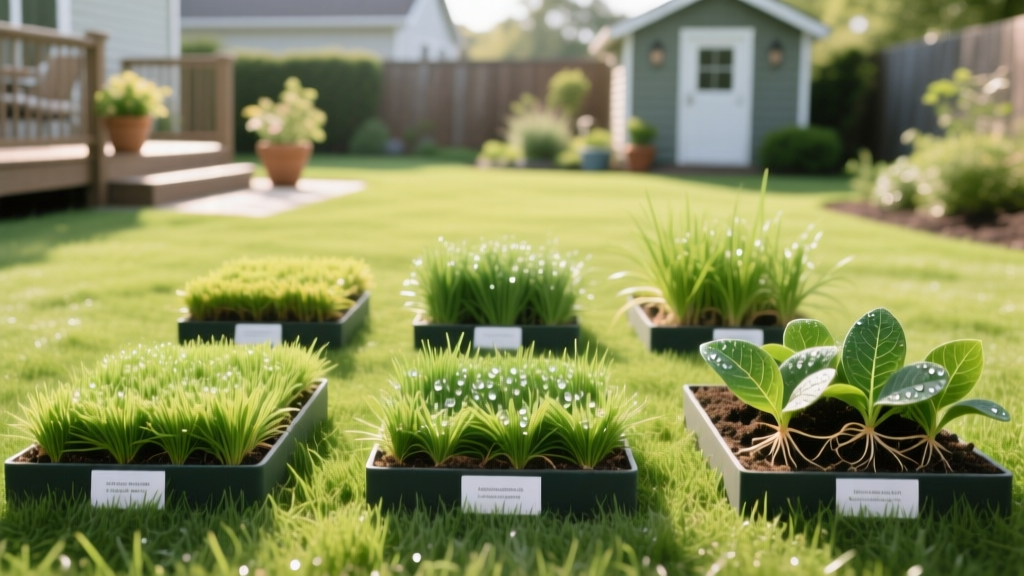
2026 Sod Cost Per SF Guide: Pricing by Grass Type & Region
The True Sod Cost Per SF in 2026
When budgeting for a new lawn, the base material price is only the starting point. In 2026, the average sod cost per sf for materials ranges from $0.35 to $0.85, depending heavily on the grass species, specific cultivar, and your geographic region. However, calculating your final project cost requires factoring in pallet logistics, soil preparation, and delivery fees. According to Angi's landscaping cost data, homeowners typically spend between $1.00 and $2.50 per square foot when combining materials with professional site preparation and installation.
This guide breaks down the exact pricing matrix for warm- and cool-season grasses, exposes the hidden fees that inflate your budget, and provides the mathematical formulas needed to order the correct pallet volume without suffering from costly shortages or waste.
Sod Pricing Matrix by Grass Species
Not all sod is priced equally. Standard utility grasses sit at the bottom of the pricing tier, while drought-tolerant, shade-resistant, or slow-growing cultivars command a premium. The table below outlines the 2026 material-only pricing for standard 400 to 500-square-foot pallets.
| Grass Type | Common Cultivars | Material Cost / SF | Avg. Pallet Price (450 SF) | Primary Use Case |
|---|---|---|---|---|
| Bermuda | Tifway 419, TifTuf | $0.35 - $0.85 | $157 - $382 | High-traffic, full-sun lawns |
| Zoysia | Meyer, Emerald, Zeon | $0.45 - $1.20 | $202 - $540 | Premium aesthetic, moderate shade |
| St. Augustine | Floratam, Palmetto | $0.40 - $0.90 | $180 - $405 | Coastal regions, high shade tolerance |
| Centipede | TifBlair, Common | $0.35 - $0.75 | $157 - $337 | Low-maintenance, acidic soils |
| Kentucky Bluegrass | Midnight, BlueNote | $0.35 - $0.70 | $157 - $315 | Northern climates, cold tolerance |
| Tall Fescue | RTF, Titan Ultra | $0.35 - $0.65 | $157 - $292 | Transition zones, deep root systems |
The Cultivar Premium: Why Variety Matters
Choosing a patented cultivar over a generic variety drastically alters your sod cost per sf. For example, standard Tifway 419 Bermuda might cost $0.40 per square foot, but Texas A&M AgriLife Extension notes that newer, highly drought-tolerant varieties like TifTuf Bermuda require significantly less water and often cost $0.75 to $0.90 per square foot. Similarly, while standard Meyer Zoysia is moderately priced, fine-bladed shade-tolerant varieties like Zeon Zoysia grow much slower, limiting farm supply and pushing prices above $1.00 per square foot.
Calculating Your Exact Order: The 10% Overage Rule
A critical mistake homeowners make is ordering the exact measured square footage of their yard. Sod is sold by the pallet (typically 400, 450, or 500 square feet, depending on the farm), and you will inevitably lose material to curves, tree rings, and cutting errors.
The Calculation Formula
- Measure: Break your lawn into basic rectangles and triangles. Calculate the area of each and sum them.
- Add Overage: Multiply your total square footage by 1.10 (10% overage) for standard rectangular yards. Multiply by 1.15 (15% overage) for yards with extensive curves, garden beds, or irregular borders.
- Divide by Pallet Size: Divide your adjusted total by the farm's pallet size (e.g., 450 SF). Always round up to the next full pallet.
If your yard measures 4,200 square feet, adding 10% brings your requirement to 4,620 square feet. If the local farm sells 450 SF pallets, you must order 11 pallets (4,950 SF total). The remaining 330 square feet can be used to patch thin areas or reinforce high-traffic zones.
Hidden Costs That Inflate Your Per-Square-Foot Budget
Focusing solely on the material sod cost per sf will lead to severe budget shortfalls. Professional installations and DIY projects alike must account for the following auxiliary expenses:
- Delivery Fees ($50 - $150+ per pallet): Sod is exceptionally heavy. A single 450 SF pallet of wet sod weighs between 2,000 and 3,000 pounds. Farms charge premium freight rates for flatbed delivery, and you may incur additional fees if the truck requires a liftgate or if the delivery address is in a restricted residential zone.
- Old Lawn Removal ($0.50 - $1.50 per SF): Before new sod can be laid, the existing turf must be stripped. Renting a sod cutter costs roughly $80 to $150 per day, plus the cost of a dumpster or municipal yard waste disposal fees.
- Soil Amendments & Grading ($0.15 - $0.35 per SF): Laying sod directly over compacted clay guarantees failure. You must till the soil to a depth of 4 to 6 inches and incorporate 1 to 2 inches of organic compost or screened topsoil. According to Forbes Home Improvement, professional grading and topsoil delivery can add thousands to a large project.
- Starter Fertilizer ($0.05 per SF): A high-phosphorus starter fertilizer (e.g., 10-18-10) is mandatory to stimulate rapid root development in the first 30 days.
Pallet Logistics and the Danger of "Pallet Burn"
Sod is a living, respiring organism. Once it is harvested and stacked on a wooden pallet, the grass in the center of the stack is deprived of sunlight and airflow. The anaerobic respiration and microbial activity inside the pallet generate intense heat.
Warning: The 24-Hour Thermophilic Threshold
If sod sits on a pallet for more than 24 hours without being unrolled, the internal temperature of the stack can exceed 140°F (60°C). This phenomenon, known as "pallet burn," literally composts the grass from the inside out. The center rolls will turn yellow, then gray, and emit a foul, silage-like odor. Rule of thumb: Never order sod until your soil preparation is 100% complete and your irrigation system is tested and operational. Lay the sod the exact same day it is delivered.
Regional Price Variations
Geography dictates both the species you can grow and the price you pay. In the Southeast, where Bermuda and Centipede farms are abundant, the sod cost per sf remains highly competitive, often hovering around $0.35 to $0.45 for standard varieties. Conversely, in the Northeast and Midwest, cool-season grasses like Kentucky Bluegrass are subject to higher farming overhead and shorter growing seasons, pushing material costs closer to $0.55 to $0.70 per square foot.
Furthermore, if you attempt to grow a non-native species in your region (e.g., ordering shade-tolerant St. Augustine in a transition zone where it will suffer winter kill), you will pay exorbitant long-distance freight charges, negating any perceived benefit of the cultivar. Always select grass species validated by your local university cooperative extension for your specific USDA Hardiness Zone.
DIY vs. Professional Installation Cost Breakdown
Installing sod yourself saves the labor markup, which typically ranges from $0.75 to $1.50 per square foot. However, DIY installation requires significant physical labor. A 5,000-square-foot lawn requires moving over 11 pallets, equating to roughly 27,000 pounds of material. You will need a wheelbarrow, a sod roller (rentable for $25-$50/day), and a team of at least three people to lay the grass before it dehydrates.
Professional installers guarantee the seams are tightly staggered (like brickwork) to prevent drying gaps, and they utilize commercial-grade sod rollers to ensure immediate soil-to-root contact, which is the single most critical factor in preventing the sod from shrinking and dying at the edges. If your yard features steep slopes exceeding a 15% grade, professional installation is highly recommended, as they will use biodegradable sod staples to anchor the turf against erosion before the roots can anchor themselves.