
Grass Types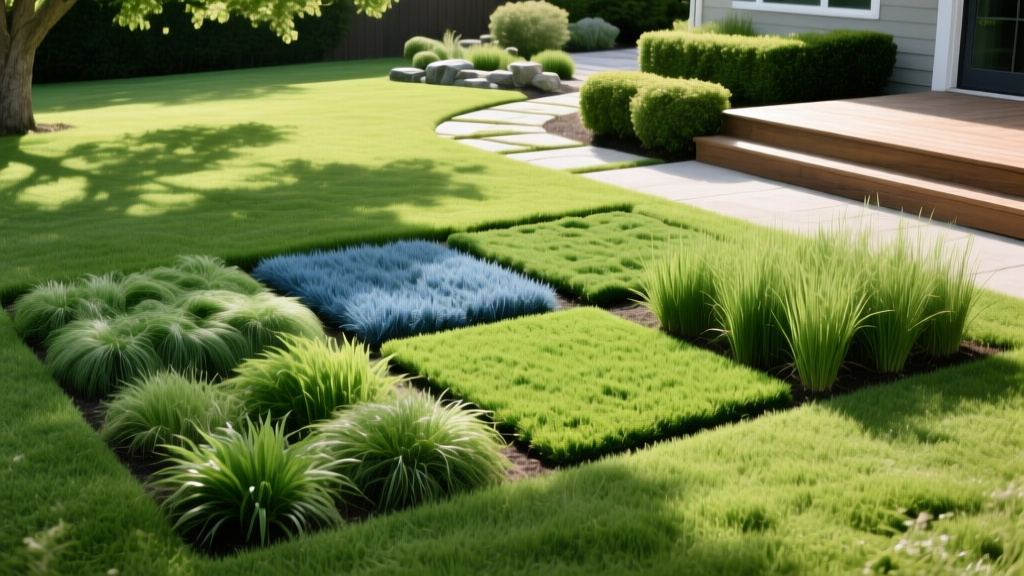
Average Sod Costs Per Square Foot in 2026: Grass Type & Installation Breakdown
The True Cost of Instant Lawns: 2026 Pricing Overview
When budgeting for a new lawn, homeowners often look strictly at the sticker price of the grass. However, establishing a turf via sod involves a complex matrix of material costs, freight logistics, and site preparation. As of 2026, the national average for sod costs per square foot ranges from $0.35 to $0.85 for materials alone. When factoring in professional installation, soil amendment, and site grading, the total project cost typically lands between $1.00 and $2.50 per square foot.
Understanding these variables is critical for accurate budgeting. A 5,000-square-foot yard will require approximately 11 to 13 standard pallets of sod, pushing material costs to $1,750–$4,250 before a single shovel hits the dirt. Below, we break down the exact pricing by turfgrass species, hidden logistical fees, and the agronomic steps required to ensure your investment takes root.
Base Sod Costs Per Square Foot by Grass Type
Turfgrass pricing fluctuates based on climate zone, cultivation difficulty, and patent royalties for proprietary cultivars. Warm-season grasses with high drought tolerance and dense stolon networks generally command a premium over standard cool-season bunchgrasses.
| Grass Type & Cultivar | Material Cost (Per Sq Ft) | Installed Cost (Per Sq Ft) | Standard Pallet Coverage | Primary Climate Zone |
|---|---|---|---|---|
| Bermuda ('TifTuf') | $0.45 - $0.65 | $1.20 - $1.80 | 450 sq ft | Warm / Transition |
| Zoysia ('Zeon' or 'Geo') | $0.60 - $0.85 | $1.50 - $2.50 | 400 sq ft | Warm / Transition |
| Kentucky Bluegrass (Blend) | $0.35 - $0.55 | $1.00 - $1.60 | 500 sq ft | Cool |
| Tall Fescue (TTTF Blend) | $0.35 - $0.50 | $1.00 - $1.50 | 500 sq ft | Cool / Transition |
| St. Augustine ('Palmetto') | $0.50 - $0.75 | $1.30 - $2.00 | 450 sq ft | Warm / Coastal |
Note: Proprietary cultivars like 'TifTuf' Bermuda or 'Zeon' Zoysia require licensed growers to pay royalties, which is directly passed to the consumer. Generic 'Common' Bermuda or standard KYB blends sit at the lower end of the pricing spectrum.
Hidden Costs of Sod Establishment
The per-square-foot material quote from a local sod farm rarely tells the whole story. To establish a viable root zone, you must account for the following site-specific variables.
1. Freight and Delivery Logistics
Sod is exceptionally heavy. A single 500-square-foot pallet of freshly harvested Kentucky Bluegrass can weigh between 1,500 and 3,000 pounds, depending on soil moisture content.
- Local Farm Pickup: If you have a heavy-duty trailer and a truck capable of towing 5,000+ lbs, you can avoid delivery fees. However, most farms charge a $50-$100 forklift loading fee.
- Flatbed Delivery: Expect to pay $100 to $350 per truckload (usually up to 12-15 pallets) for addresses within 30 miles of the farm.
- Curbside vs. Yard Drop: Standard delivery is curbside. If the driver needs to navigate a steep driveway or use a pallet jack to move the sod into your backyard, expect an additional $150-$250 'difficult access' surcharge.
2. Site Preparation and Old Turf Removal
You cannot lay sod over existing weeds or compacted clay. According to Penn State Extension, proper seedbed preparation is the single most critical factor in long-term turf survival.
- Sod Cutter Rental: Removing an existing lawn requires a gas-powered sod cutter. Rental costs average $90 to $120 per day. Disposal of the old turf at a local landfill adds $30 to $50 per ton in tipping fees.
- Rototilling and Grading: Tilling the top 4-6 inches of soil and laser-grading for a 2% slope away from your foundation costs $0.15 to $0.30 per square foot if hired out.
- Soil Amendments: A standard soil test ($20-$30) will dictate your needs. Most new construction sites require 1 inch of compost topdressing. At $40 per cubic yard, covering 5,000 square feet with 1 inch of compost requires roughly 15 cubic yards, adding $600 in material costs.
Expert Decision Framework: Sod vs. Seed
While sod costs per square foot are exponentially higher than seed (which averages $0.05 to $0.15 per square foot), sod is strictly required under specific conditions:
- Slopes greater than 20%: Seed will wash out during heavy rain before germination. Sod acts as an immediate erosion control blanket.
- Immediate Use Requirements: If the area needs to withstand foot traffic or pet use within 30 days, sod is the only viable option. Seed requires 8-12 weeks of strict no-traffic establishment.
- Late Season Planting: If you missed the optimal early-fall seeding window for cool-season grasses, laying dormant sod in late November is safer than risking seed frost-heave over winter.
Agronomic Establishment: The First 21 Days
Paying premium sod costs per square foot is a waste if the root zone fails to knit. The University of Minnesota Turfgrass Science program emphasizes that the transition from farm soil to native soil requires meticulous moisture management.
The 3-Phase Watering Protocol
New sod lacks a deep root system and relies entirely on the top 1.5 inches of soil moisture. Do not rely on standard '1 inch per week' rules during establishment.
- Days 1 to 10 (Root Initiation): Water 3 to 4 times daily for 10-15 minutes per zone. The goal is to keep the sod itself and the immediate soil interface constantly damp, but not waterlogged. If the sod edges begin to curl or turn grayish-blue, it is experiencing acute drought stress and needs immediate spot-watering.
- Days 11 to 21 (Root Penetration): Reduce frequency to twice daily, but increase duration to 20 minutes. This encourages roots to chase the moisture deeper into the native soil profile. Perform a 'tug test' on day 14; if the sod resists lifting, the stolons and rhizomes have successfully anchored.
- Day 22+ (Deep Conditioning): Transition to standard deep-and-infrequent watering. Apply 0.5 inches of water twice a week, ideally in the early morning (between 4:00 AM and 8:00 AM) to minimize evaporation and fungal pathogens like Pythium blight.
Fertilization and Soil pH
Most sod farms harvest their turf with a high-nitrogen, slow-release fertilizer coating. Therefore, applying a heavy starter fertilizer immediately upon installation is redundant and can burn the shallow new roots. Instead, focus on soil pH. Turfgrasses require a pH between 6.0 and 7.0 to access soil-bound phosphorus. If your soil test reveals a pH below 5.8, apply pelletized lime at a rate of 50 lbs per 1,000 square feet before laying the sod. For comprehensive regional turfgrass guidelines, consult the Texas A&M AgriLife Extension turfgrass database.
Frequently Asked Questions
How long does sod last on a pallet before it dies?
During peak summer temperatures (above 85°F), sod can begin to compost and die in the center of the pallet within 24 to 36 hours due to trapped heat and nitrogen release. In cooler spring or fall weather, it can survive 5 to 7 days on the pallet. Always schedule delivery for the exact morning you plan to install.
Should I put topsoil down before laying sod?
Yes, but avoid fine, screened topsoil that lacks organic matter. A loamy topsoil mixed with 20% compost is ideal. Apply a 1-to-2-inch layer and lightly compact it with a lawn roller before laying the sod to prevent future settling and uneven depressions.
Can I lay sod directly over existing grass?
No. Laying sod over existing turf creates a barrier of decaying organic matter that prevents the new sod's roots from penetrating the native soil. It also traps moisture, inviting fungal diseases and root rot. You must strip the old lawn or till it completely into the subsoil.

