Grass Types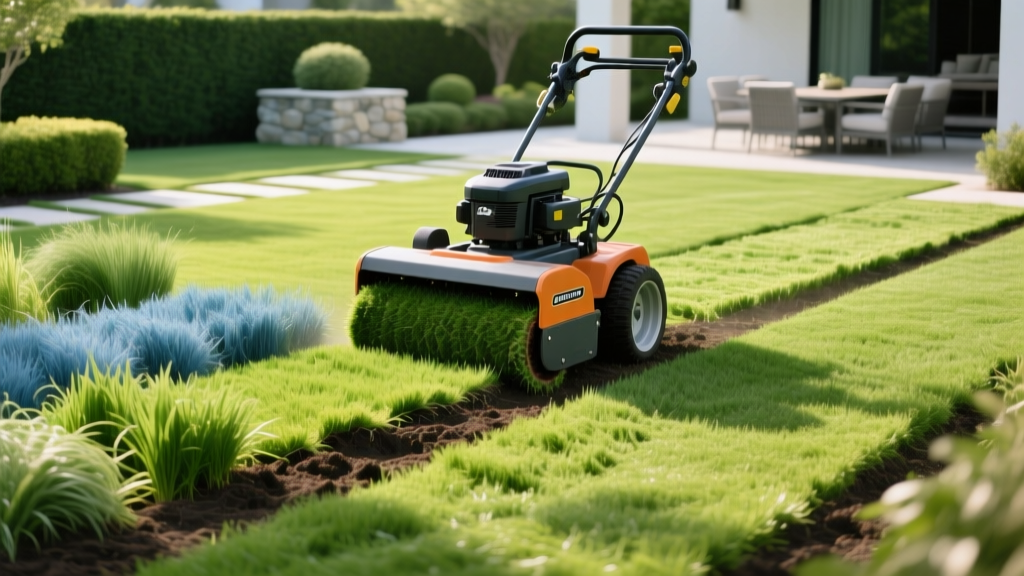
Sod Cutters: Choosing the Right Machine That Removes Sod
Why Use a Sod Cutter Instead of a Tiller?
When establishing a new lawn from seed, the seedbed is everything. Many homeowners mistakenly use a rototiller to break up old, failing grass before overseeding or planting new turf. Tilling brings dormant weed seeds to the surface, creates an uneven, fluffy soil profile that settles unpredictably, and leaves behind a tangled mat of old roots that prevents new seed-to-soil contact.
The professional alternative is utilizing a machine that removes sod (commonly known as a sod cutter). This equipment slices horizontally beneath the turf canopy, cleanly separating the grass, thatch, and upper root zone from the topsoil. The result is a firm, level, and weed-free mineral soil base that is immediately ready for core aeration, soil amendment, and precise seed establishment.
The Mechanics of Sod Removal: Oscillating vs. Rotary Blades
To operate a sod cutter effectively, you must understand how the blade interacts with the soil profile. Most walk-behind machines that remove sod utilize an oscillating blade rather than a spinning rotary blade.
- Oscillating Blades: The blade moves rapidly back and forth in a tight, horizontal arc (usually 15 to 20 degrees). This shearing action cleanly slices roots without tearing the soil structure. It requires less horsepower and leaves a smooth, compacted subgrade.
- Rotor-Driven Cutters: Found on heavy commercial PTO units, these use a continuous spinning rotor with cutting teeth. They are aggressive and designed for cutting thick, mature sod for harvesting and resale, rather than prepping a residential seedbed.
For 95% of residential lawn renovations, a walk-behind oscillating sod cutter is the correct tool. According to turfgrass renovation guidelines from the University of Minnesota Extension, removing the existing turf canopy completely is the most reliable method for eliminating competitive weeds before introducing new cool-season or warm-season grass cultivars.
Equipment Comparison: Which Machine Fits Your Project?
Selecting the right equipment depends on your total square footage, soil type, and budget. Below is a comparison of the primary machines available in 2026 for turf removal.
| Machine Type | Example Model | Cutting Width | Best Application | Estimated 2026 Cost |
|---|---|---|---|---|
| Walk-Behind Gas (Hydrostatic) | Billy Goat SC182H | 18 inches | Residential yards (1,000 - 5,000 sq ft) | $140 - $180 / day (Rental) |
| Walk-Behind Gas (Manual Drive) | Ryan Renovation Pro | 12 - 16 inches | Tight spaces, narrow gates, budget DIY | $90 - $120 / day (Rental) |
| Tractor PTO Attachment | Land Pride SGC1560 | 60 inches | Large estates, rural properties (>1 acre) | $3,200+ (Purchase) |
| Skid Steer Attachment | Toro Dingo / Harley Rake | 48 inches | Commercial sites, new construction grading | $250 - $350 / day (Rental) |
Note: While battery-powered commercial outdoor equipment is expanding rapidly in 2026, high-torque sod cutting still heavily relies on gas engines (like the Honda GX series) or heavy machinery PTO systems due to the immense resistance of slicing through dense root mats and clay.
⚠️ CRITICAL WARNING: Subsurface Utilities
Before operating any machine that removes sod, you must call 811 to have public utility lines marked. However, 811 does not mark private lines. You are responsible for locating shallow private irrigation drip lines, low-voltage landscape lighting wires, and invisible dog fences. A sod cutter blade operating at 2 inches deep will instantly sever a 1/2-inch poly irrigation line, causing severe water damage and costly repairs. Use a private line locator or manually probe the perimeter with a fiberglass rod before cutting.
Step-by-Step Calibration and Cutting Technique
Renting the equipment is only half the battle. Improper calibration will either leave roots behind or strip away valuable topsoil, ruining your seedbed. Follow these exact parameters for standard lawn renovation:
- Mow Extremely Low: Set your lawn mower to its lowest deck height (usually 1 to 1.5 inches) and bag the clippings. This reduces the physical drag on the sod cutter and prevents the grass canopy from jamming the machine's deflector.
- Water Lightly: If the soil is bone-dry and hard-baked, water the lawn lightly 24 hours prior. The soil should be moist, not muddy. Mud will clog the cutter's tracks and cause the blade to bind.
- Set the Blade Depth: Adjust the depth gauge to 1.5 inches. This is the industry sweet spot. It cuts just below the crown and thatch layer, leaving the nutrient-rich topsoil intact. Cutting deeper than 2 inches removes topsoil and makes the resulting sod rolls incredibly heavy (up to 40 lbs per square foot) and difficult to dispose of.
- Set the Blade Angle: Tilt the blade to a 15 to 20-degree downward angle. This creates a shearing effect rather than a digging effect.
- Execute the Passes: Drive the machine in straight, continuous lines. Overlap each subsequent pass by exactly 1 inch to ensure no strips of grass are left uncut. If the machine bogs down, do not force it; raise the depth gauge by 0.25 inches, make the pass, and then lower it for a second cleanup pass.
Post-Removal Soil Prep for Seed Establishment
Once the old sod is rolled up and removed, you will be left with bare soil. Do not broadcast seed immediately. The tracks of the sod cutter, combined with the shearing action of the blade, often leave behind a slick, compacted layer of clay or silt known as a 'glaze.' Seed placed on this glaze will wash away or fail to establish roots.
To prepare the bare soil for seed:
- Scarify the Surface: Use a heavy-duty bow rake or a powered dethatcher (with blades raised to just scratch the surface) to break up the top 1/4 inch of compacted soil. This creates micro-furrows for seed to settle into.
- Core Aerate (Optional but Recommended): Running a core aerator over the bare soil pulls plugs and fractures the compaction caused by the sod cutter's weight, drastically improving water infiltration and deep root growth for your new grass.
- Amend and Grade: Spread a thin layer (1/4 inch) of screened compost over the scarified soil to introduce organic matter and beneficial microbes before seeding.
For more detailed protocols on seeding bare soil after turf removal, consult the turfgrass establishment guides provided by the University of Minnesota Turfgrass Science program or your local cooperative extension.
Cost Analysis: DIY Rental vs. Professional Removal
Is it worth renting a machine that removes sod yourself, or should you hire a landscape contractor? The math depends heavily on your physical capability and disposal logistics.
| Cost Factor | DIY Rental (5,000 sq ft) | Professional Service (5,000 sq ft) |
|---|---|---|
| Equipment / Labor | $160 (1-day rental + gas) | $1,000 - $1,500 ($0.20 - $0.30/sq ft) |
| Disposal / Hauling | $150 (Dumpster bag or landfill fees) | Included in contractor quote |
| Time Investment | 8 - 12 hours (cutting, rolling, hauling) | 2 - 3 hours (crew of 3) |
| Total Estimated Cost | $310 + physical labor | $1,000 - $1,500 |
If you are physically capable of lifting 50-pound rolls of sod and have access to a truck or trailer for disposal, the DIY route saves roughly $1,000. However, if your site has steep slopes, narrow gate access (under 36 inches), or you lack disposal logistics, hiring a professional with a mini-skid steer is the safer, more efficient investment.
Frequently Asked Questions
Can I use a sod cutter on uneven, bumpy terrain?
Sod cutters require relatively flat ground to maintain a consistent 1.5-inch depth. If your lawn has severe undulations, the cutter will scalp the high spots and miss the low spots. For highly uneven terrain, it is better to use a non-selective herbicide to kill the existing grass, followed by heavy scarification, rather than attempting mechanical removal.
What do I do with the removed sod?
Do not leave it on the property to rot; it will smother your new seedbed and harbor pests. You can stack it in a corner of your property (grass-side down) to compost into topsoil over 12-18 months, give it away on local community boards to people filling low spots, or haul it to a municipal green-waste landfill.
Will a sod cutter remove deep-rooted weeds like Dandelion or Bermudagrass?
A sod cutter set to 1.5 inches will remove the crown and upper taproot of most weeds, effectively eliminating them from the seedbed. However, aggressive rhizomatous grasses like Bermudagrass or deep-rooted perennials may have roots extending below 3 inches. In these cases, mechanical removal must be paired with a systemic herbicide application weeks prior, or you risk the weeds regenerating from the deep root fragments left in the subsoil.