
Grass Types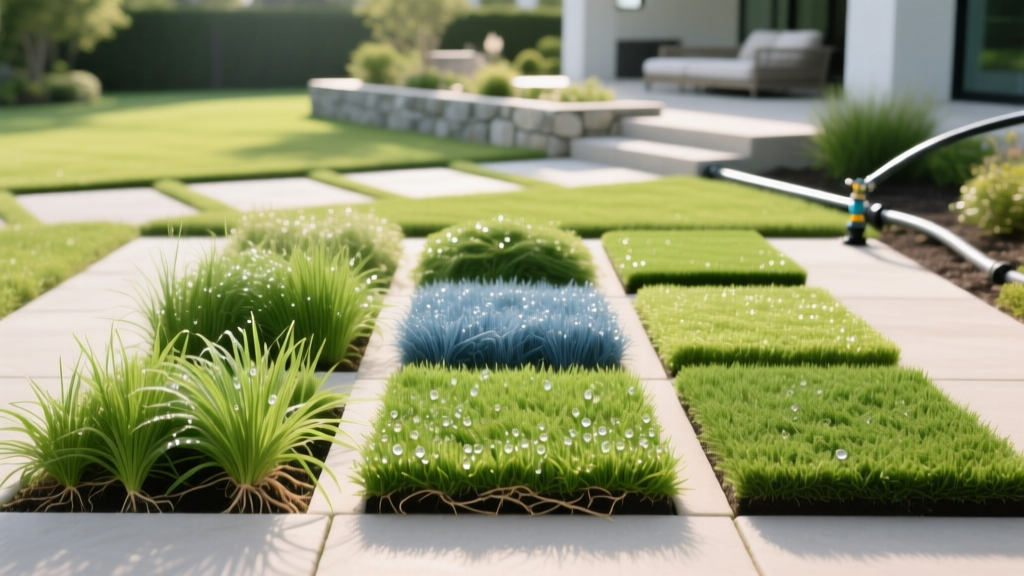
The True Cost of Sod and Installation in 2026: Price Breakdown
The national average cost of sod and installation in 2026 ranges from $1.75 to $3.50 per square foot, placing a standard 5,000-square-foot residential lawn project between $8,750 and $17,500. However, quoting a single average obscures the massive price variations driven by turfgrass cultivar selection, site topography, and soil remediation requirements. Professional landscape contractors price jobs based on material procurement, heavy equipment access, and the specific rooting characteristics of the chosen grass species.
This guide dismantles the pricing structure of sod installation, providing exact per-square-foot costs, pallet coverage mathematics, and the hidden site-prep expenses that routinely inflate final invoices by 30% or more.
The Core Numbers: Material vs. Labor Breakdown
Understanding your invoice requires separating the biological material from the physical labor. Sod farms price their product by the pallet, while installation crews price their labor by the square foot or hourly minimums.
| Cost Component | Low-End Estimate | High-End Estimate | Primary Cost Drivers |
|---|---|---|---|
| Sod Material | $0.35 / sq ft | $1.10 / sq ft | Grass species, cultivar rarity, farm distance |
| Site Preparation | $0.50 / sq ft | $2.00 / sq ft | Old turf removal, grading, soil amendment |
| Labor (Installation) | $0.75 / sq ft | $1.50 / sq ft | Yard accessibility, slope steepness, crew size |
| Delivery & Logistics | $150 flat | $400 flat | Fuel surcharges, Moffett forklift requirement |
Grass Type Price Matrix: Cool-Season vs. Warm-Season
Not all sod is priced equally. Warm-season grasses that require vegetative propagation (sprigging or plugging at the farm level before harvesting as sod) command a premium over cool-season grasses grown from seed. According to turfgrass researchers at NC State University, the genetic purity and disease resistance of patented cultivars also dictate wholesale farm pricing.
Warm-Season Cultivars (High Traffic & Drought Tolerance)
- TifTuf Bermuda: $0.60 - $0.85 per sq ft. Known for superior drought tolerance, requiring 38% less water than traditional Bermuda varieties.
- Zeon Zoysia: $0.85 - $1.15 per sq ft. A fine-bladed, shade-tolerant Zoysia that grows slowly, meaning farms must hold the crop longer before harvest, increasing overhead.
- EMPIRE Zoysia: $0.65 - $0.90 per sq ft. A wider-bladed, highly durable option for southern climates with heavy clay soils.
Cool-Season Cultivars (Northern Climates & Transition Zones)
- Midnight Kentucky Bluegrass: $0.45 - $0.65 per sq ft. Features a dark blue-green hue and aggressive rhizome spread for self-repairing lawns.
- RTF (Rhizomatous Tall Fescue): $0.40 - $0.60 per sq ft. Deep-rooted and bunch-forming, ideal for transition zones where summer heat stresses traditional bluegrass.
- Perennial Ryegrass Mix: $0.35 - $0.50 per sq ft. The most economical option, germinating rapidly but lacking long-term drought survivability without heavy irrigation.
Calculating Exact Coverage and Pallet Requirements
Sod is harvested and shipped on standard wooden pallets, but the square footage per pallet varies by region and farm equipment. In the Southeast, pallets typically cover 400 square feet (often cut as 16x24 inch pieces). In the Midwest and West, pallets frequently cover 500 square feet (often rolled).
The 10% Overage Rule
Never order the exact square footage of your lot. Curved garden beds, irregular property lines, and cutting around sprinkler heads generate unavoidable waste. Always calculate your base area and add a 10% overage buffer. If your yard measures 4,200 sq ft, order for 4,620 sq ft. Assuming 400 sq ft pallets, you will need 11.55 pallets. Round up to 12 pallets to prevent project delays from partial-load delivery shortages.
Hidden Site Prep Costs That Destroy Budgets
The most frequent cause of budget overruns in sod installation is inadequate site preparation. Laying sod over compacted, unamended soil guarantees shallow root establishment and inevitable turf failure within 18 months. The UC Davis Integrated Pest Management program emphasizes that proper soil grading and amendment are non-negotiable for long-term lawn health.
Common Line-Item Additions
- Old Turf Removal (Sod Cutting): $1.25 to $2.00 per sq ft. Using a mechanical sod cutter to strip dead grass and weeds down to the bare soil.
- Rototilling and Debris Hauling: $0.40 to $0.75 per sq ft. Breaking up compacted subsoil to a depth of 4-6 inches and removing exposed rocks or roots.
- Topsoil and Compost Amendment: $0.30 to $0.60 per sq ft. Spreading a 2-inch layer of screened loam or organic compost to improve cation exchange capacity (CEC) and water retention.
- Finish Grading: $0.25 to $0.50 per sq ft. Raking the soil to ensure a 2% slope away from the home's foundation to prevent water intrusion and basement flooding.
DIY Installation vs. Professional Crews: A Financial Decision Tree
Deciding whether to install the sod yourself or hire a landscape contractor depends on your physical capability, timeline, and access to equipment. Sod is a perishable agricultural product; it must be laid within 24 to 48 hours of harvest to prevent the center of the pallet from composting and generating lethal heat (pallet burn).
- Choose DIY Installation IF:
- The project area is under 2,000 square feet (roughly 5 pallets).
- You have a flat, easily accessible yard with wide gates (minimum 48 inches) for wheelbarrow access.
- You can recruit 2-3 able-bodied helpers to lay the sod in a single afternoon.
- You are prepared to pay the $150-$300 flatbed delivery fee and manually unload 60-pound rolls of sod.
- Hire a Professional Crew IF:
- The project exceeds 3,000 square feet, requiring heavy soil amendment and mechanical grading.
- Your yard features slopes greater than a 15% grade, which require specialized stapling or pinning techniques to prevent the sod from sliding before roots establish.
- You lack access to a commercial dump trailer or a network for hauling away old soil and turf debris.
- The installation requires coordinating with irrigation technicians to adjust or raise sprinkler heads post-grading.
Post-Installation Establishment Costs
The financial commitment does not end once the last roll of sod is laid. The first 30 days of establishment require intensive resource inputs. According to Penn State Extension, new sod requires frequent, shallow watering to keep the root zone moist without drowning the unestablished roots.
The 30-Day Establishment Budget
- Starter Fertilizer: Apply a high-phosphorus starter fertilizer (e.g., 18-24-12 NPK) at a rate of 4 lbs per 1,000 sq ft immediately before or after laying the sod to stimulate root hair development. Cost: ~$60 per 5,000 sq ft.
- Irrigation Water Usage: New sod requires roughly 1 inch of water every other day for the first two weeks. For a 5,000 sq ft lawn, this equates to over 3,000 gallons of water per watering session, which will visibly impact your municipal water bill or well-pump electricity usage.
- Pre-Emergent Herbicide Restriction: You cannot apply standard pre-emergent crabgrass preventers (like Prodiamine) to newly laid sod until it has been mowed at least three times. Budget for post-emergent spot treatments if broadleaf weeds invade the seams during the establishment window.
Accurately forecasting the cost of sod and installation requires looking past the per-square-foot sticker price. By accounting for specific cultivar premiums, mandatory soil amendments, and the logistical realities of pallet delivery, homeowners can build a realistic budget that ensures a thriving, deeply rooted lawn for decades.

