
Grass Types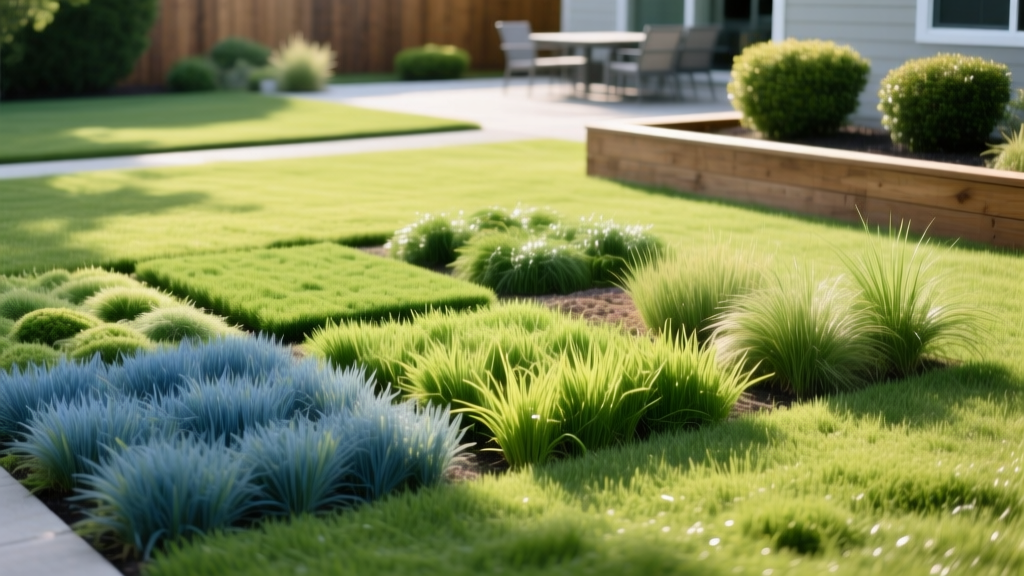
How Much Does It Cost to Install Sod? 2026 Pricing Guide
The True Cost to Install Sod: 2026 National Averages
When homeowners ask how much does it cost to install sod, the answer depends heavily on grass species, site topography, and regional labor rates. In 2026, the national average for professional sod installation ranges from $1.50 to $3.50 per square foot, including materials and labor. For a standard 2,000-square-foot front yard, expect to pay between $3,000 and $7,000. If you opt for a DIY approach, material costs alone drop the price to $0.30 to $1.00 per square foot ($600 to $2,000 for 2,000 sq ft), though you must factor in equipment rentals and physical labor.
According to Forbes Home Improvement, premium drought-tolerant cultivars and complex grading requirements can push luxury installation costs up to $4.50 per square foot. Understanding the breakdown between the raw turf, soil preparation, and installation labor is critical to avoiding budget overruns.
Sod Material Costs by Grass Species
Turf farms price sod by the pallet or by the square foot. A standard pallet covers 450 to 500 square feet and weighs between 1,500 and 3,000 pounds, depending on soil moisture content. Below is the 2026 material-only pricing matrix for the most requested residential grass types.
| Grass Species | Climate Zone | Cost per Sq. Ft. (Material) | Cost per Pallet (450 sq ft) | Best Cultivar for Residential |
|---|---|---|---|---|
| Bermuda | Warm-Season | $0.30 - $0.80 | $135 - $360 | TifTuf (High drought tolerance) |
| Zoysia | Warm-Season / Transition | $0.40 - $1.10 | $180 - $495 | Palisades or Emerald |
| Kentucky Bluegrass | Cool-Season | $0.35 - $0.75 | $157 - $337 | Midnight or Blue Note |
| Tall Fescue | Cool-Season / Transition | $0.30 - $0.65 | $135 - $292 | Titan Ultra or RTF |
| St. Augustine | Warm-Season (Coastal) | $0.45 - $0.95 | $202 - $427 | Palmetto or Floratam |
Expert Tip: Always order 5% to 10% more sod than your exact square footage. Curved garden beds, property lines, and cutting around irrigation heads generate significant waste. If your calculated area is 1,800 sq ft, order 2,000 sq ft to prevent a second delivery fee, which typically costs $75 to $150.
Hidden Site Preparation & Labor Costs
The most common budgeting mistake is assuming sod can be laid directly over existing dirt or dead grass. Proper site preparation accounts for 40% to 60% of the total project cost. Skipping these steps guarantees shallow root establishment and eventual turf failure.
1. Old Turf Removal and Grading
- Sod Cutter Rental / Labor: Removing existing grass with a gas-powered sod cutter costs $0.15 to $0.25 per square foot. Manual removal with flat spades is cheaper but highly labor-intensive.
- Rough Grading & Tilling: Rototilling the soil to a depth of 4 to 6 inches breaks up compaction. Expect to pay $0.10 to $0.20 per square foot for mechanical tilling.
- Fine Grading: Laser-grading or manual raking to ensure a 1% to 2% slope away from the home's foundation costs $1.00 to $2.50 per square foot.
2. Soil Amendments and Starter Fertilizer
Before laying sod, conduct a soil test (typically $20-$30 via local university extensions). Most new construction sites lack organic matter. Adding a 1-inch layer of screened topsoil or compost costs $0.20 to $0.40 per square foot. You must also apply a high-phosphorus starter fertilizer (e.g., a 10-18-10 NPK ratio) at a rate of 1 lb of nitrogen per 1,000 sq ft to stimulate immediate root growth. Material cost for fertilizer is roughly $0.05 per square foot.
Coverage Calculations: How Many Pallets Do You Actually Need?
To determine exact coverage, break your lawn into geometric shapes. Do not rely on municipal property lot sizes, as these include the footprint of your house, driveway, and hardscaping.
- Measure Rectangular Zones: Multiply Length × Width for standard boxes.
- Measure Triangular Zones: Multiply (Base × Height) / 2 for corner cutouts.
- Measure Circular Zones: Multiply 3.14 × Radius² for curved garden bed edges.
- Calculate Total Area: Sum all zones to get your base square footage.
- Apply the Waste Multiplier: Multiply the base area by 1.10 (for 10% waste).
- Determine Pallet Count: Divide the final number by 450 (or 500, depending on your local turf farm's standard).
For example, a yard measuring 40 ft by 50 ft equals 2,000 sq ft. Adding 10% waste yields 2,200 sq ft. Divided by 450 sq ft per pallet, you need to order exactly 5 pallets.
DIY vs. Professional Installation: A Financial Breakdown
Data from HomeGuide's 2026 landscaping cost report indicates that professional installation labor averages $1.00 to $2.00 per square foot. Here is how the financials compare for a 1,000-square-foot project.
| Cost Factor | DIY Installation | Professional Installation |
|---|---|---|
| Sod Material (Tall Fescue) | $400 | $400 |
| Delivery Fee | $125 | $0 (Usually included) |
| Equipment Rentals (Tiller, Roller) | $250 | $0 |
| Soil Prep & Amendments | $200 | $400 |
| Labor (Installation) | $0 (Sweat Equity) | $1,500 |
| Total Estimated Cost | $975 | $2,300 |
Warning: Sod is highly perishable. Once delivered, it must be laid within 24 to 48 hours. In summer heat, the center of a stacked pallet can 'cook' and turn yellow within 12 hours due to trapped microbial heat. If you DIY, ensure you have the physical capacity to move 2,500 lbs of turf in a single day, or hire day laborers at $20-$25/hour to assist.
Critical Failure Modes: Why New Sod Dies
Even with premium grass and perfect soil, improper installation techniques lead to costly failures. Avoid these three common edge cases:
1. Sod Shrinkage and Gapping
As sod dries out, the soil matrix contracts, creating gaps between rolls. Weeds will immediately colonize these seams. The Fix: Install sod in a staggered 'brick-laying' pattern. Push rolls tightly together so the edges slightly overlap, then use a heavy lawn roller filled halfway with water to press the seams flush without crushing the crowns.
2. Hydroplaning and Root Rot
Homeowners often overwater new sod, creating a hydroplane effect where the turf floats on a layer of mud, preventing the roots from knitting into the native soil. The Fix: Water deeply but monitor the soil. Lift a corner of the sod daily; the native soil beneath should be moist to a depth of 4 inches, not muddy. Transition from daily watering to every other day by week three to force roots to chase the moisture downward.
3. Poor Soil-to-Sod Contact
Laying sod over cloddy, un-raked soil or leaving air pockets beneath the turf will cause the roots to desiccate. The Fix: Drag a heavy steel mat or a piece of chain-link fence over the graded soil before installation to create a perfectly smooth, firm seedbed. After laying, roll the entire lawn to eliminate trapped air.

