Grass Types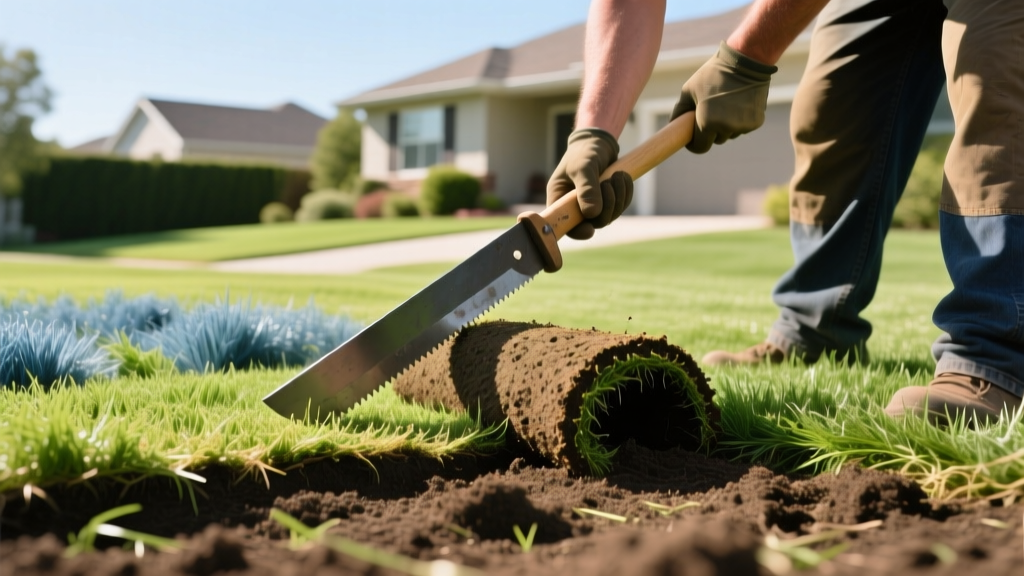
How to Use a Sod Knife for Lawn Patching and Sod Installation
Establishing a flawless lawn requires more than just broadcasting seed or unrolling turf. The transition zones, tight curves, and small bare patches demand surgical precision that a standard landscaping spade or utility blade simply cannot provide. A professional-grade sod knife bridges the gap between heavy earthmoving and delicate horticultural work, allowing you to cut through dense rhizome networks, score compacted soil, and seamlessly blend new sod into existing turf.
Why a Sod Knife Outperforms Standard Landscaping Spades
When installing sod or patching cool-season grasses like Kentucky Bluegrass or Tall Fescue, the root matrix and thatch layer can be incredibly dense. Standard square-mouth spades crush the turf edges, leaving jagged seams that dry out and fail to knit together. According to Purdue Turfgrass Science, tight, vertical seams are critical for rapid root establishment and preventing weed infiltration in the gap. A sod knife, with its narrow profile and razor-sharp bevel, slices cleanly through the thatch and soil profile without displacing the surrounding earth, ensuring the new patch sits perfectly flush with the existing grade.
Anatomy of a Professional-Grade Sod Knife
Not all soil knives are created equal. While a standard Japanese Hori Hori is excellent for planting perennials, a dedicated sod knife requires specific metallurgical and structural features to withstand the lateral torque of cutting thick turf.
- Blade Length and Width: Look for a blade measuring 6.5 to 7 inches long and 1.5 to 2 inches wide. This provides enough surface area to cut a clean vertical line without bending.
- Steel Composition: High-carbon steel (like the Wilcox 14-inch All-Steel Digging Knife, typically $30-$35) holds a sharper edge but requires oiling to prevent rust. Alternatively, 420-grade stainless steel (like the Leonard 7-Inch Turf Knife, around $25-$40) offers superior corrosion resistance when working in damp morning soil.
- Edge Profile: A dual-edge design is ideal. One side should be a straight, razor-sharp bevel for clean slicing, while the opposite side features aggressive serrations for sawing through thick, woody rhizomes and tree roots.
- Tip Design: A slightly blunted or rounded tip is safer for turf work, preventing accidental punctures to shallow underground irrigation lines or low-voltage lighting wires.
Step-by-Step: Precision Sod Installation and Trimming
Proper technique minimizes waste and ensures the new grass establishes rapidly. Follow this workflow when fitting sod into complex landscape beds or hardscape borders.
1. Scoring the Perimeter
Before unrolling the sod, use the straight edge of the knife to score a 2-inch deep guideline along the soil border. This trench acts as a physical guide, ensuring your sod edges remain perfectly straight and preventing the turf from creeping over walkways.
2. The Sawing Motion for Curves
When trimming sod around circular tree rings or curved retaining walls, do not attempt to push the blade straight down. Instead, choke up on the handle and use the serrated edge in a short, aggressive sawing motion. This prevents the blade from binding in the clay-heavy subsoil.
3. Stamping and Plugging
For repairing small, localized dead spots (under 12 inches in diameter), use the sod knife as a plugger. Drive the blade straight down in a circular motion to extract the dead turf core, then use the same technique to cut a matching plug from your donor sod roll. Press the new plug into the hole, ensuring the crown of the grass is level with the surrounding soil.
Tool Comparison Matrix: Sod Knife vs. Alternatives
Choosing the right tool for the specific establishment task saves time and reduces physical fatigue. Use this matrix to determine when to deploy your sod knife versus other common landscaping tools.
| Tool | Best Application | Seam Precision | Edge Retention | Ergonomics / Fatigue |
|---|---|---|---|---|
| Sod Knife (7-inch) | Tight curves, plug patching, edging | Excellent (Vertical cuts) | High (if maintained) | Low (Wrist-level work) |
| Square-Mouth Spade | Trenching, large area grading | Poor (Crushes turf edges) | Moderate | High (Requires foot leverage) |
| Utility Knife / Box Cutter | Cutting twine, scoring plastic sheeting | Moderate (Blade flexes) | Very Low (Dulls in soil) | Moderate (Pinching grip) |
| Push Sod Cutter | Removing large lawns, stripping turf | N/A (Removal tool) | High (Heavy steel blade) | Very High (Full body exertion) |
Advanced Technique: Manual Slit-Seeding for Bare Patches
When establishing grass seed in small, compacted bare patches where a mechanical slit-seeder cannot reach, a sod knife is an invaluable asset. According to University of Minnesota Extension, seed-to-soil contact is the primary driver of germination success. Broadcasting seed over compacted soil or thick thatch results in germination rates below 20%.
Pro-Tip: The Manual Slit Method
Use the straight edge of your sod knife to cut parallel slits, 2 inches deep and 4 inches apart, directly into the bare soil. Pry the slit open slightly with the blade, drop your grass seed (such as Perennial Ryegrass or Fine Fescue) directly into the crevice, and step on the slit to close it. This bypasses the thatch layer entirely, placing the seed in direct contact with the mineral soil and protecting it from birds and wind.
Blade Maintenance and Sharpening Protocols
A dull sod knife is dangerous and ineffective; it requires excessive force, increasing the risk of the blade slipping and causing injury. Because you are cutting through abrasive silica-rich soil, the blade will dull rapidly. Establish a strict maintenance routine to ensure longevity.
Sharpening the Bevel
Do not use a high-speed bench grinder, as the heat will ruin the temper of the steel. Instead, use a 400-grit diamond sharpening stone. Maintain the factory 20-degree bevel angle. Run the stone along the edge in one direction, away from your body, until a uniform burr forms, then flip and lightly hone the back to remove the wire edge.
Rust Prevention
After every use, wipe the blade clean with a dry rag. If you are using a high-carbon steel knife, apply a micro-thin layer of camellia oil or food-grade mineral oil to the blade before storing it in a leather sheath. Avoid WD-40, which can leach into the soil and harm delicate grass seedlings during your next planting session.
Frequently Asked Questions
Can I use a serrated bread knife to cut sod?
While a serrated bread knife can saw through the thatch layer, it lacks the structural rigidity to penetrate the soil profile. The thin steel will bend or snap under lateral pressure. Always use a full-tang knife with a minimum blade thickness of 3mm for turf work.
How deep should I cut when trimming sod edges?
Cut exactly to the depth of the sod roll's soil profile, typically 1.5 to 2 inches. Cutting deeper into the native subsoil creates a trench that will collect water and cause the sod edges to rot, while cutting too shallow leaves a visible lip that will dry out and turn brown.
Is a sod knife effective for removing deep-rooted weeds during establishment?
Yes. The narrow, 7-inch blade is perfect for severing the taproots of broadleaf weeds like dandelions and plantain. Drive the blade straight down alongside the weed, angle it slightly under the crown, and lever the handle back to pop the entire root system out intact, preventing regrowth in your newly established lawn.