
Grass Types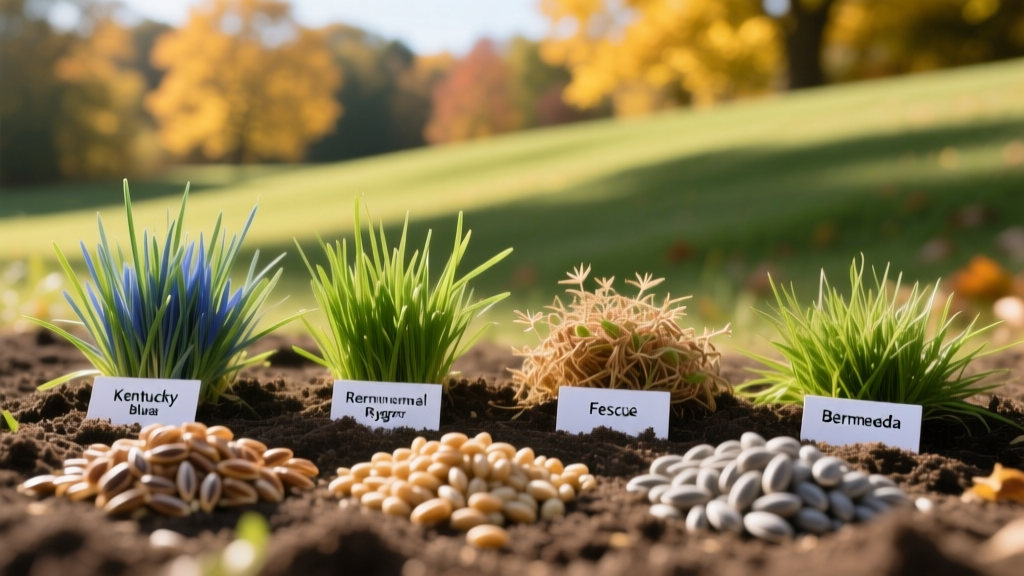
Sowing Grass Seed in Fall: Exact Timing by Region & Zone
The Thermodynamics of Fall Germination
Sowing grass seed in fall is widely considered the optimal window for establishing cool-season turf, but success relies entirely on soil thermodynamics rather than the calendar date. While air temperatures may drop into the 60s, the soil retains summer heat, creating a vital thermal blanket that accelerates germination and root development. According to turfgrass research from the University of Minnesota Extension, the ideal soil temperature for cool-season grass germination rests strictly between 50°F and 65°F at a 2-inch depth. Measuring air temperature is a common amateur mistake; you must use a digital soil probe thermometer inserted two inches into the ground, taking readings in the early morning before solar radiation skews the data. When soil temperatures drop below 45°F, seed metabolism slows drastically, leaving ungerminated seed vulnerable to rot and predation.
Regional Sowing Calendars & Frost Buffers
The primary risk of late fall seeding is frost heave, where freezing water expands and pushes shallow, unrooted seedlings out of the soil matrix. To prevent this, seed must germinate and establish a minimum 1-inch root system before the first hard freeze. Below is the precise regional calendar for sowing grass seed in fall, calibrated to provide a minimum 45-day buffer before historical first-frost dates.
| Geographic Region | USDA Zones | Optimal Sowing Window | Target Soil Temp (2" Depth) | First Frost Buffer |
|---|---|---|---|---|
| Northeast & New England | 4b - 6a | August 15 – September 10 | 55°F - 65°F | 45-60 Days |
| Midwest & Great Lakes | 5a - 6b | August 20 – September 15 | 55°F - 65°F | 45 Days |
| Pacific Northwest | 7b - 8b | September 1 – September 30 | 50°F - 60°F | 60+ Days |
| Transition Zone | 6b - 7b | September 1 – September 25 | 60°F - 68°F | 40 Days |
Homeowners in the Transition Zone face a unique challenge: sowing grass seed in fall here means battling the aggressive dormancy transition of warm-season grasses like Zoysia and Bermuda. If overseeding warm-season lawns for winter color, use Perennial Ryegrass at a rate of 8-10 lbs per 1,000 sq ft in late October. If establishing a permanent cool-season lawn (like Tall Fescue) in this zone, adhere strictly to the early September window to outcompete fall-germinating Poa annua.
Cultivar Selection and Exact Seeding Rates
Selecting the correct cultivar and applying the precise seeding rate prevents overcrowding, which leads to damping-off disease, or sparse coverage, which invites winter weeds. Always look for NTEP (National Turfgrass Evaluation Program) rated varieties.
Turf-Type Tall Fescue (TTTF)
TTTF is the most drought-tolerant cool-season option, featuring deep root systems that penetrate up to 3 feet. Modern dwarf varieties like 'Titan Ultra' or 'Firecracker SLS' offer finer blades and darker green hues.
- Seeding Rate: 6 to 8 lbs per 1,000 sq ft (new establishment); 3 to 5 lbs per 1,000 sq ft (overseeding).
- Germination Time: 7 to 12 days.
- Best For: High-traffic areas, clay soils, and Transition Zone lawns.
Kentucky Bluegrass (KBG)
KBG spreads via underground rhizomes, allowing it to self-repair damaged areas. However, it requires significantly more water and nitrogen than fescue. Elite midnight-type cultivars like 'Midnight' or 'NuGlide' provide exceptional density.
- Seeding Rate: 2 to 3 lbs per 1,000 sq ft (new establishment); 1 to 1.5 lbs per 1,000 sq ft (overseeding).
- Germination Time: 14 to 21 days (requires consistent moisture).
- Best For: Northern climates, full-sun exposures, and high-maintenance estates.
The 4-Step Soil Preparation Protocol
Broadcasting seed over an existing lawn without soil preparation yields a germination rate of less than 15%. Seed-to-soil contact is non-negotiable. Follow this mechanical preparation sequence:
- Core Aeration: Rent a walk-behind core aerator (e.g., Billy Goat AET48) and make two perpendicular passes over the lawn. Pull 2-to-3-inch soil plugs to alleviate compaction and create micro-furrows for seed capture.
- Slit Seeding or Topdressing: For bare dirt, use a slit-seeder to cut 1/4-inch grooves directly into the soil, dropping seed into the trenches. For overseeding, apply a 1/4-inch layer of screened compost topdressing over the broadcast seed to retain moisture and protect from birds.
- Starter Fertilizer Application: Apply a high-phosphorus starter fertilizer to fuel initial root growth. A formulation like 18-24-12 applied at a rate of 1 lb of actual Nitrogen per 1,000 sq ft is ideal. Phosphorus is critical here; standard maintenance fertilizers (like 32-0-10) will result in weak, stunted root systems.
- Hydration Cycling: Water immediately after seeding. The goal is to keep the top 1 inch of soil consistently moist, not saturated.
Troubleshooting: Why Fall Seedings Fail
Even with perfect timing, environmental and chemical variables can destroy a fall seeding. Review these common failure modes before deploying seed.
WARNING: Pre-Emergent Herbicide Conflict
Applying a fall pre-emergent (like Prodiamine or Dithiopyr) to prevent winter annual weeds will simultaneously prevent your grass seed from germinating. These chemicals create a vapor barrier in the top 1/2 inch of soil that stops all seedling cell division. If you must seed in the fall, you must forfeit pre-emergent weed control and rely on manual pulling or post-emergent spot treatments once the new grass has been mowed three times. According to Penn State Extension, siduron (Tupersan) is the only pre-emergent that allows for simultaneous cool-season grass seeding, though it is significantly more expensive and offers a shorter weed-control window.
CRITICAL ERROR: Improper Watering Transitions
The most frequent cause of seedling death is the failure to transition watering schedules. Days 1-14: Water lightly 3 to 4 times daily for 5-10 minutes to prevent the seed bed from drying out. Days 15-21: As roots anchor, reduce frequency to once daily but increase duration to 15-20 minutes to encourage deeper root chasing. Days 22+: Transition to standard deep-and-infrequent watering (1 inch per week, split into two sessions). Leaving seed on a shallow, frequent watering schedule past day 21 guarantees shallow roots that will die during the first winter freeze.
Sowing grass seed in fall requires precise execution of soil temperature monitoring, mechanical seed-to-soil contact, and strict hydration management. By aligning your seeding window with the regional soil-temperature data above and utilizing NTEP-rated cultivars, you establish a dense, deeply rooted turf capable of surviving winter dormancy and emerging aggressively in the spring.

