
Grass Types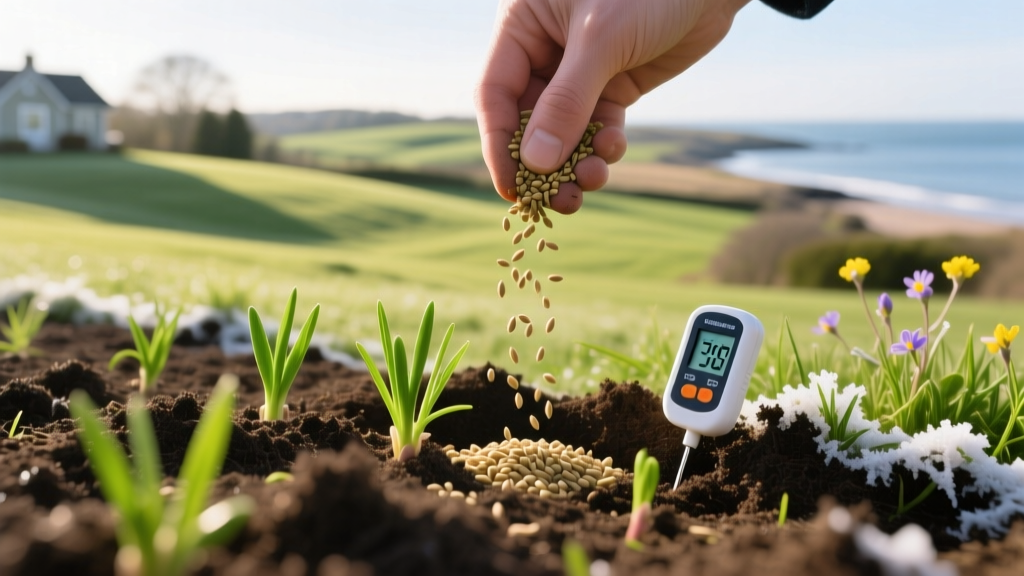
Planting Grass Seed in Spring: Regional Timing and Soil Temp Guide
The Soil Temperature Thresholds for Spring Seeding
The single most critical mistake homeowners make when planting grass seed in spring is relying on the air temperature or the calendar date. Grass seed germination is dictated entirely by soil temperature at a 2-inch depth. While a warm 65°F spring afternoon might feel ideal, the soil profile often remains in the 40s, keeping seeds dormant and vulnerable to rot or predation.
Target Soil Temperatures (Measured at 2-Inch Depth)
- Cool-Season Grasses (Fescue, Bluegrass, Ryegrass): Consistent 50°F to 65°F. Germination halts if soil drops below 45°F or exceeds 75°F.
- Warm-Season Grasses (Bermuda, Zoysia, Centipede): Consistent 65°F to 70°F. Seeds will fail to germinate and rot in soils below 60°F.
Pro Tip: Use a dedicated stainless steel soil thermometer (like the REOTEMP Fast Response model) inserted 2 inches into the soil at 8:00 AM for the most accurate daily baseline reading.
According to research published by the NC State Turf Files, cool-season grasses seeded too early in cold, wet spring soils suffer from Pythium blight and seed rot. Conversely, seeding too late pushes the fragile seedling establishment phase into the heat stress of early summer, where young root systems rapidly desiccate.
Regional Spring Seeding Calendars
Because soil warming rates vary drastically by USDA Hardiness Zone and local microclimates, you must align your seeding window with your specific region. The following calendar provides the optimal spring seeding windows based on historical soil warming data.
| USDA Zone | Primary Grass Type | Optimal Spring Seeding Window | Average Soil Temp at Window |
|---|---|---|---|
| Zone 4-5 (Upper Midwest, Northeast) | Cool-Season | April 15 - May 15 | 50°F - 58°F |
| Zone 6-7 (Mid-Atlantic, Transition Zone) | Cool-Season / Warm-Season | March 20 - April 20 (Cool) May 10 - June 10 (Warm) |
52°F - 62°F (Cool) 65°F - 70°F (Warm) |
| Zone 8-9 (Deep South, Gulf Coast) | Warm-Season | March 1 - April 15 | 65°F - 72°F |
The Transition Zone Dilemma: If you live in the Transition Zone (Zone 6b to 7a), spring is actually the second-best time to plant cool-season grass (fall is superior). If you must seed Tall Fescue or Kentucky Bluegrass in spring, aim for the earliest possible date your soil hits 50°F to give the roots maximum time to establish before July heat.
Cool-Season vs. Warm-Season Spring Protocols
Selecting the right cultivar and seeding rate is non-negotiable for spring establishment. The Purdue Turf Science program recommends utilizing NTEP (National Turfgrass Evaluation Program) rated cultivars that exhibit strong spring vigor and disease resistance.
Cool-Season Grass Specifications
- Tall Fescue: Seed at 6 to 8 lbs per 1,000 sq ft. Look for endophyte-enhanced cultivars like 'Titan Ultra' or 'Firenza' which resist spring brown patch.
- Kentucky Bluegrass (KBG): Seed at 2 to 3 lbs per 1,000 sq ft. KBG germinates slowly (14-21 days). Use 'Mazama' or 'Blue Note' for aggressive spring rhizome spread.
- Perennial Ryegrass: Seed at 5 to 7 lbs per 1,000 sq ft. Germinates in 5-7 days. Excellent for quick spring erosion control, but struggles in summer heat.
Warm-Season Grass Specifications
- Bermudagrass: Seed at 1 to 2 lbs per 1,000 sq ft (hulled seed). Requires full sun and soil temps above 65°F. 'Yukon' and 'Latitude 36' offer superior cold tolerance for northern warm-season lawns.
- Zoysiagrass: Seed at 2 to 3 lbs per 1,000 sq ft. Extremely slow to establish from seed; 'Zenith' is one of the few reliable seed-grown varieties.
- Centipedegrass: Seed at 0.5 lbs per 1,000 sq ft. Highly sensitive to alkaline soils; requires a soil pH between 5.0 and 6.0.
⚠️ The Pre-Emergent Herbicide Conflict
The most common cause of spring seeding failure is the application of standard pre-emergent herbicides (like Prodiamine or Dithiopyr) for crabgrass control. These chemicals create a chemical barrier that stops all seeds from germinating, including your expensive grass seed.
The Solution: If you must control crabgrass while seeding cool-season grass in spring, use a pre-emergent containing Mesotrione (e.g., Syngenta Tenacity). Mesotrione is safe for use at the time of seeding for Tall Fescue, Kentucky Bluegrass, and Fine Fescue. Apply at a rate of 4 fl oz per acre (approx. 2.7 mL per 1,000 sq ft) mixed with a non-ionic surfactant. Do NOT use Mesotrione on Bermudagrass or Zoysiagrass.
Step-by-Step Spring Seedbed Preparation
Spring soils are often heavily compacted from winter frost heave and snow load. Proper mechanical preparation ensures seed-to-soil contact, which is required for moisture imbibition.
- Core Aeration: Pull 3-inch deep plugs using a gas-powered core aerator. Leave the plugs on the lawn to break down naturally. This relieves compaction and creates micro-pockets for seed.
- Topdressing & Leveling: Apply a 1/4-inch layer of screened compost or peat moss. Use a leveling rake to fill low spots. Avoid using topsoil with high clay content, which will crust over and block seedlings.
- Starter Fertilizer Application: Apply a high-phosphorus starter fertilizer to drive root growth. A formulation like 18-24-12 or 10-18-10 applied at 4 lbs per 1,000 sq ft provides the necessary phosphorus boost that mature lawn fertilizers lack. (Note: Check local ordinances, as some states restrict phosphorus use unless a soil test proves deficiency or you are establishing new seed).
- Seed Distribution: Use a rotary broadcast spreader. Split your total seed volume in half. Spread the first half walking North-South, and the second half walking East-West to ensure uniform coverage and prevent striping.
- Rolling & Mulching: Rent a lightweight lawn roller (fill with water to about 50% capacity) to press the seed into the soil. For slopes or erosion-prone areas, cover the seed with a hydromulch or weed-free straw (like Penn Mulch) at a rate of 1 bale per 1,000 sq ft.
Spring Irrigation Schedules for Germination
Spring wind and sudden heat spikes can dry out the top 1/2-inch of soil in hours. The Penn State Extension emphasizes that the seedbed must remain consistently moist, but never waterlogged, during the 7 to 21-day germination window.
'Water newly seeded lawns lightly two to three times a day for 5 to 10 minutes per zone. The goal is to keep the top inch of soil damp. Once seedlings reach 1.5 inches in height, transition to deep, infrequent watering—approximately 1 inch of water per week applied in a single session to drive roots downward.'
Frequently Asked Questions
Can I plant grass seed in spring if I missed the fall window?
Yes, but you must accept a higher maintenance burden. Spring-seeded cool-season grasses will have shallow root systems when summer arrives. You will need to irrigate heavily during July and August heatwaves to prevent the young grass from going dormant or dying. Warm-season grasses, however, thrive when planted in late spring.
How late in the spring is too late to plant grass seed?
For cool-season grasses, once daytime air temperatures consistently exceed 80°F and soil temperatures push past 70°F, the germination window has closed. In most northern climates, this cutoff is late May. For warm-season grasses, you can seed well into early July, provided you have an automated irrigation system to support establishment.
Should I soak grass seed before planting in spring?
No. Soaking grass seed before broadcasting makes it clumpy, impossible to spread evenly, and prone to tearing the delicate emerging radicle (root). Always plant dry seed directly into a moistened soil bed.

