
Grass Types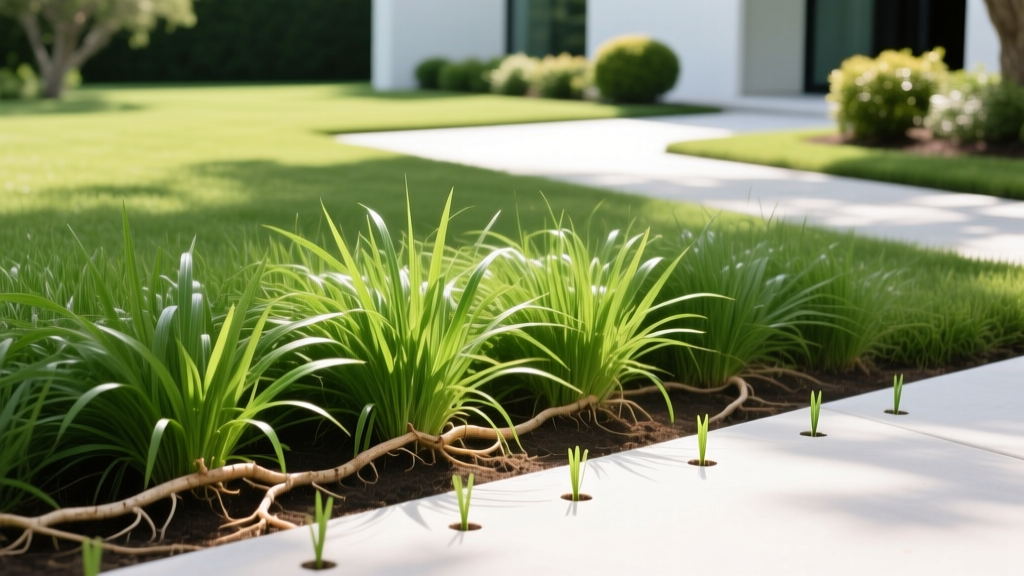
Does St. Augustine Grass Spread? Growth Rates & Plug Spacing
Does St. Augustine Grass Spread? The Short Answer
Yes, St. Augustine grass (Stenotaphrum secundatum) spreads aggressively, but it does so exclusively through above-ground runners called stolons. Unlike Bermuda or Zoysia grass, which utilize both above-ground stolons and below-ground rhizomes, St. Augustine relies entirely on surface-level creeping stems to colonize bare soil. Under optimal summer conditions, a single stolon can extend up to 24 inches in a single month, making it one of the fastest-establishing warm-season turfgrasses available to homeowners.
However, its spread rate is highly dependent on soil temperature, nitrogen availability, and cultivar selection. If you are establishing a new lawn via plugs or trying to repair bare patches, understanding the exact mechanics of stolon growth and the mathematical requirements for fertilization will cut your establishment time in half.
The Anatomy of Spread: How Stolons Work
Stolons are horizontal stems that grow along the soil surface. At regular intervals along the stolon, you will find nodes. When a node makes firm contact with moist soil, it pushes adventitious roots downward and sends a new shoot (tiller) upward. This is the exact mechanism of St. Augustine's lateral spread.
Expert Insight: Because St. Augustine lacks rhizomes, it cannot recover from deep soil disturbance or severe scalping. If a lawnmower cuts into the stolon layer below the node, that runner dies. This is why maintaining a mowing height of 3 to 4 inches is non-negotiable for rapid lateral spread.
Seasonal Growth Rates: What to Expect
St. Augustine grass is a warm-season species. Its metabolic activity and stolon extension are directly tied to soil temperatures. Below is the expected lateral spread rate per month based on regional climate data and turfgrass extension trials.
| Season | Soil Temp Range | Lateral Spread Rate | Growth Phase |
|---|---|---|---|
| Spring (April-May) | 65°F - 75°F | 4 to 8 inches/month | Green-up & early stolon initiation |
| Summer (June-Aug) | 80°F - 95°F | 12 to 24 inches/month | Peak vegetative growth & rapid fill |
| Fall (Sept-Oct) | 70°F - 80°F | 6 to 10 inches/month | Slowing growth, root storage |
| Winter (Nov-Mar) | Below 55°F | 0 inches (Dormant) | Dormancy, browning, no spread |
According to NC State Extension TurfFiles, attempting to establish St. Augustine plugs when soil temperatures are below 65°F will result in stolon stagnation and high plug mortality. Always time your planting for late spring or early summer.
Planting Methods: Plugs vs. Sprigs vs. Sod
Because St. Augustine grass produces very little viable seed, commercial seed bags are virtually non-existent. You must establish it vegetatively. Here is how the three primary methods compare regarding cost, labor, and spread time.
1. Plugs (The DIY Standard)
Plugs are 3-inch cylindrical cores of mature grass and soil. They are the most cost-effective method for homeowners. A standard tray of 18 plugs costs between $15 and $25. When planted at 12-inch centers, plugs typically take 6 to 8 months to fully knit together during the peak summer growing season.
2. Sprigs (The Commercial Approach)
Sprigs are bare stolon runners with attached nodes, usually sold in bushels. While cheaper per square foot than plugs (roughly $30-$40 per bushel), they require a specialized sprigging machine or intense manual labor to press into the soil. Without daily irrigation, sprigs dry out and die within 48 hours. This method is best left to professional landscapers.
3. Sod (Instant Coverage)
Sod provides an immediate lawn but comes at a premium. Pallets of St. Augustine sod (covering roughly 450 sq. ft.) cost between $180 and $270 depending on the cultivar. While there is no 'spread' time required, the sod must still root into the native soil over 3 to 4 weeks.
Optimal Plug Spacing for Maximum Spread
The distance between your plugs dictates how much nitrogen and water you will need to force the stolons to bridge the gap. Use this decision matrix to choose your spacing based on your budget and timeline.
| Spacing Grid | Plugs per 1,000 Sq Ft | Estimated Cost | Time to Full Coverage |
|---|---|---|---|
| 6-inch centers | ~400 plugs | $200 - $350 | 2 to 3 months |
| 12-inch centers | ~100 plugs | $50 - $90 | 6 to 8 months |
| 18-inch centers | ~45 plugs | $25 - $40 | 10 to 14 months |
4 Proven Strategies to Accelerate Stolon Extension
If your St. Augustine grass is spreading slower than the rates outlined above, you are likely missing one of these four critical growth triggers.
1. Precision Nitrogen Application
Stolons are pure vegetative growth, which requires heavy nitrogen. The Texas A&M AgriLife Extension recommends applying 1 pound of actual nitrogen per 1,000 square feet every 8 weeks during the growing season. The Math: If you use a 20-5-10 fertilizer (20% nitrogen), you must apply 5 pounds of product per 1,000 sq. ft. to deliver exactly 1 lb of N. Using a slow-release nitrogen source like Milorganite (6-4-0) or a coated urea product prevents stolon burn and provides a steady 8-week feed.
2. Deep, Infrequent Irrigation
Stolons will not root into dry, compacted soil. You must provide 1 to 1.5 inches of water per week. Instead of watering for 15 minutes daily, water for 45 minutes twice a week. This forces the adventitious roots at the stolon nodes to grow deeper into the soil profile to chase the moisture, anchoring the runner securely.
3. Raise Your Mowing Deck
Mowing St. Augustine below 3 inches severs the stolons and removes the photosynthetic leaf area required to generate the energy for lateral growth. Set your mower deck to 3.5 or 4 inches. Never remove more than one-third of the leaf blade in a single pass.
4. Liquid Iron and Micronutrients
In high-pH soils (common in coastal and southern regions), St. Augustine suffers from iron chlorosis, turning yellow and halting stolon production. Applying a chelated liquid iron spray (such as LawnStar Chelated Liquid Iron) every 30 days during summer will darken the canopy and restart stalled lateral growth.
Warning: Thatch Buildup
Because St. Augustine spreads via surface stolons, aggressive fertilization can lead to a thatch layer exceeding 0.5 inches. If water pools on the surface and stolons feel spongy, rent a vertical mower (dethatcher) in early spring to slice through the mat, allowing new nodes to make direct soil contact.
Because St. Augustine spreads via surface stolons, aggressive fertilization can lead to a thatch layer exceeding 0.5 inches. If water pools on the surface and stolons feel spongy, rent a vertical mower (dethatcher) in early spring to slice through the mat, allowing new nodes to make direct soil contact.
Common Roadblocks: Why Your Grass Isn't Spreading
- Insufficient Sunlight: Standard St. Augustine (like the Floratam cultivar) requires 6+ hours of direct sunlight. If your bare spots are in shaded areas, the stolons will thin out and die. Switch to shade-tolerant cultivars like Palmetto or CitraBlue for areas under tree canopies.
- Chinch Bug Damage: The Southern chinch bug injects a toxin into the stolon that halts growth and kills the runner. If you see yellowing halos around the edges of your spreading patches, inspect the thatch layer. Treat immediately with a bifenthrin-based insecticide.
- Soil Compaction: Heavy clay soils prevent the delicate adventitious roots from penetrating the surface. Core aerate the lawn in early June to pull 3-inch soil plugs, creating physical trenches for the stolons to root into.
Summary Checklist for Rapid Fill-In
1. Plant plugs between May and July when soil temps exceed 75°F.
2. Space plugs 12 inches apart for the best balance of cost and speed.
3. Apply 1 lb of Nitrogen per 1,000 sq. ft. every 8 weeks using slow-release granules.
4. Water deeply twice a week (1.5 inches total) to encourage node rooting.
5. Maintain a strict 3.5 to 4-inch mowing height to protect the stolon network.