
Grass Types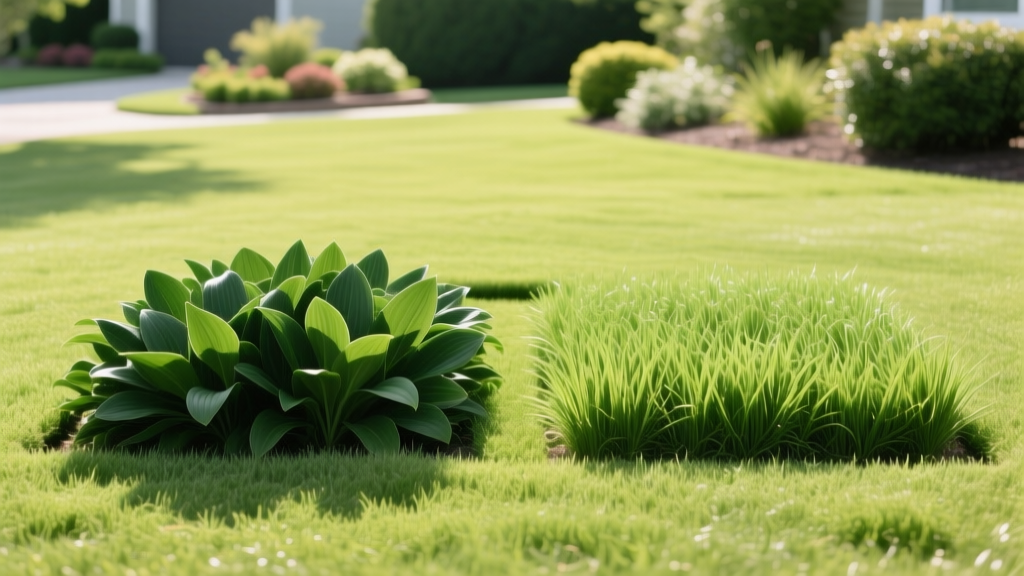
St. Augustine Grass vs Bermuda: Choosing the Right Warm-Season Turf
The Core Differences at a Glance
Choosing between St. Augustine grass (Stenotaphrum secundatum) and Bermuda grass (Cynodon dactylon) dictates the next decade of your weekend chore schedule, water bill, and lawn aesthetics. While both are aggressive warm-season turfgrasses thriving in USDA Zones 8 through 11, their environmental requirements and failure modes are vastly different. St. Augustine offers a lush, coarse-textured, dark green carpet that tolerates partial shade, whereas Bermuda provides a dense, fine-bladed, high-traffic turf that demands full sun and frequent mowing.
| Characteristic | St. Augustine Grass | Bermuda Grass |
|---|---|---|
| Leaf Texture | Coarse, broad, flat blades (5-10mm wide) | Fine to medium, narrow, pointed blades (1-3mm wide) |
| Shade Tolerance | Good (Requires 4-6 hours of direct/filtered sun) | Poor (Requires 8+ hours of direct, unfiltered sun) |
| Traffic Tolerance | Moderate (Recovers in 14-21 days) | Excellent (Recovers in 5-7 days via rhizomes) |
| Ideal Mowing Height | 2.5 to 4.0 inches (Rotary mower) | 0.5 to 2.0 inches (Reel mower preferred) |
| Annual Nitrogen Need | 2.0 to 4.0 lbs per 1,000 sq. ft. | 3.0 to 6.0 lbs per 1,000 sq. ft. |
| Drought Tolerance | Moderate (Wilts quickly, requires deep watering) | High (Goes dormant, recovers well upon watering) |
Sun, Shade, and Microclimate Tolerance
The single most critical factor in the St. Augustine grass vs Bermuda debate is your property's canopy cover. Bermuda grass is an obligate sun-lover. According to NC State Extension Turffiles, Bermuda requires a minimum of eight hours of direct sunlight to maintain density. If planted under the canopy of mature live oaks or near the north-facing shadow of a two-story home, Bermuda will thin out within 18 months, inviting invasive weeds like crabgrass and doveweed.
St. Augustine is the undisputed champion of warm-season shade tolerance. Cultivars like Palmetto and Seville can survive with as little as four hours of direct sunlight or dappled, all-day filtered light. However, St. Augustine is not a deep-shade grass; it will still fail under dense, low-hanging evergreen canopies where sunlight penetration drops below 20%.
Microclimate Warning: In coastal transition zones (like parts of North Carolina or Virginia), St. Augustine is highly susceptible to winterkill if temperatures drop below 10°F for extended periods. Bermuda grass, particularly cold-hardy cultivars like Latitude 36, will survive these freezes by going fully dormant and greening up in mid-April.
Traffic, Wear, and Recovery Rates
Bermuda grass possesses a dual-growth system: above-ground stolons and below-ground rhizomes. This subterranean rhizome network acts as a biological shock absorber. When a dog digs or a soccer cleat tears the turf, Bermuda regenerates from the root zone, typically filling in a 6-inch bare spot within 5 to 7 days during peak summer growth.
St. Augustine spreads exclusively via above-ground stolons. It lacks the deep rhizomatic anchor of Bermuda, making it vulnerable to tearing under heavy, repetitive foot traffic. A high-activity household with large dogs or frequent outdoor entertaining will quickly turn a St. Augustine lawn into a muddy, patchy mess by late August. For high-traffic zones, Bermuda is the mandatory choice.
Maintenance, Fertilizer, and Mowing Costs
While St. Augustine requires less frequent mowing, it demands stricter chemical management. Bermuda is a heavy feeder, requiring up to 6 lbs of nitrogen per 1,000 square feet annually to maintain a golf-course-quality density. A 5,000 sq. ft. Bermuda lawn will consume roughly 30 lbs of actual nitrogen per year, translating to approximately $120-$150 in granular fertilizer costs annually using products like Scotts Turf Builder Southern or Milorganite.
The Mowing Dilemma: Rotary vs. Reel
St. Augustine must be mowed high (2.5 to 4.0 inches) to protect its shallow root system and prevent thatch buildup. A standard $300 gas-powered rotary mower handles this effortlessly. Bermuda grass, conversely, performs best when scalp-mowed to 0.5 to 1.5 inches. Achieving this low cut with a rotary mower results in 'scalping' (cutting into the woody stem), which turns the lawn brown and invites disease. To maintain Bermuda properly, homeowners often invest $400-$800 in a manual or motorized reel mower.
Top Cultivars and 2026 Sod Pricing
Avoid generic 'common' seed or sod. Modern vegetative cultivars offer vastly superior disease resistance and environmental tolerance. Pricing below reflects average 2026 pallet rates (covering ~450 sq. ft.) delivered from regional sod farms.
- St. Augustine - CitraBlue: Developed by the University of Florida, this cultivar features a striking blue-green hue, superior shade tolerance, and high resistance to gray leaf spot. Cost: $260 - $320 per pallet.
- St. Augustine - Floratam: The legacy standard. Excellent chinch bug resistance but poor shade and cold tolerance. Cost: $180 - $220 per pallet.
- Bermuda - TifTuf: The current gold standard for drought resistance, using 38% less water than older Tifway 419 varieties while maintaining deep green color. Cost: $290 - $350 per pallet.
- Bermuda - Celebration: Features a deep blue-green color and moderate shade tolerance (for a Bermuda), making it highly versatile for residential landscapes. Cost: $230 - $270 per pallet.
Pest and Disease Vulnerabilities
Both grasses face distinct biological threats that require targeted chemical interventions. According to Texas A&M AgriLife Extension, St. Augustine's primary nemesis is the Southern Chinch Bug (Blissus insularis). These insects inject toxins into the stolons, creating expanding yellow-brown patches in the hottest, sunniest parts of the lawn during July and August. Treatment requires active ingredients like bifenthrin or clothianidin applied at the first sign of damage.
Bermuda grass is largely immune to chinch bugs but is highly susceptible to Spring Dead Spot (SDS), a devastating soil-borne fungus (Ophiosphaerella) that manifests as sunken, bleached circular patches as the grass breaks dormancy in spring. Preventing SDS requires late-summer preventative fungicide applications containing propiconazole or myclobutanil, adding roughly $80 to your annual chemical budget.
Herbicide Sensitivities
Weed control is where many homeowners accidentally destroy their lawns. St. Augustine is highly sensitive to MSMA and high concentrations of 2,4-D, which will cause severe leaf curling and stunting. For St. Augustine, rely on atrazine for winter broadleaf weeds and carfentrazone for summer weeds. Bermuda grass tolerates MSMA and 2,4-D beautifully, making it much easier to eradicate stubborn grassy weeds like dallisgrass.
Final Verdict: The Decision Framework
Do not base your choice on aesthetic preference alone; base it on your property's physical limitations and your lifestyle.
Choose St. Augustine Grass If:
- Your yard receives between 4 and 7 hours of sunlight due to mature trees or structural shade.
- You prefer a mowing schedule of once every 7-10 days using a standard rotary mower.
- Foot traffic is limited to occasional walking, with no large, highly active dogs.
- You live in a deep southern coastal zone where winter freezes are rare.
Choose Bermuda Grass If:
- Your lawn is fully exposed to 8+ hours of direct, unfiltered sunlight daily.
- You have children, large dogs, or host frequent outdoor sports and gatherings.
- You are willing to mow twice a week during peak summer and invest in a reel mower.
- You live in a transition zone where winter temperatures routinely drop into the teens.
Matching the turf to the environment prevents the endless cycle of overseeding, aerating, and applying expensive curative fungicides. Test your soil pH before laying sod—both grasses prefer a pH between 6.0 and 6.5, but St. Augustine will tolerate slightly higher alkaline soils up to 7.5, whereas Bermuda will suffer iron chlorosis (yellowing) in high-pH environments without chelated iron supplements.

