
Grass Types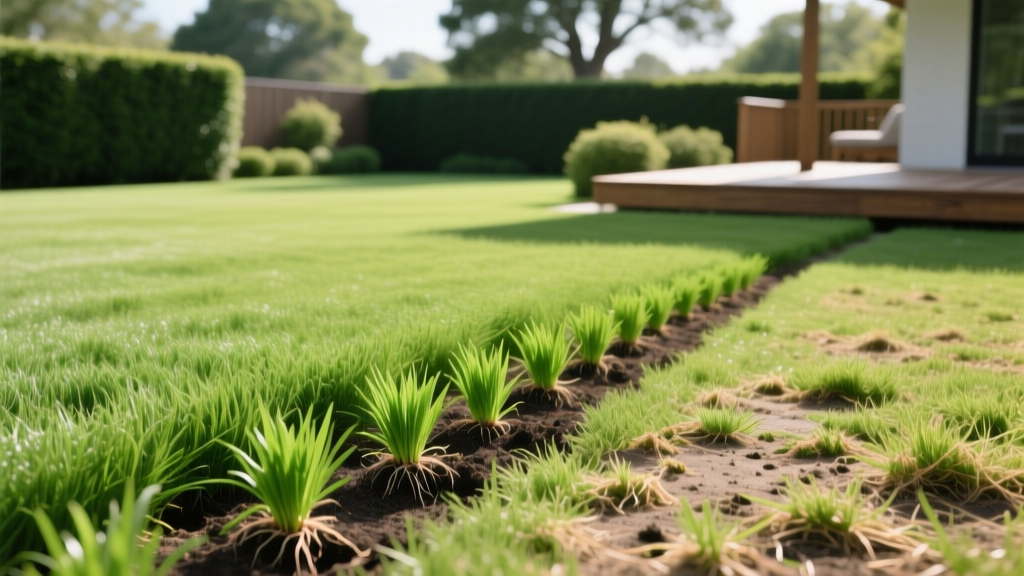
The Truth About St. Augustine Seed: Why Plugs Beat Grass Seed
If you are searching for St. Augustine seed to establish a new lawn or patch bare spots, you are about to encounter one of the most persistent misconceptions in the turfgrass industry. The hard truth is that commercial, viable St. Augustine grass seed (Stenotaphrum secundatum) is virtually non-existent for homeowners. While the plant does produce seed heads, the seeds have notoriously low viability, and the improved cultivars you actually want to grow are sterile hybrids.
Instead of wasting money on mislabeled seed packets, this guide explains the biological reality of St. Augustine reproduction, exposes common marketplace scams, and provides a precise, actionable framework for establishing a thick, weed-resistant lawn using vegetative propagation methods like plugs, sprigs, and sod.
The Biological Reality: Why St. Augustine Seed Fails
St. Augustine grass primarily reproduces vegetatively through above-ground stolons (runners). While the plant does produce a spike-like inflorescence containing seeds, several biological barriers prevent successful seed propagation:
- Apomixis and Low Viability: Much of the seed produced by St. Augustine is the result of apomixis (asexual reproduction through seed), which often results in empty chaff or embryos that fail to germinate. Germination rates for raw, unimproved St. Augustine seed rarely exceed 20% in field conditions.
- Sterile Cultivars: The most popular, disease-resistant, and shade-tolerant cultivars—such as Floratam, CitraBlue, and Palmetto—are triploid or complex hybrids. According to turfgrass researchers at Texas A&M Aggie Turf, these improved varieties are functionally sterile and must be propagated vegetatively to maintain their genetic traits.
- Genetic Drift: Even if you manage to germinate a true seed from a basic St. Augustine plant, the resulting seedling will not be a clone of the parent. It will likely exhibit inferior traits, such as poor shade tolerance, susceptibility to the St. Augustine Decline (SAD) virus, and a coarse, pale-green leaf texture.
⚠️ WARNING: The Online Seed Scam
Major online marketplaces (including Amazon, eBay, and Wish) are flooded with listings for "St. Augustine Grass Seed." These are almost universally scams. Independent testing of these packets frequently reveals they contain Centipedegrass seed, weedy Paspalum, or simply sterilized grain chaff. If a vendor is selling St. Augustine seed in a foil packet, do not buy it.
Vegetative Alternatives: Cost and Success Matrix
Since seed is off the table, you must choose a vegetative establishment method. The right choice depends on your budget, timeline, and the total square footage of your lawn. Below is a 2026 market comparison of the three viable propagation methods.
| Method | Avg. Cost (per sq. ft.) | Establishment Time | Labor Intensity | Success Rate |
|---|---|---|---|---|
| Sod | $0.45 - $0.85 | 2 - 3 weeks (roots), instant coverage | High (heavy lifting, requires rapid install) | 95%+ |
| Plugs | $0.10 - $0.18 | 3 - 6 months to full coverage | Medium (digging holes, precise spacing) | 85% - 90% |
| Sprigs | $0.04 - $0.08 | 4 - 8 months to full coverage | High (requires sprigging machine or trenching) | 70% (high desiccation risk) |
For most homeowners repairing patches or establishing a lawn on a budget without the backbreaking labor of laying sod, plugs are the superior alternative to the mythical seed.
Step-by-Step Guide: Establishing St. Augustine from Plugs
Planting plugs mimics the spacing and gradual fill-in process of seeding, but guarantees the genetic integrity of your chosen cultivar. Follow this precise protocol to ensure stolon establishment before the first frost.
1. Soil Preparation and pH Adjustment
St. Augustine thrives in a soil pH between 5.0 and 8.5, but optimal nutrient uptake occurs between 6.0 and 7.0. Conduct a soil test 30 days before planting. If your pH is below 5.5, apply pelletized limestone at a rate of 50 lbs per 1,000 sq. ft. to raise it. Till the soil to a depth of 4 to 6 inches, removing all debris and existing weed roots. Rake the area perfectly level to prevent water pooling, which causes stolon rot.
2. Strategic Plug Spacing
The speed at which your lawn fills in is dictated entirely by your spacing matrix. Data from NC State TurfFiles suggests the following spacing guidelines based on your timeline:
- 12" x 12" Spacing: Requires 1 plug per square foot. Total coverage in 2 to 3 months. (Highest material cost, fastest fill).
- 15" x 15" Spacing: Requires 0.64 plugs per square foot. Total coverage in 4 to 5 months. (Best balance of cost and time).
- 24" x 24" Spacing: Requires 0.25 plugs per square foot. Total coverage in 6 to 8 months. (Lowest cost, highest risk of weed invasion during fill).
3. Planting and Initial Fertilization
Use a bulb planter or a specialized plug auger attached to a cordless drill to dig holes matching the exact depth of the plug's root ball. The crown of the plug must sit exactly level with the surrounding soil; burying the crown will suffocate the plant, while leaving it exposed will dry out the roots. Immediately after planting, apply a high-phosphorus starter fertilizer (such as a 18-24-12 NPK ratio) at a rate of 1.0 lb of actual nitrogen per 1,000 sq. ft. The phosphorus is critical for stimulating rapid root hair development in the first 14 days. Water the area with 0.5 inches of water immediately to settle the soil around the roots.
4. The 30-Day Irrigation Protocol
Unlike seed, which requires constant surface moisture, plugs need deep, targeted watering. For the first 14 days, water lightly twice a day (morning and early afternoon) for 10-15 minutes to keep the top 2 inches of soil moist. From days 15 to 30, transition to watering every other day, but increase the duration to apply 0.5 inches per session, forcing the roots to grow downward into the soil profile.
The Math: Calculating Plug Needs for a 2,000 Sq Ft Lawn
Let's look at a real-world scenario for a 2,000 square foot backyard using a 15" x 15" spacing grid (the optimal balance for most homeowners).
Material Calculation Breakdown:
- Total Area: 2,000 sq. ft.
- Plugs Required (15" spacing): 2,000 × 0.64 = 1,280 plugs.
- Trays Needed: Standard nursery trays hold 18 plugs. 1,280 ÷ 18 = 71.1 (Round up to 72 trays).
- Estimated Material Cost: At an average of $22.00 per tray of premium CitraBlue plugs, 72 trays × $22 = $1,584.00.
- Compare to Sod: 2,000 sq. ft. of sod at $0.65/sq. ft. = $1,300.00 (plus delivery fees and higher labor).
Note: While the plug material cost can sometimes exceed sod for large areas, the elimination of heavy equipment rental, reduced physical labor, and lower watering requirements during establishment often make plugs the more practical choice for DIY homeowners.
Top St. Augustine Cultivars for 2026 Plantings
When ordering plugs or sod, avoid generic "St. Augustine" and specify one of these scientifically improved cultivars:
- CitraBlue: Developed by the University of Florida, this is currently the premier choice for lawns with heavy tree canopy. It features a distinct blue-green hue, exceptional shade tolerance, and strong resistance to gray leaf spot and large patch fungus.
- Floratam: The legacy standard. It has a coarse texture and requires a minimum of 6 hours of direct, unfiltered sunlight. It is highly susceptible to the SAD virus and chinch bugs, making it a less desirable choice for modern organic-leaning lawn care programs.
- ProVista: A revolutionary cultivar that is tolerant to glyphosate (Roundup). This allows homeowners to spray glyphosate directly over the grass to eliminate broadleaf weeds and competing grasses like crabgrass without damaging the St. Augustine stolon network.
- Palmetto: Known for its darker emerald green color and finer leaf blade. It offers superior cold tolerance, making it the best choice for homeowners in the northern extremes of the St. Augustine transition zone (e.g., Dallas, TX or Atlanta, GA).
Frequently Asked Questions
Can I overseed my St. Augustine lawn with ryegrass for winter color?
While you can overseed with perennial ryegrass, it is generally discouraged by turf scientists. Ryegrass competes aggressively for water and nutrients during the critical spring green-up period. When the ryegrass dies off in late May, it can smother the emerging St. Augustine stolons, leading to thin, patchy turf and increased susceptibility to fungal pathogens like brown patch. If you must overseed, use a light seeding rate of annual ryegrass (5 lbs per 1,000 sq. ft.) and aggressively transition it out with nitrogen in early spring.
What pre-emergent herbicides are safe when planting plugs?
This is a common failure point. You cannot use standard pre-emergents like atrazine or pendimethalin immediately before or after planting plugs, as they will severely stunt stolon growth and root development. Prodiamine (Barricade) is the safest option, but you must wait at least 60 days after the plugs have rooted and begun to spread before applying a half-rate application. During the initial fill-in phase, rely on hand-pulling and targeted spot-treatments with a selective post-emergent like Celsius WG for weed control.

