
Grass Types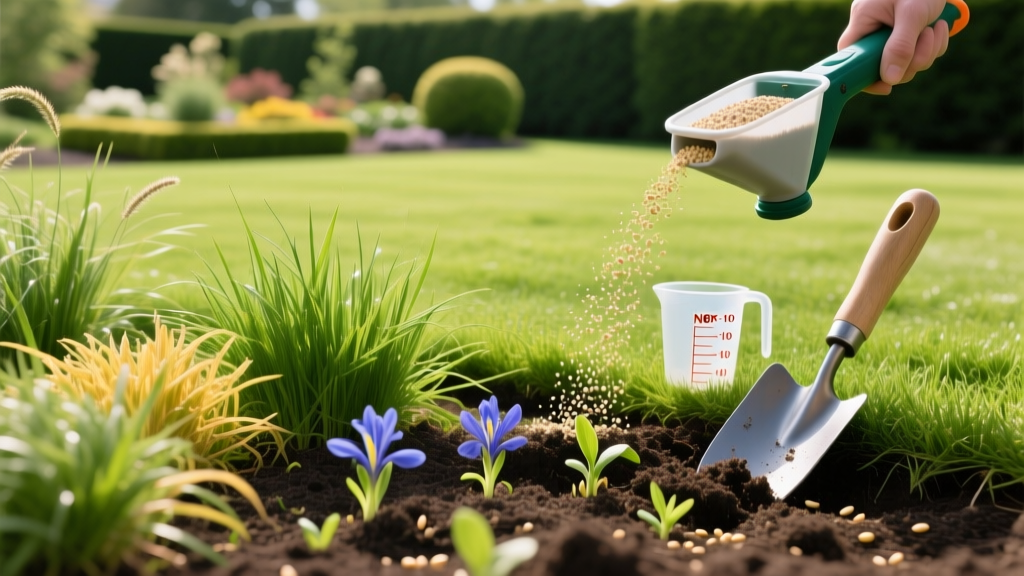
Starter Fertilizer for Grass Seed: NPK Ratios & Application Guide
The Science Behind Starter Fertilizer for Grass Seed
Germinating grass seed and establishing a mature lawn require fundamentally different nutritional profiles. While established turf thrives on high-nitrogen diets to fuel blade growth and chlorophyll production, newly sown seed prioritizes root strike and cellular division. Applying a standard lawn fertilizer to newly seeded soil often results in weak root systems, delayed germination, and increased susceptibility to drought stress.
Starter fertilizers are specifically engineered to bridge the nutritional gap during the critical first 30 to 45 days of a lawn's life cycle. The primary differentiator is the concentration of phosphorus, which drives adenosine triphosphate (ATP) production—the energy currency plants use to develop deep, anchoring root systems before the first true leaves even emerge.
Expert Insight: Never apply standard weed-and-feed products to newly seeded areas. The herbicides (like mesotrione or 2,4-D) will kill germinating grass seedlings, and the high nitrogen-to-phosphorus ratio will force the plant to push fragile top growth at the expense of root development.
Decoding the NPK Ratio: Why Phosphorus is Non-Negotiable
The NPK ratio on a fertilizer bag represents the percentage by weight of Nitrogen (N), Phosphorus (P), and Potassium (K). For starter fertilizers, the middle number (Phosphorus) must be disproportionately high compared to maintenance fertilizers.
| Fertilizer Type | Typical NPK Ratio | Primary Function | Application Timing |
|---|---|---|---|
| Starter Fertilizer | 10-18-10 or 5-10-5 | Root development, seedling vigor, ATP synthesis | Day of seeding or 1-2 days prior |
| Maintenance Fertilizer | 32-0-4 or 28-0-3 | Blade growth, color retention, disease resistance | 4-6 weeks after germination |
| Winterizer Fertilizer | 22-0-14 | Root carbohydrate storage, cold tolerance | Late fall (post-growing season) |
Ideal starter formulations typically feature a 1:2:1 or 1:3:1 ratio. For example, a 5-10-5 or 10-20-10 blend ensures that for every part of nitrogen pushing the shoot upward, two parts of phosphorus are driving the radicle (embryonic root) downward into the soil matrix.
Navigating Phosphorus Bans and the 'New Lawn Exemption'
A common point of confusion for homeowners is the legality of purchasing starter fertilizer. To combat eutrophication (algae blooms caused by phosphorus runoff in waterways), states like New York, Minnesota, Washington, and New Jersey have enacted strict bans on phosphorus in turf fertilizers.
According to the University of Minnesota Extension, phosphorus runoff is a leading contributor to freshwater degradation. However, environmental regulations universally recognize the biological necessity of phosphorus for new plant establishment.
The New Lawn Exemption: Almost all state-level phosphorus bans include a legal exemption for new lawn establishment or patch repairs. If you are seeding a new lawn, overseeding bare patches, or laying new sod, you are legally permitted to purchase and apply high-phosphorus starter fertilizer, regardless of your state's general turf restrictions. Retailers may keep these products behind the counter or require you to sign a declaration of intent for new establishment.
Top Commercial Formulations and Nitrogen Sources
Not all starter fertilizers are created equal. The source of nitrogen dictates whether your seedlings will experience steady growth or suffer from osmotic seed burn. Fast-release urea draws moisture out of germinating seeds, causing desiccation. Look for products utilizing Methylene Urea (MU) or Sulfur-Coated Urea (SCU) for gradual nutrient release.
- Scotts Turf Builder Starter Food for New Grass (24-25-4): Widely available and utilizes a mix of fast and slow-release nitrogen. Excellent for small residential patch jobs. Costs approximately $35 for a 5,000 sq. ft. bag ($7.00 per 1,000 sq. ft.).
- Lesco Professional Starter Fertilizer (18-24-12): A commercial-grade staple featuring high phosphorus and potassium for stress tolerance. Preferred by landscaping professionals for full-yard renovations. Costs around $45 for a 50 lb bag covering 12,000 sq. ft. ($3.75 per 1,000 sq. ft.).
- Jonathan Green Green-Up for Seeding & Sodding (12-25-12): Features humic acids to improve soil structure and nutrient uptake in compacted clay soils. Priced at roughly $40 for a 15,000 sq. ft. coverage bag ($2.66 per 1,000 sq. ft.).
Step-by-Step Application and Spreader Calibration
Applying starter fertilizer requires precision. Over-application will chemically burn the seed; under-application will stall root development. Target an application rate of 0.5 to 1.0 lbs of actual Nitrogen per 1,000 square feet.
1. Perform a Soil pH Test
Phosphorus is highly reactive. If your soil pH is above 7.5, phosphorus binds to calcium and becomes insoluble. If pH is below 5.5, it binds to aluminum and iron. The optimal pH for phosphorus availability is between 6.0 and 7.0. Apply pelletized lime or elemental sulfur weeks before seeding if adjustments are needed.
2. Calibrate Your Broadcast Spreader
Never trust the manufacturer's spreader settings blindly; they vary based on your walking speed and the specific granule size of the product. Use the 100-square-foot test method:
- Calculate the ounces of product needed for 100 sq. ft. (Formula: [Bag Weight in oz / Total Sq. Ft. Coverage] * 100).
- Weigh out that exact amount and pour it into your spreader.
- Mark off a 10x10 foot (100 sq. ft.) area of your driveway or a tarp.
- Walk the area at your normal pace. If you run out of product before finishing the square, your setting is too low. If you have product left over, your setting is too high.
3. Apply and Water In
Apply the starter fertilizer to the bare soil before dropping the seed, or mix it into the top 1-2 inches of soil using a rake. After seeding, apply exactly 0.25 inches of irrigation to dissolve the granules and move the phosphorus into the top inch of the soil profile where the seed resides. Avoid heavy watering that causes runoff.
Common Failure Modes and Troubleshooting
Warning: The 'Starter Burn' Phenomenon
If your seedlings emerge but immediately turn yellow and crisp at the tips, you have likely applied a starter fertilizer with a high Water-Soluble Nitrogen (WSN) index directly on top of the seed without watering it in. Always water starter fertilizer into the soil matrix immediately after application.
If your seedlings emerge but immediately turn yellow and crisp at the tips, you have likely applied a starter fertilizer with a high Water-Soluble Nitrogen (WSN) index directly on top of the seed without watering it in. Always water starter fertilizer into the soil matrix immediately after application.
- Failure Mode: Phosphorus Lockout. You applied starter fertilizer, but root growth is stunted. Cause: High soil pH or excessive clay content binding the phosphorus. Fix: Use a liquid kelp supplement or humic acid to chelate the phosphorus and make it bioavailable.
- Failure Mode: Algae Growth on Soil Surface. Cause: Over-watering combined with high phosphorus levels on the soil surface. Fix: Reduce irrigation frequency, allow the top 1/4 inch of soil to dry between waterings, and lightly rake the surface to break the algae crust.
- Failure Mode: Uneven Germination. Cause: Spreader overlap errors causing localized nutrient toxicity. Fix: Always use a broadcast spreader with an edge guard when near garden beds, and overlap your wheel tracks by exactly 50% on each pass.
Frequently Asked Questions
Can I use starter fertilizer on an established lawn?
Technically yes, but it is not recommended for routine maintenance. Established lawns do not require high phosphorus levels, as their root systems are already mature and the soil likely contains sufficient residual phosphorus. Continuous use of starter fertilizer on mature turf increases the risk of phosphorus runoff into local waterways and can lead to micronutrient deficiencies, particularly zinc and iron lockout.
How long does starter fertilizer last in the soil?
Most commercial starter fertilizers are formulated to feed seedlings for 4 to 6 weeks. This timeline aligns perfectly with the establishment phase of cool-season grasses (like Kentucky Bluegrass and Tall Fescue) and warm-season grasses (like Bermuda and Zoysia). Once the lawn has been mowed two to three times, transition to a standard high-nitrogen maintenance fertilizer.
Should I apply starter fertilizer before or after laying sod?
Apply starter fertilizer to the bare soil before laying the sod rolls. Rake the granules into the top inch of the topsoil so the sod's root zone makes immediate contact with the phosphorus-rich layer. Applying it on top of newly laid sod will result in the granules getting trapped in the thatch layer, failing to reach the soil interface where root strike occurs.

