
Grass Types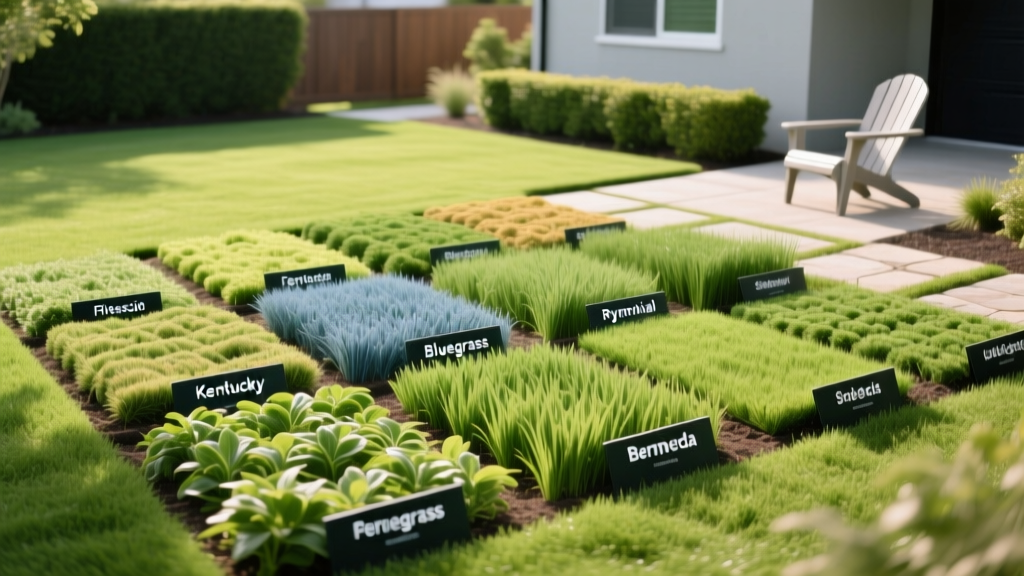
The Ultimate Grass Seed and Fertilizer Mix Guide for New Lawns
Establishing a new lawn or overseeding an existing one requires more than just scattering seed over dirt. The success of your germination hinges on the precise nutrient environment surrounding the seed. A properly calibrated grass seed and fertilizer mix provides the immediate phosphorus and nitrogen required for root nucleic acid synthesis and early blade development. Applying the wrong ratio, or using a high-nitrogen mature lawn fertilizer, will result in osmotic stress, seed burn, and total germination failure. This guide details the exact N-P-K matrices, application protocols, and chemical interactions required for successful turf establishment.
The Science Behind a Starter Grass Seed and Fertilizer Mix
When a grass seed imbibes water and breaks dormancy, its primary biological imperative is root establishment, not vertical leaf growth. Standard lawn fertilizers typically feature high nitrogen (N) and low phosphorus (P) ratios, such as 32-0-4. However, a starter fertilizer formulated for a grass seed and fertilizer mix must invert or balance this ratio to prioritize Phosphorus.
Phosphorus is the engine of ATP (adenosine triphosphate) production, which fuels the rapid cell division required for radicle (embryonic root) emergence. According to Penn State Extension, new seedlings lack the root mass to scavenge immobile soil nutrients like phosphorus, making localized starter applications critical.
Warning: Phosphorus Legislation
Several states, including New York, New Jersey, and Minnesota, have strict bans on phosphorus-containing fertilizers to protect watersheds from algal blooms. However, these laws universally include an exemption for new lawn establishment or when a soil test confirms a deficiency. Always keep your soil test results or seed purchase receipts on hand if applying a phosphorus-rich grass seed and fertilizer mix in regulated zones.
Calculating Actual Nutrient Loads
Fertilizer bags display N-P-K ratios by weight. If you purchase a 40lb bag of 18-24-12 starter fertilizer, you are not applying 18lbs of nitrogen. You must calculate the actual nutrient load to avoid seed burn:
- Nitrogen (N): 40 lbs × 0.18 = 7.2 lbs of actual Nitrogen.
- Phosphorus (P2O5): 40 lbs × 0.24 = 9.6 lbs of actual Phosphorus.
- Potassium (K2O): 40 lbs × 0.12 = 4.8 lbs of actual Potassium.
For new seedlings, the target application rate is 0.5 to 1.0 lbs of actual Phosphorus (P2O5) per 1,000 square feet. Exceeding this provides no additional agronomic benefit and increases salt-index stress on the germinating seed.
N-P-K Ratio Matrix for Different Grass Types
Different turfgrass species have varying metabolic demands during the first 30 days of establishment. Cool-season grasses generally require a slightly higher nitrogen push to survive early frost windows, while warm-season grasses prioritize deep root anchoring.
| Grass Species | Ideal Starter N-P-K Ratio | Application Rate (per 1,000 sq ft) | Primary Establishment Focus |
|---|---|---|---|
| Kentucky Bluegrass | 24-25-4 or 18-24-12 | 0.8 lbs P2O5 | Rhizome initiation and frost hardiness |
| Tall Fescue | 18-24-12 or 12-18-8 | 0.6 lbs P2O5 | Deep taproot development |
| Perennial Ryegrass | 24-25-4 | 0.5 lbs P2O5 | Rapid germination and erosion control |
| Bermudagrass (Seed) | 12-18-8 or 10-18-10 | 1.0 lbs P2O5 | Stolon spreading and heat tolerance |
| Zoysiagrass (Seed) | 12-18-8 | 0.8 lbs P2O5 | Slow initial root anchoring |
Pre-Mixed vs. Separate Applications: Pros and Cons
Homeowners must decide between buying a pre-blended grass seed and fertilizer mix (where seed and nutrients are coated or bagged together) or purchasing seed and starter fertilizer separately. As of 2026, premium standalone starter fertilizers range from $42 to $65 per 40lb bag, while pre-mixed seed/fertilizer combinations often carry a 20% convenience premium.
Pre-Mixed Combinations
Pros:
- Single-pass application saves time.
- Ensures fertilizer is in direct proximity to the seed.
Cons:
- Seed-to-fertilizer contact can cause osmotic desiccation if left on the surface without watering.
- Cannot customize the seeding rate independently of the fertilizer rate.
- Limited cultivar choices; usually restricted to generic contractor-grade seed.
Separate Applications (Recommended)
Pros:
- Allows selection of premium, A-NUE certified seed cultivars (e.g., Titan Ultra Tall Fescue).
- Enables precise calibration of seed density (e.g., 8 lbs/1,000 sq ft) separate from nutrient load.
- Reduces risk of seed burn by allowing soil incorporation of fertilizer before seeding.
Cons:
- Requires two passes with a spreader.
- Requires calculating two separate spreader dial settings.
Step-by-Step Application Protocol to Avoid Seed Burn
Fertilizer salts draw water out of germinating seeds through osmosis. If the salt index of your grass seed and fertilizer mix is too high in the top 1/4 inch of soil, the seed will dehydrate and die before the radicle penetrates the seed coat. Follow this protocol to mitigate risk:
- Conduct a Baseline Soil Test: Use a mail-in test (like those from University of Minnesota Turfgrass Science or your local extension) to verify baseline Phosphorus levels. If P is already >40 ppm (Mehlich-3), use a zero-phosphorus starter (e.g., 24-0-4) and rely on residual soil P.
- Grade and Rake: Prepare the seedbed to a fine tilth. Remove debris larger than 1/2 inch.
- Apply Starter Fertilizer First: Set your broadcast spreader to the manufacturer's recommended setting for your specific starter product (e.g., Scotts Turf Builder Starter Food 24-25-4). Apply the fertilizer directly to the bare soil.
- Lightly Incorporate: Use a leaf rake to scratch the fertilizer into the top 1/8 inch of soil. This creates a buffer zone and prevents direct seed-to-granule contact.
- Sow the Seed: Apply your chosen grass seed at the recommended rate. For overseeding, use half the new-lawn rate.
- Topdress and Roll: Apply a 1/4 inch layer of peat moss or compost over the seed. Run an empty lawn roller over the area to press the seed into the soil matrix, ensuring capillary water contact.
- Initiate Hydration: Water immediately with a fine mist to dissolve the fertilizer salts into the soil solution, moving them away from the seed coat and into the root zone.
Troubleshooting Edge Cases and Failure Modes
Even with a perfectly calibrated grass seed and fertilizer mix, environmental variables can disrupt establishment. Use this diagnostic framework to identify and correct issues during the critical 14-to-21-day germination window.
| Symptom | Probable Cause | Corrective Action |
|---|---|---|
| Seedlings emerge, then turn yellow/brown at the tips and collapse. | Seed Burn / Osmotic Stress. Fertilizer salt index is too high in the germination zone, or urea-based nitrogen is off-gassing ammonia. | Increase watering frequency to leach salts below the root zone. Switch to a slow-release methylene urea nitrogen source for future applications. |
| Green crust or slime forming on the soil surface between seeds. | Algae Growth. Excessive surface moisture combined with high phosphorus runoff from the starter fertilizer. | Reduce watering duration but maintain frequency. Lightly rake the surface to break the algae crust and allow oxygen to reach the seed. |
| Seeds swell but fail to produce a radicle (root). | Phosphorus Lockout. Soil pH is above 7.5 or below 5.5, causing phosphorus to bind with calcium or iron, rendering it unavailable. | Apply pelletized sulfur (for high pH) or lime (for low pH) based on soil test results. Use a liquid kelp extract to provide immediate trace micronutrients. |
| Uneven germination; thick patches next to bare spots. | Spreader Overlap Error. Double-application of the grass seed and fertilizer mix caused localized toxicity in overlap zones. | Use a spreader with an edge-guard feature. Mark wheel tracks with landscaping paint to ensure precise overlap on the next pass. |
Mastering the grass seed and fertilizer mix is a exercise in chemical balance and precise timing. By prioritizing phosphorus availability, calculating actual nutrient loads, and physically buffering the seed from high salt-index granules, you transition from simply planting seed to engineering a high-performance turf establishment environment.