Grass Types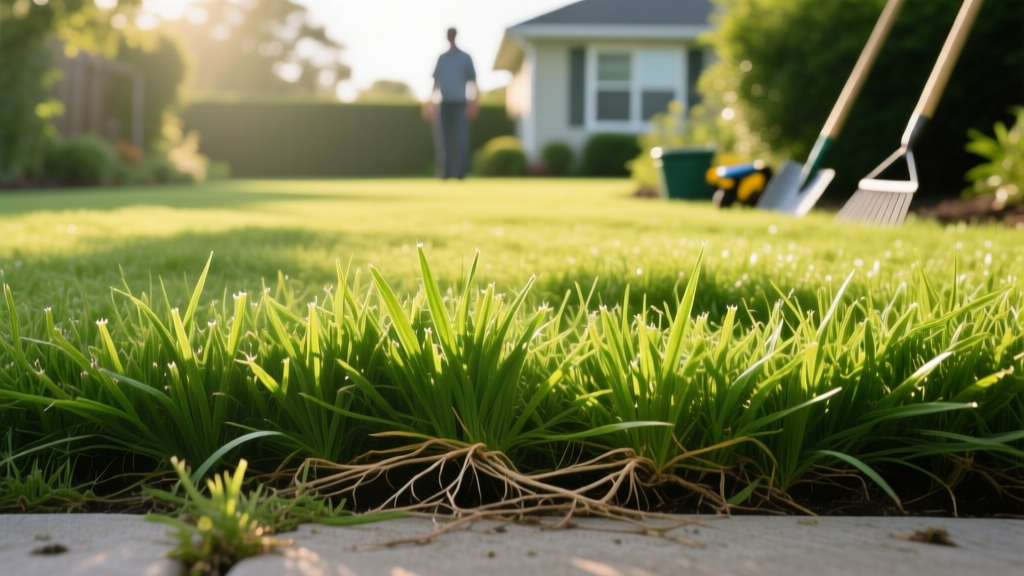
Bermuda Grass Taking Over? How to Stop the Spread Fast
The Biology of the Invasion: Why Bermuda Grass Spreads So Fast
When homeowners realize they have Bermuda grass taking over their cool-season lawn, the infestation is usually already well-established beneath the surface. Cynodon dactylon is a warm-season perennial that utilizes a dual-threat reproductive system: above-ground stolons and below-ground rhizomes. During peak summer temperatures (85°F to 95°F), Bermuda stolons can grow up to 3 inches per day, while rhizomes push through compacted clay soils to depths of 6 to 8 inches.
Data Highlight: A single square foot of mature Bermuda grass can contain over 400 linear feet of rhizomes. If you attempt to rototill an infested Tall Fescue lawn without chemical treatment first, you will chop these rhizomes into thousands of viable nodes, multiplying the invasion rather than stopping it.
Because Bermuda thrives in heat and drought while cool-season grasses like Tall Fescue and Kentucky Bluegrass struggle in mid-summer, the warm-season invader easily outcompetes the desired turf during July and August. Stopping this spread requires a multi-pronged approach combining selective chemistry, physical containment, and cultural suppression.
Selective Eradication: Chemical Controls for Cool-Season Lawns
If your Bermuda grass is taking over a Tall Fescue or Kentucky Bluegrass lawn, non-selective herbicides like glyphosate will destroy your desirable turf alongside the weed. Instead, you must use selective grassy-weed herbicides that target the specific cellular processes of warm-season grasses.
| Active Ingredient | Brand Example | Safe For | Application Rate | Est. Cost (2026) |
|---|---|---|---|---|
| Fluazifop-p-butyl | Ornamec 170, Grass-B-Gon | Tall Fescue, KBG | 0.5 - 0.75 fl oz / 1,000 sq ft | $95 - $115 / pint |
| Ethofumesate | Prograss | KBG, Perennial Ryegrass | 1.5 - 2.0 fl oz / 1,000 sq ft | $140 / quart |
| Fenoxaprop-p-ethyl | Acclaim Extra | Tall Fescue, KBG, Zoysia | 0.3 - 0.4 fl oz / 1,000 sq ft | $120 / quart |
According to turfgrass research from NC State Turfgrass Science, Fluazifop-p-butyl is the most effective post-emergent option for suppressing Bermuda in Tall Fescue. For optimal results, apply Fluazifop when the Bermuda is actively growing but not heat-stressed (early June or late August). You must include a non-ionic surfactant (NIS) at a 0.25% v/v rate to ensure the chemical penetrates the waxy cuticle of the Bermuda leaf. Expect to make two applications spaced 21 to 28 days apart for complete suppression.
Cultural Suppression: Starving the Invader
Herbicides alone will not permanently solve the issue if the canopy remains open. You must manipulate your mowing and fertilization schedules to favor the cool-season grass.
- Mowing Height: Raise your mower deck to 3.5 or 4.0 inches. Tall Fescue mowed at this height creates a dense canopy that shades the soil surface. Bermuda stolons require direct sunlight and high soil temperatures to root; shading drops the soil temperature and halts stolon establishment.
- Fertilization Timing: Apply zero nitrogen during the summer months (June through August). Summer nitrogen feeds the invading Bermuda. Instead, heavily fertilize the Fescue in the fall. Apply 1.0 lb of nitrogen per 1,000 sq ft in early September and again in late October to build a dense winter canopy that chokes out early spring Bermuda emergence.
Containing the Perimeter: Physical Barriers for Landscape Beds
When Bermuda grass is taking over mulched landscape beds or garden borders, chemical controls are risky due to drift damage to ornamental shrubs. Physical exclusion is mandatory. Standard plastic lawn edging (4 to 6 inches deep) is entirely useless against Bermuda rhizomes, which will simply grow under or through thin barriers.
Installing a Professional Root Barrier
- Trenching: Dig a continuous trench along the bed perimeter that is exactly 6 inches wide and 18 to 24 inches deep.
- Material Selection: Use a minimum 80-mil thick High-Density Polyethylene (HDPE) or galvanized steel edging.
- Angling: Install the barrier at a 15-degree angle leaning away from the garden bed. When rhizomes hit the barrier, the angle forces them upward to the surface rather than allowing them to hook under the bottom edge.
- Top Edge: Leave 1 inch of the barrier exposed above the soil grade to stop above-ground stolons from creeping over the top.
Expert Insight: The University of California Statewide IPM Program notes that even with deep physical barriers, you must maintain a 2-inch 'inspection zone' of bare soil or gravel on the lawn side of the barrier to easily spot and pull any stolons attempting to bridge the gap.
The Dormant Season Advantage: Winter Treatment Protocols
If your cool-season lawn is heavily infested, the most effective eradication window occurs when the Bermuda is dormant but the Fescue is actively growing. This typically happens in late November or early March, depending on your hardiness zone.
During this window, you can use a non-selective herbicide like Glyphosate (41% active ingredient) at a rate of 1.5 fl oz per gallon of water. Because the Bermuda grass is dormant, it will not translocate the chemical effectively, but it will burn back the early green-up of the Bermuda crowns. Meanwhile, the actively growing Tall Fescue will easily metabolize and survive the minor glyphosate contact. Always verify soil temperatures are below 50°F before attempting dormant treatments, as any warmth will cause the Bermuda to break dormancy and absorb the lethal dose, potentially killing your entire lawn.
For further reading on seasonal weed management strategies, refer to the comprehensive guidelines published by University of Georgia Extension (Publication B1352).
Decision Matrix: Which Eradication Method Should You Choose?
Use the following framework to determine your immediate action plan based on your specific lawn composition and the severity of the invasion.
| Scenario | Primary Action | Secondary Action | Expected Timeline |
|---|---|---|---|
| Light patches in Tall Fescue | Spot treat with Fluazifop in late summer | Raise mowing height to 4 inches | 1-2 months for suppression |
| Heavy infestation (>40% lawn) | Kill entire lawn with Glyphosate in August | Rototill, rake rhizomes, and re-seed Fescue in Sept | 3-4 months for full renovation |
| Invading landscape beds | Install 18-inch HDPE root barrier | Paint stolons with 5% Glyphosate gel | Immediate containment |
| Winter dormancy window | Apply Glyphosate when soil is <50°F | Apply Ethofumesate (Prograss) if KBG lawn | Reduces spring emergence by 60% |
Managing an aggressive warm-season invader requires patience and strict adherence to application timings. By combining selective post-emergent chemistry with canopy-shading mowing practices and deep physical barriers, you can successfully reclaim your cool-season turf without starting from scratch.