
Grass Types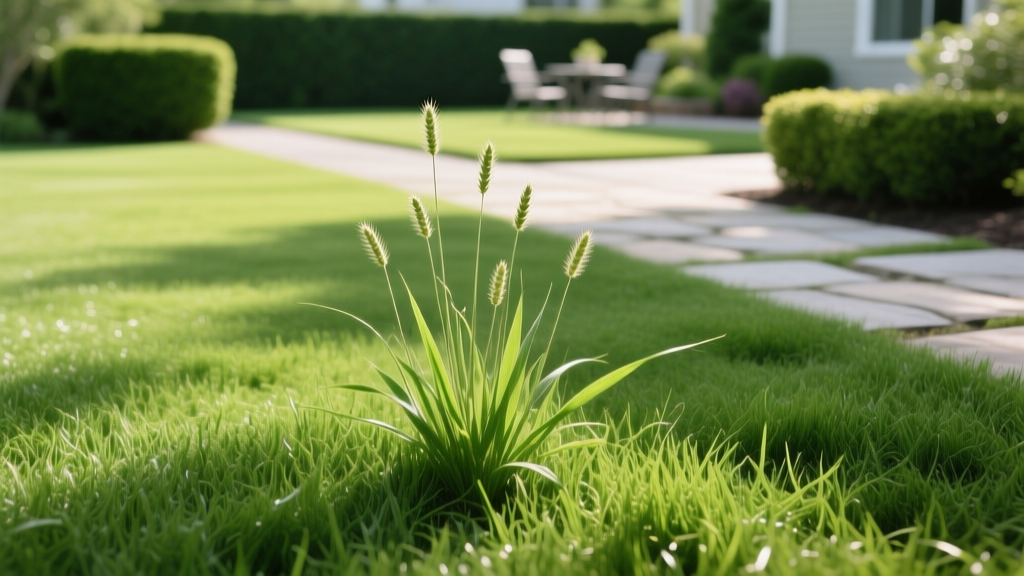
How to Stop Common Bermuda Seed Heads From Ruining Your Lawn
The Biology of the Bermuda Seed Head Flush
If your once-pristine warm-season lawn suddenly looks like it has been dusted with snow or invaded by tall, Y-shaped weeds in late spring, you are dealing with common bermuda seed heads. Unlike hybrid bermudagrasses (such as Tifway 419 or Celebration), which are largely sterile triploids, common bermuda (Cynodon dactylon) is a prolific, fertile diploid species. When environmental triggers align, the grass shifts its energy from lateral stolon growth to vertical reproduction, pushing tough, fibrous seed stalks through the turf canopy.
Photoperiod and Temperature Triggers
Seed head production in common bermuda is primarily driven by photoperiod (day length) and soil temperature. The flush typically initiates when daylight hours exceed 14 hours and soil temperatures consistently hover between 75°F and 85°F. In most of the transitional and deep southern zones, this creates a massive reproductive flush between mid-May and late June. According to Texas A&M AgriLife Extension, this biological imperative is incredibly strong; the plant will sacrifice root and stolon development to ensure seed production, leading to a temporary thinning of the turf canopy and increased vulnerability to drought stress.
The 'White Cast' Phenomenon: Why Your Lawn Looks Dusty
One of the most misunderstood symptoms of a seed head flush is the grayish-white cast that appears over the lawn a day or two after mowing. Homeowners often mistake this for a fungal disease like powdery mildew or dollar spot. In reality, this is mechanical damage caused by rotary mower blades.
Bermuda seed stalks are highly fibrous and rich in silica. A standard rotary mower blade relies on high-speed impact to cut grass. When it strikes a mature seed stalk, the stalk bends and tears rather than slicing cleanly. The shredded tissue at the tip of the stalk rapidly oxidizes, dries out, and turns white. To eliminate this unsightly 'white cast,' you must either switch to a reel mower (which uses a precise scissor-cut action) or drastically increase your mowing frequency so the seed stalks are removed before they mature and become too fibrous to tear.
Pro Turf Tip: Blade Sharpening Intervals
During the peak seed head flush (May-June), you must sharpen your rotary mower blade every 10 to 12 hours of actual mowing time. A dull blade will exacerbate the white cast effect and create open wounds on the grass, inviting pathogens like leaf spot.
During the peak seed head flush (May-June), you must sharpen your rotary mower blade every 10 to 12 hours of actual mowing time. A dull blade will exacerbate the white cast effect and create open wounds on the grass, inviting pathogens like leaf spot.
4-Step Protocol to Eradicate Seed Heads
Eliminating seed heads requires a multi-pronged approach that disrupts the plant's reproductive cycle while maintaining turf density. Follow this exact protocol during the late spring flush.
1. High-Frequency Mowing and the 1/3 Rule
Maintain common bermuda at a height of 1.0 to 1.5 inches. During the seed head flush, the vertical growth rate accelerates. You must adhere strictly to the 1/3 rule: never remove more than one-third of the leaf blade in a single pass. If your target height is 1.5 inches, you must mow when the grass reaches 2.25 inches. During peak flush, this often requires mowing every 3 to 4 days. By mowing frequently, you physically remove the seed heads before they emerge fully from the leaf sheath.
2. Apply Plant Growth Regulators (PGRs)
For the most effective chemical suppression, apply a Class A Plant Growth Regulator containing the active ingredient trinexapac-ethyl (commonly sold as Primo Maxx). Trinexapac-ethyl inhibits the biosynthesis of gibberellic acid, a hormone responsible for vertical cell elongation. This stops the seed stalks from pushing through the canopy and forces the plant to redirect energy into lateral stolon and rhizome growth.
- Application Rate: 0.25 to 0.5 fluid ounces per 1,000 square feet.
- Timing: Apply just before the anticipated flush (early May) and reapply every 21 to 28 days until mid-July.
- Cost Expectation: A 16 oz bottle of generic trinexapac-ethyl costs roughly $40 to $55 and will treat up to 12,000 square feet per application.
NC State TurfFiles notes that consistent PGR use not only suppresses seed heads but also significantly improves turf density and drought tolerance by promoting a deeper, more robust root system.
3. Strategic Nitrogen Reduction
Conventional wisdom suggests feeding your lawn to keep it healthy, but pushing heavy nitrogen during the seed head flush is counterproductive. High nitrogen rates (1.0+ lbs of actual N per 1,000 sq ft) stimulate rapid vertical leaf growth, meaning the seed stalks will outpace your mowing schedule. During May and June, drop your nitrogen application to 0.5 lbs per 1,000 sq ft. Use a slow-release, sulfur-coated urea (SCU) or methylene urea (MU) to provide a steady, low-level feed that supports lateral density without triggering explosive vertical growth.
4. Deep, Infrequent Irrigation
Shallow, daily watering encourages the grass to produce shallow roots and stress-induced seed heads. Switch to deep, infrequent irrigation. Apply 0.5 to 0.75 inches of water per session, allowing the top inch of soil to dry out completely before watering again. This mild, controlled moisture stress signals to the plant that conditions are stable, reducing the biological panic that triggers early reproduction.
Control Method Comparison Matrix
| Control Method | Mechanism of Action | Effectiveness | Estimated Seasonal Cost (per 5,000 sq ft) |
|---|---|---|---|
| Reel Mowing | Scissor-cut removes stalks cleanly below canopy | High (Visual only) | $0 (if owned) / $800+ (equipment purchase) |
| Trinexapac-ethyl (PGR) | Inhibits gibberellic acid, stops vertical elongation | Very High (Biological) | $15 - $25 |
| Frequent Rotary Mowing | Physical removal before stalk maturity | Moderate (Labor intensive) | $10 - $20 (blade sharpening/fuel) |
| Nitrogen Management | Reduces vertical flush by limiting available N | Moderate (Supportive) | $10 - $15 (fertilizer adjustment) |
Frequently Asked Questions
Can I use a weed killer to burn off the seed heads?
No. Selective herbicides like 2,4-D or Celsius WG target broadleaf weeds and certain grassy weeds, but they will not distinguish between the bermuda seed stalk and the bermuda grass blade. Applying a non-selective herbicide like glyphosate will kill your entire lawn. Stick to PGRs and mechanical removal.
Will the seeds from my common bermuda grass germinate and fill in bare spots?
While common bermuda seeds are viable, they require highly specific conditions to germinate successfully in an established lawn, including bare soil contact, constant moisture, and temperatures above 70°F. In a dense, healthy lawn, the seeds will simply rot in the thatch layer. If you have bare spots, it is far more effective to plug them with live bermuda stolons or use a specialized bermudagrass seed mix in late summer.
My lawn is a hybrid bermuda (Tifway 419). Why is it still producing a few seed heads?
Hybrid bermudas are triploids and are functionally sterile, meaning they do not produce viable seed. However, under severe environmental stress (extreme drought, heavy soil compaction, or severe nutrient deficiency), hybrid bermudas may still produce a small number of vestigial, sterile seed stalks as a stress response. If your hybrid is producing seed heads, conduct a soil test and evaluate your irrigation schedule immediately, as this is a primary indicator of turf distress.

