
Grass Types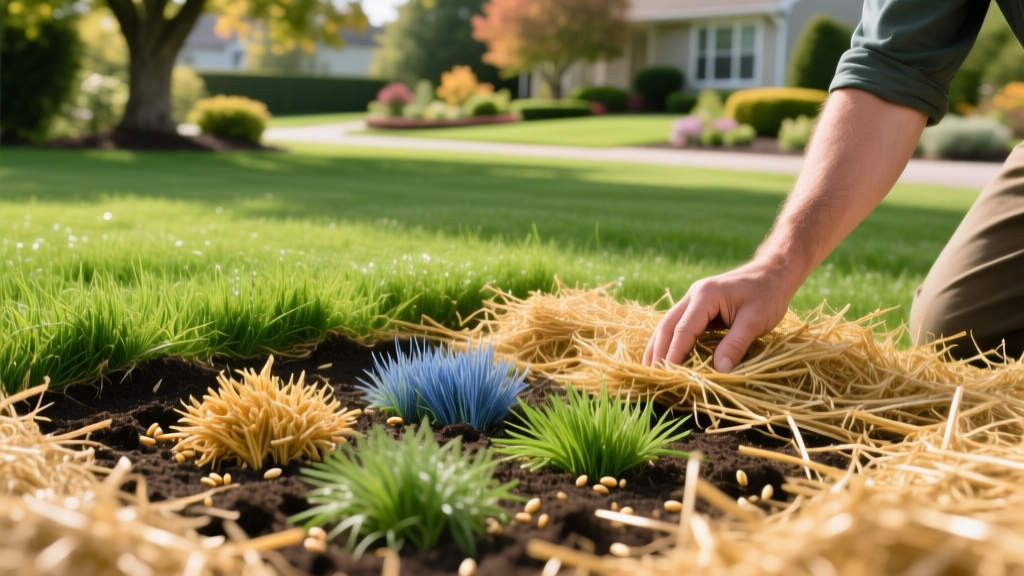
Using Straw for Lawn Seeding: Coverage Rates, Costs, and Best Types
The Microclimate Effect: Why Grass Seed Needs Straw
Applying a mulch layer is not an optional aesthetic step; it is a biological necessity for successful turfgrass establishment. When you use straw for lawn seeding, you are engineering a localized microclimate that directly impacts the imbibition phase of seed germination. Bare soil exposed to direct sunlight and wind can lose up to 1/4 inch of moisture per day through evaporation. Grass seeds, particularly fine fescues and Kentucky bluegrass, require constant surface moisture for 14 to 21 days to successfully radicle and emerge.
According to turfgrass researchers at the University of Minnesota Extension, a proper straw layer reduces soil surface evaporation by 60% to 65%, cuts down on the frequency of required irrigation cycles, and buffers the soil temperature against sudden spring frosts or late-summer heat spikes. Furthermore, the physical barrier deters foraging birds and prevents high-velocity raindrops from dislodging seeds or causing micro-erosion channels in the seedbed.
Wheat, Oat, or Pine? Selecting the Right Material
Not all bales are created equal. The structural integrity, decomposition rate, and weed-seed contamination levels vary drastically depending on the crop origin.
Wheat Straw (The Gold Standard)
Wheat straw features hollow, rigid stems that resist matting and allow optimal air circulation and light penetration to the soil surface. It contains the lowest concentration of viable weed seeds among grain straws because wheat is typically harvested before secondary weeds go to seed, and the threshing process effectively separates the grain. It breaks down slowly over 4 to 6 months, providing long-term protection without requiring manual removal.
Oat Straw (The Budget Alternative)
Oat straw is softer and breaks down faster than wheat, but it carries a distinct risk: viable oat seeds. If the oats were not properly winter-killed or harvested late, you may inadvertently plant a temporary oat cover crop alongside your turf. While these volunteer oats will eventually die off or be mowed out, they compete for water and nutrients during the critical first 30 days of turf establishment.
Pine Straw (The Specialty Option)
Pine straw (pine needles) is highly resistant to matting and does not blow away easily once settled. However, it is best reserved for acidic soils or areas around acid-loving ornamentals. Pine needles do not hold moisture against the soil surface as effectively as hollow grain straws, and their slow decomposition rate means they will remain visible on the lawn well into the first year, potentially interfering with early mower blade engagement.
Straw vs. Hay: A Costly Mistake
Homeowners frequently confuse straw with hay, leading to disastrous results. Hay is a livestock feed cut while the plant is still green and nutrient-dense, meaning it is loaded with viable agricultural and broadleaf weed seeds. Straw is the dried, hollow stalk left over after the grain harvest.
| Characteristic | Wheat Straw | Grass Hay / Alfalfa |
|---|---|---|
| Viable Weed Seeds | Very Low (0-5 per sq ft) | Extremely High (50-200+ per sq ft) |
| Nutrient Content | Low (High Carbon) | High (High Nitrogen/Protein) |
| Decomposition Speed | Slow (4-6 months) | Rapid (2-3 months, causes nitrogen tie-up) |
| Mold/Fungus Risk | Low | High (promotes Pythium blight) |
Calculating Exact Coverage Rates and 2026 Costs
Over-applying straw is just as damaging as under-applying it. The industry standard for turfgrass establishment is the 1,000 Square Foot Rule. One standard square bale of wheat straw (weighing approximately 50 to 60 lbs) should cover exactly 1,000 square feet of seeded area.
In 2026, the average cost for a square bale of wheat straw ranges from $8 to $14, depending on regional transport costs and local drought conditions affecting harvest yields. For a standard 5,000 square foot suburban lawn, you will need 5 bales, budgeting between $40 and $70 for the material. Avoid purchasing round bales (which can weigh 800+ lbs) unless you have a tractor and a mechanical fluffer; hand-teasing a tightly compressed round bale will result in uneven, clumpy application and severe physical strain.
Application Protocol: The 50% Soil Visibility Rule
Follow this exact sequence to ensure optimal seed-to-soil contact and light penetration.
- Seed and Fertilize First: Broadcast your grass seed and starter fertilizer, then lightly rake or roll the seedbed to incorporate the seed into the top 1/8 inch of soil.
- Cut the Twine and Shake: Never dump chunks of straw directly onto the lawn. Cut the bale twine and use a pitchfork to gently shake the straw apart, letting it fall like snow.
- The 50% Visibility Test: Look down at the soil. You must be able to see 50% of the bare soil through the straw layer. The target depth is 1/4 to 1/2 inch. If the soil is completely hidden, the layer is too thick, blocking the photosynthetically active radiation (PAR) required for seedling emergence.
- Initial Tamping: Run an empty, lightweight lawn roller over the straw, or use the back of a landscape rake to gently press the straw into the soil. This prevents wind displacement.
Troubleshooting Common Straw Failures
Warning: Wind Displacement
If high winds are forecasted within 48 hours of seeding, straw will blow into neighboring beds or pool in low-lying areas. To counteract this, apply a light tackifier spray (like organic psyllium seed hull emulsions) or immediately irrigate the lawn with 1/4 inch of water to mat the straw slightly into the soil surface.
If high winds are forecasted within 48 hours of seeding, straw will blow into neighboring beds or pool in low-lying areas. To counteract this, apply a light tackifier spray (like organic psyllium seed hull emulsions) or immediately irrigate the lawn with 1/4 inch of water to mat the straw slightly into the soil surface.
Pro Tip: Preventing Damping-Off Disease
If you apply straw too thickly (failing the 50% visibility test), the trapped humidity creates an ideal breeding ground for soil-borne pathogens like Pythium and Rhizoctonia. These fungi cause damping-off, where seedlings suddenly pinch at the soil line and die. If you notice white, web-like mycelium on the straw in the morning, reduce irrigation frequency and lightly rake the matted areas to increase airflow.
If you apply straw too thickly (failing the 50% visibility test), the trapped humidity creates an ideal breeding ground for soil-borne pathogens like Pythium and Rhizoctonia. These fungi cause damping-off, where seedlings suddenly pinch at the soil line and die. If you notice white, web-like mycelium on the straw in the morning, reduce irrigation frequency and lightly rake the matted areas to increase airflow.
When to Abandon Straw: Steep Slopes and RECPs
Straw relies on gravity and friction to stay in place. On slopes with a grade steeper than 3:1 (a 3-foot horizontal run for every 1-foot vertical rise), irrigation and rainfall will wash the straw and the underlying seed into a concentrated pile at the bottom of the hill.
For these extreme grades, abandon loose straw entirely. Instead, utilize Rolled Erosion Control Products (RECPs) such as biodegradable jute netting, excelsior blankets (like Curlex), or coconut coir mats. These materials are unrolled directly over the seeded soil and pinned with 6-inch landscape staples every 3 feet, providing a permanent matrix for the grass roots to weave through during the critical 60-day establishment window. For comprehensive regional seeding timelines and soil preparation data, always cross-reference your local university extension turfgrass fact sheets before purchasing materials.

