Grass Types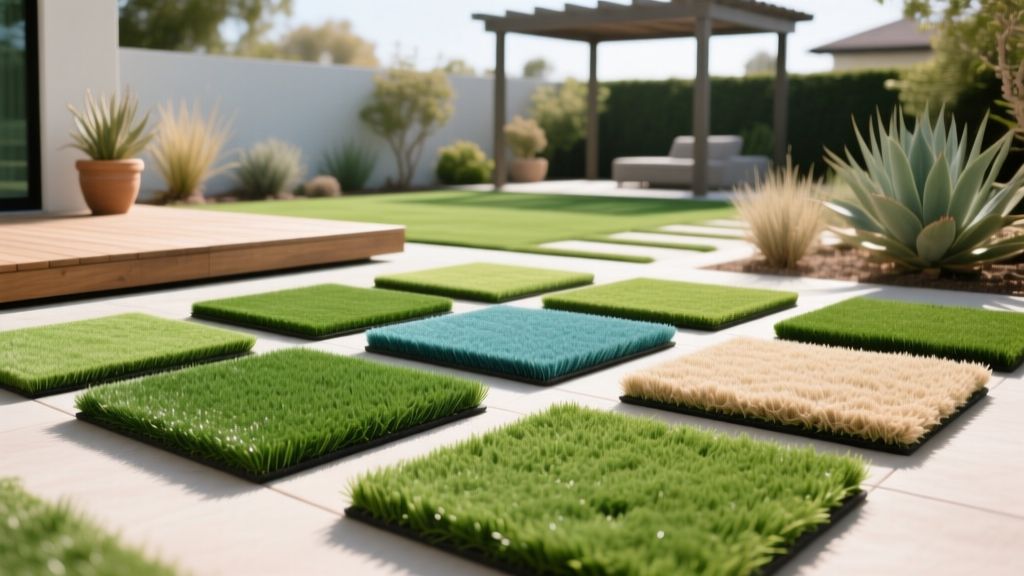
Beginner Guide to Choosing the Right Synthetic Turf Backyard Grass
Transitioning from natural grass to a synthetic turf backyard is one of the most impactful landscaping decisions a homeowner can make. According to the EPA WaterSense program, outdoor water use accounts for nearly 30% of total household water consumption, much of which goes toward maintaining traditional lawns. While artificial grass eliminates mowing, watering, and fertilizing, the market is flooded with confusing specifications. Beginners often make the mistake of selecting turf based solely on color and softness, ignoring critical structural metrics like face weight, drainage backing, and infill requirements.
This guide cuts through the marketing jargon to provide a practical, data-driven framework for selecting and installing the right synthetic turf for your specific backyard environment, whether you have heavy foot traffic, pets, or shaded areas.
Decoding Synthetic Turf Specifications: The Big Three
When requesting quotes or ordering samples, manufacturers will provide a spec sheet. You need to focus on three primary metrics that dictate the longevity and performance of your synthetic turf backyard.
1. Pile Height and the "Mat-Down" Effect
Pile height refers to the length of the grass blades from the backing to the tip. For residential backyards, the optimal pile height is between 1.5 inches and 1.75 inches. Beginners often gravitate toward 2.25-inch or 2.5-inch turf because it looks lush in the showroom. However, without heavy infill, taller blades lack the structural integrity to stand upright under foot traffic. Over time, they fold over, mat down, and trap heat, creating a flat, unnatural surface. A 1.5-inch pile with a dense thatch layer will remain upright for years with minimal maintenance.
2. Face Weight: The True Measure of Density
Face weight measures the ounces of yarn per square yard of turf. It dictates how dense and durable the grass is.
Data Highlight: Aim for a face weight between 50 oz and 70 oz per square yard for residential backyards. Turf below 40 oz will look sparse and wear out quickly in high-traffic zones. Turf above 75 oz is generally reserved for commercial applications and is unnecessarily expensive for home use.
3. Yarn Material and Shape
The plastic used to extrude the blades determines how the turf handles UV exposure, heat, and physical stress. The Synthetic Turf Council (STC) recognizes three primary yarn types, each with distinct trade-offs.
| Yarn Material | Best Use Case | Pros | Cons |
|---|---|---|---|
| Polyethylene (PE) | General backyard use, landscaping | Softest feel, excellent UV resistance, natural look | Lower resilience; requires quality infill to stay upright |
| Nylon | High-traffic zones, putting greens | Highest durability, excellent heat resistance, stands upright without infill | Stiffer feel, more expensive, can retain static |
| Polypropylene (PP) | Decorative areas, low-budget projects | Most affordable, good for short pile heights | Degrades quickly under UV, flattens easily, not for active yards |
Expert Tip: Look for "dual-yarn" or "hybrid" turf that uses a Polyethylene face yarn for softness and a nylon thatch layer for structural support.
The Hidden Engine: Infill and Drainage Systems
A common beginner misconception is that synthetic turf is a "roll-it-out-and-walk-away" product. In reality, the infill and the backing drainage system are what make or break your installation.
Selecting the Right Infill
Infill weighs down the turf, protects the primary backing from UV degradation, and keeps the blades upright. You will need approximately 1.5 to 2 pounds of infill per square foot.
- Silica Sand: The most economical option ($0.15 - $0.25 per sq ft). Best for ornamental lawns with no pets. It can retain heat and does not neutralize odors.
- Zeolite: A natural, highly porous mineral ($0.40 - $0.60 per sq ft). Zeolite is mandatory for backyards with dogs. Its crystalline structure absorbs ammonia from pet urine and prevents odors from escaping into the yard.
- Coated TPE (Thermoplastic Elastomer): Products like Envirofill ($0.70 - $1.00 per sq ft) feature an antimicrobial acrylic coating. They stay significantly cooler than sand and are highly durable, making them ideal for play areas.
Warning: Never use crumb rubber (recycled tire rubber) in a residential backyard. While common on sports fields, it retains extreme heat (reaching 150°F+ in summer) and can track black dust into your home.
Drainage Backing: Hole-Punched vs. Fully Permeable
If your backyard experiences heavy rain or houses pets, drainage is critical. Traditional turf features "hole-punched" backing with drainage holes spaced every few inches. While this drains water adequately (usually rated at 30-40 inches per hour), pet urine can pool between the holes, leading to bacterial growth and odor. For pet owners, insist on fully permeable backing (often branded as 100% permeable or micro-porous). This allows liquids to drain uniformly across the entire surface at rates exceeding 100 inches per hour, flushing urine directly into the base layer.
Real-World Cost Breakdown for a 500 Sq. Ft. Backyard
Understanding the financial commitment helps prevent sticker shock. As of 2026, a professional installation for a mid-range synthetic turf backyard typically ranges from $9 to $14 per square foot. Here is how that breaks down for a 500-square-foot project:
- Turf Material (60 oz PE/Nylon blend): $2,000 - $3,000 ($4 - $6 / sq ft)
- Base Materials (Class II road base, DG, weed barrier): $600 - $900 ($1.20 - $1.80 / sq ft)
- Infill (Zeolite for pets): $250 - $350
- Labor & Equipment (Excavation, compaction, seaming): $2,500 - $3,500 ($5 - $7 / sq ft)
- Total Estimated Project Cost: $5,350 - $7,750
While the upfront cost is significant, the University of Minnesota Extension notes that homeowners typically recoup this investment within 5 to 7 years through eliminated water bills, mowing services, and fertilizer costs.
Step-by-Step Base Preparation for Beginners
The turf itself is only as good as the base beneath it. A poorly prepared base will result in sinking, pooling water, and visible seams. If you are DIY-ing or overseeing a contractor, ensure they follow this exact base profile:
- Excavation: Remove 4 to 5 inches of existing soil and organic matter. Cap any existing sprinkler lines and reroute drainage away from the house foundation.
- Sub-Base Layer: Lay down 3 to 4 inches of Class II road base (a mix of crushed rock and fines). Wet it lightly and compact it using a vibratory plate compactor to achieve a 95% compaction rate.
- Leveling Layer: Add a 0.5 to 1-inch layer of Decomposed Granite (DG) or limestone chat. This fine material fills the micro-gaps in the road base, creating a perfectly smooth, hard surface.
- Weed Barrier: Lay a heavy-duty, permeable geotextile weed barrier over the compacted DG. Do not use cheap plastic sheeting, as it will block drainage and cause your yard to flood.
Common Beginner Mistakes to Avoid
Even with the best materials, environmental edge cases can ruin a synthetic turf backyard. Watch out for these specific hazards:
- Window Reflection Melting: Energy-efficient, low-E windows can act like magnifying glasses, focusing sunlight onto the turf and melting the plastic yarn (which melts at roughly 175°F to 200°F). If you have south-facing low-E windows, install a window tint film or plant a buffer shrub to break the focal point.
- Tree Root Heaving: Do not install synthetic turf directly over the shallow surface roots of mature trees (like ficus or oak). As the roots grow, they will push up against the compacted base, creating severe tripping hazards and tearing the turf backing.
- Improper Seaming: Seams should never be placed in high-traffic pathways. Ensure the installer uses high-quality seaming tape and dual-component polyurethane adhesive, allowing a full 24-hour cure time before walking on the joints.
Frequently Asked Questions
Does synthetic turf get too hot in the summer?
Yes, synthetic turf can reach temperatures 30°F to 50°F higher than the ambient air temperature. To mitigate this, choose turf with built-in heat-reflective yarn technology (often branded as CoolTouch or similar), use light-colored TPE infill instead of dark sand, and hose the turf down with water for 60 seconds, which can drop the surface temperature by up to 30 degrees almost instantly.
Can I install synthetic turf over an existing concrete patio?
Yes, but you must use a specialized shock pad underlayment (typically 5mm to 10mm thick) to provide cushioning and allow for lateral drainage. Ensure the concrete has a minimum slope of 1% to prevent water from pooling beneath the turf.