
Grass Types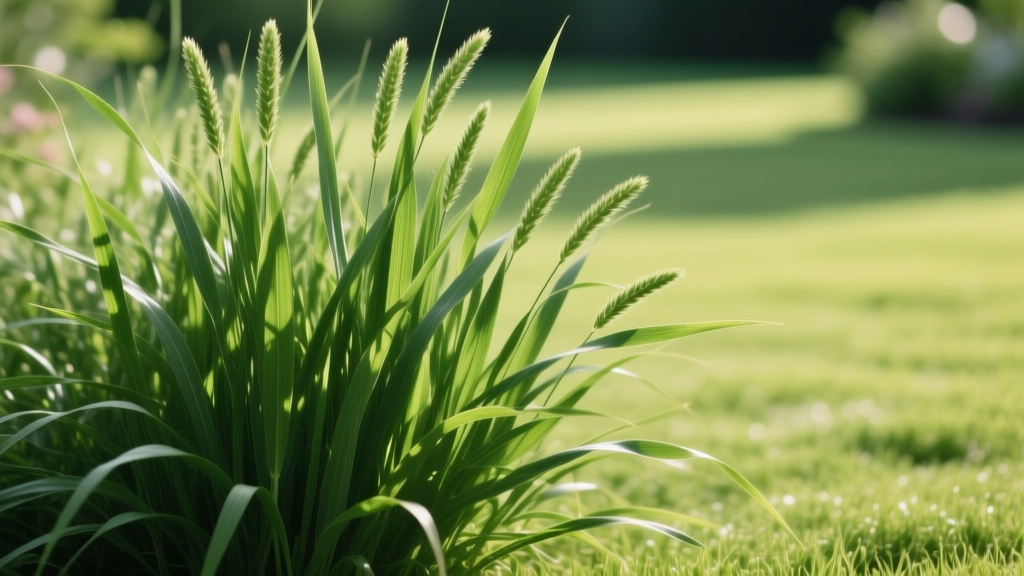
Key Characteristics of Tall Fescue for Beginner Lawns
For homeowners navigating the complexities of lawn care in the transition zone, selecting the right grass is the most critical decision you will make. Tall fescue (Festuca arundinacea) has emerged as the undisputed workhorse for beginner and veteran gardeners alike. Unlike finicky grasses that demand constant intervention, tall fescue offers a resilient, deep-rooted solution that forgives common maintenance errors while maintaining a lush, dark-green aesthetic.
Understanding the specific characteristics of tall fescue is essential before purchasing seed or laying sod. This guide breaks down the botanical traits, environmental tolerances, and modern cultivar options you need to know to establish a thriving lawn.
The Botanical Profile: What Makes Tall Fescue Unique?
Quick Botanical Stats:
- Scientific Name: Festuca arundinacea (syn. Schedonorus arundinaceus)
- Season: Cool-season grass
- USDA Hardiness Zones: 4 through 9 (Thrives in the Transition Zone)
- Growth Habit: Bunchgrass (primarily non-rhizomatous)
Root System and Drought Tolerance
The most defining characteristic of tall fescue is its exceptionally deep root system. While Kentucky Bluegrass roots typically max out at 12 to 18 inches, mature tall fescue roots can plunge 24 to 36 inches into well-aerated soil. This profound depth allows the grass to access subsoil moisture that shallow-rooted competitors cannot reach, granting it superior drought tolerance and heat resilience during mid-summer stress periods.
The Bunchgrass Growth Habit
Unlike Bermudagrass or Kentucky Bluegrass, which spread aggressively via stolons and rhizomes to fill in bare spots, traditional tall fescue is a bunchgrass. It grows in distinct clumps or "tillers." Because it does not naturally creep laterally to repair damage, tall fescue lawns require periodic overseeding to maintain a dense, uniform canopy and prevent weed infiltration in thin areas.
Visual and Physical Characteristics
Historically, tall fescue was criticized for its coarse, wide blades, which earned it the nickname "pig's tail" grass among turf purists. However, decades of breeding have produced "Turf-Type Tall Fescue" (TTTF) and "Dwarf Tall Fescue" varieties with much finer leaf textures that rival bluegrass in visual appeal.
| Trait | Turf-Type Tall Fescue (TTTF) | Kentucky Bluegrass (Comparison) |
|---|---|---|
| Blade Width | Medium to Fine (2-4 mm) | Fine (1-3 mm) |
| Color | Dark Green to Blue-Green | Rich Dark Green |
| Growth Rate | Rapid vertical growth | Moderate vertical, high lateral |
| Shade Tolerance | Moderate to Good | Poor to Moderate |
Environmental Tolerances: Where Does It Thrive?
Tall fescue is highly adaptable, but understanding its specific thresholds will dictate your success. According to North Carolina State Extension, tall fescue is the most widely adapted cool-season grass in the state due to its unique environmental tolerances.
- Sun vs. Shade: Prefers full sun (6+ hours of direct light) but handles moderate shade better than most cool-season grasses. In deep shade, it will thin out and become susceptible to Powdery Mildew.
- Soil Adaptability: Thrives in heavy clay soils where other grasses suffocate. It tolerates a wide pH range of 5.5 to 7.5, though a pH of 6.0 to 6.8 is optimal for nutrient uptake.
- Traffic Tolerance: Moderate. It recovers from foot traffic slower than rhizomatous grasses because it cannot creep back over worn paths. High-traffic areas require annual aeration and overseeding.
Common Beginner Mistakes (And How to Fix Them)
⚠️ Warning: The "Scalping" Trap
Beginners often mow tall fescue down to 2 inches to mimic the look of a golf course fairway. Scalping tall fescue exposes the soil to UV radiation, invites crabgrass invasion, and severely stunts its deep root growth. Never cut more than 1/3 of the blade height at a single mowing.
1. Incorrect Mowing Heights
The ideal mowing height for tall fescue is 3.0 to 4.0 inches. During peak summer heat, raise your mower deck to 4.0 inches. The taller canopy shades the soil, retaining moisture and keeping the root zone up to 10°F cooler than ambient air temperatures.
2. Over-Fertilizing in Summer
As a cool-season grass, tall fescue goes semi-dormant in high heat. Applying high-nitrogen synthetic fertilizers in July or August forces top-growth when the plant is trying to conserve energy. This severely increases the risk of Rhizoctonia solani (Brown Patch fungus). Limit summer fertilization to zero, or use a slow-release organic option at half-rate.
3. Under-Seeding During Establishment
Because it is a bunchgrass, achieving a dense lawn requires the correct seeding rate. For new lawn establishment, apply 5 to 8 lbs of seed per 1,000 square feet. For annual fall overseeding, reduce the rate to 3 to 5 lbs per 1,000 square feet. Penn State Extension emphasizes that using a starter fertilizer high in phosphorus is critical for the first 21 days of germination.
Top Tall Fescue Cultivars to Buy
When purchasing seed, avoid "Kentucky 31" (K-31). K-31 is an older forage-grade cultivar with wide, light-green blades meant for cattle pastures, not aesthetic lawns. Instead, look for proprietary Turf-Type Tall Fescue (TTTF) blends. As of 2026, premium TTTF seed blends typically cost between $7.00 and $11.00 per pound.
Falcon IV
Bred for extreme heat tolerance and a dark green genetic color, Falcon IV features a fine leaf texture and excellent resistance to Brown Patch. It is a top performer in the National Turfgrass Evaluation Program (NTEP) trials.
Titan Ultra
Known for its aggressive tillering (producing new shoots at the base), Titan Ultra helps mitigate the bunchgrass weakness by creating a denser canopy without the need for rhizomes. It performs exceptionally well in heavy clay soils.
Barenbrug RTF (Rhizomatous Tall Fescue)
RTF is a genetic breakthrough that gives tall fescue true rhizomes, allowing it to spread laterally and repair damaged areas like a bluegrass lawn. It is more expensive (often $12+ per pound) but drastically reduces the need for annual overseeding.
Frequently Asked Questions
Is tall fescue resistant to dog urine spots?
Tall fescue is more tolerant of the high nitrogen and salt concentrations in dog urine than Kentucky Bluegrass or Ryegrass. However, it is not entirely immune. Training pets to use a specific mulched area or immediately diluting the spot with a gallon of water remains the best defense against necrotic spots.
How much water does tall fescue need per week?
During active spring and fall growth, tall fescue requires 1 to 1.25 inches of water per week. In mid-summer, increase this to 1.5 inches. Always water deeply and infrequently (e.g., two 45-minute sessions per week) rather than daily light sprinklings, which encourages shallow roots and fungal diseases.
Can I mix tall fescue with Kentucky Bluegrass?
Yes, a 90% Tall Fescue / 10% Kentucky Bluegrass mix is highly recommended by turf scientists. The tall fescue provides the deep roots, drought tolerance, and disease resistance, while the 10% bluegrass acts as an insurance policy, utilizing its rhizomes to creep in and fill any bare spots that the bunchgrass leaves behind.

