Grass Types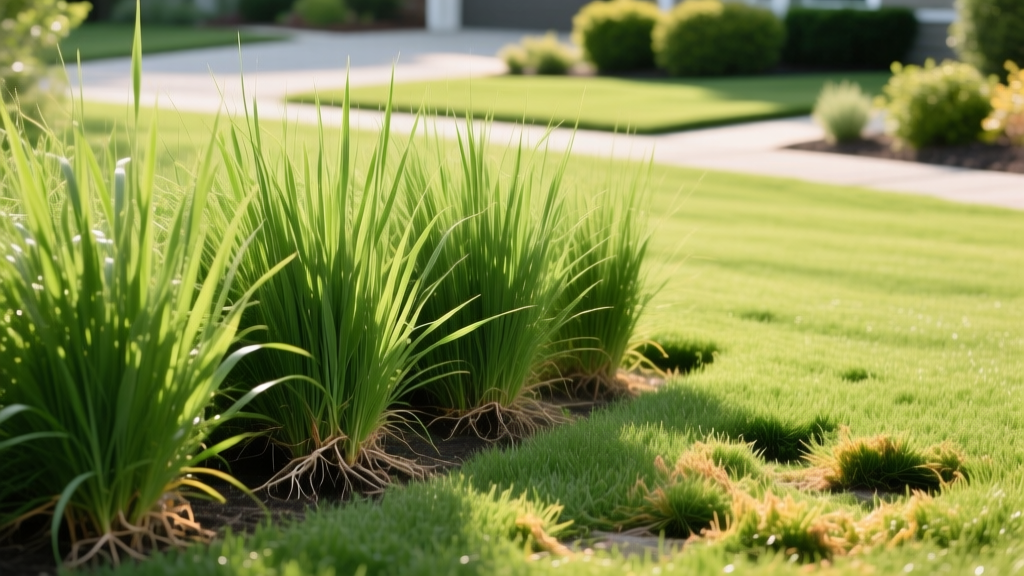
How to Fix and Prevent Tall Fescue Clumps in Your Lawn
Tall fescue is a cornerstone of lawns in the transition zone and cool-season regions due to its deep root system, drought tolerance, and disease resistance. However, many beginner gardeners are frustrated by unsightly tall fescue clumps that disrupt the uniform, carpet-like appearance of their turf. If your lawn looks like a patchwork of thick, coarse tufts separated by thin or bare soil, you are dealing with the natural growth habit of bunchgrass exacerbated by improper seed selection or maintenance.
This guide breaks down the exact biological reasons these clumps form, provides a cost-effective step-by-step removal protocol, and outlines the specific turf-type cultivars you need to plant to ensure a smooth, clump-free lawn moving forward.
The Science Behind Tall Fescue Clumps
To understand why tall fescue clumps, you must understand its classification as a bunchgrass. Unlike Kentucky bluegrass or bermudagrass, which spread laterally via underground rhizomes and above-ground stolons to fill in bare spots, tall fescue (Festuca arundinacea) grows in distinct, vertical tufts.
Expert Insight: Because tall fescue lacks aggressive lateral spreaders, it cannot naturally 'creep' into a damaged area. If a clump dies in the center, it leaves a permanent bare ring until you manually intervene with seed or sod.
According to Penn State Extension, while modern breeding has improved the density of tall fescue, its fundamental bunch-type growth habit remains. When seeds are planted too closely together, or when older, forage-type varieties are used, these individual tufts merge into massive, coarse clumps that stand out starkly against finer surrounding grasses.
4 Primary Causes of Clumping in Residential Lawns
1. Planting Kentucky 31 (K-31) Forage Seed
Kentucky 31 is an older, agricultural forage variety. It is incredibly cheap (often under $2.00 per pound) and highly durable, but it features wide, light-green blades and aggressive vertical growth. K-31 is the number one culprit behind massive, unruly tall fescue clumps in residential lawns.
2. Over-Applying Seed During Overseeding
Beginners often assume 'more seed equals a thicker lawn.' The recommended seeding rate for Turf-Type Tall Fescue (TTTF) is 5 to 6 pounds per 1,000 square feet for new lawns, and 2 to 4 pounds for overseeding. Applying 10+ pounds per 1,000 square feet forces seeds to germinate in dense, competing clusters, resulting in tight, suffocating clumps that eventually die out in the center due to lack of sunlight and airflow.
3. Severe Soil Compaction
Tall fescue relies on a deep root system (often reaching 3 to 4 feet deep in optimal soil). When soil is heavily compacted from foot traffic or clay content, roots cannot penetrate deeply. The plant compensates by growing dense, shallow, vertical foliage that mats together into hard, raised clumps on the soil surface.
4. Infrequent Mowing and Scalping
Tall fescue should be maintained at a height of 3 to 4 inches. If you let the grass grow to 6 inches and then scalp it down to 2 inches, you shock the plant. This stress causes the older, inner leaves of the bunchgrass to die back, leaving only the outer edges green, creating a distinct 'donut' shaped clump.
Step-by-Step Guide to Removing Existing Clumps
You cannot chemically kill tall fescue clumps without killing the rest of your fescue lawn, as selective herbicides do not distinguish between the clump and the desirable turf. Manual and mechanical removal is required.
- Identify and Mark: Walk your lawn after a heavy rain (when soil is soft) and flag the worst offending clumps.
- Extract the Clump: Use a manual dethatching rake or a sharp flat spade to dig out the entire clump, ensuring you remove the crown and root mass down to a depth of 2 inches.
- Core Aerate the Zone: Rent a walk-behind core aerator and pass over the extracted area and the surrounding 5-foot radius. This pulls 3-inch soil plugs, relieving the compaction that caused the clumping.
- Topdress and Level: Fill the divots left by the removed clumps with a 50/50 mix of screened topsoil and compost. Rake it perfectly level with the surrounding grade.
- Re-seed with TTTF: Apply a high-quality Turf-Type Tall Fescue blend at a rate of 3 pounds per 1,000 square feet over the repaired areas. Keep the seed consistently moist for 14 to 21 days until germination is complete.
Cost and Tool Breakdown for Clump Removal
| Tool / Material | Estimated Cost | Purpose in Clump Removal |
|---|---|---|
| Manual Dethatching Rake | $35 - $50 | Slicing through thick thatch and tearing out dead clump centers |
| Walk-behind Core Aerator (Rental) | $75 - $95 / day | Extracting 3-inch soil plugs to relieve compaction around clumps |
| Premium TTTF Seed Blend (3 lbs) | $30 - $45 | Replacing extracted coarse clumps with fine-bladed, dense cultivars |
| Screened Compost (1 cu ft bag) | $8 - $12 | Topdressing and leveling the soil profile after physical extraction |
Preventing Clumps: Seed Selection and Cultivar Matrix
The most effective way to prevent tall fescue clumps is to stop planting forage varieties and upgrade to modern Turf-Type Tall Fescue (TTTF) or Rhizomatous Tall Fescue (RTF). According to turfgrass research highlighted by NC State University's Turfgrass Science program, modern TTTF cultivars have been bred for finer leaf texture, darker green color, and a denser, more prostrate growth habit that mimics a carpet rather than a bunch.
Warning: Never mix Kentucky 31 seed with Turf-Type Tall Fescue. The K-31 will grow faster, wider, and lighter green, immediately creating the exact clumping problem you are trying to avoid.
Seed Type Comparison Matrix
| Seed Category | Leaf Texture | Growth Habit | Clumping Risk | Best Use Case |
|---|---|---|---|---|
| Kentucky 31 (K-31) | Very Coarse, Wide | Aggressive Bunchgrass | Extreme | Pastures, erosion control, utility areas |
| Turf-Type Tall Fescue (TTTF) | Medium to Fine | Dense Bunchgrass | Low (if seeded correctly) | Primary residential lawns, high traffic zones |
| Rhizomatous Tall Fescue (RTF) | Fine | Bunchgrass with short rhizomes | Very Low | Premium lawns requiring slight lateral recovery |
| Dwarf Tall Fescue | Very Fine | Compact, slow-growing bunch | Moderate (requires precise mowing) | Low-maintenance areas, shaded zones |
Top Cultivar Recommendations for 2026
When purchasing seed, ignore the brand name on the front of the bag and read the seed tag on the back. Look for blends that contain top-performing NTEP (National Turfgrass Evaluation Program) cultivars such as:
- Mustang IV: Exceptional wear tolerance and very fine leaf texture.
- Titan Ultra: Deep rooting, excellent brown patch resistance, and dense growth.
- Rebel IV: A classic, reliable TTTF that blends beautifully with existing fine turf.
- RTF Pro: A true rhizomatous variety that helps fill in minor bare spots without forming coarse tufts.
Crucial Maintenance Rules for a Clump-Free Lawn
Even the best TTTF seed will clump if maintained poorly. Follow these strict parameters to maintain a uniform canopy:
The 1/3 Mowing Rule
Never remove more than one-third of the grass blade in a single mowing. If your target height is 3.5 inches, mow when the grass reaches 5 inches. This prevents the shock that causes the center of the fescue bunch to die out.
Precise Fertilization
Tall fescue clumps often form when the grass is starved of nitrogen, causing thin, weak centers surrounded by thicker outer edges. Apply a balanced, slow-release nitrogen fertilizer (such as a 3-1-2 N-P-K ratio) in early fall (September) and late fall (November). Avoid heavy nitrogen applications in late spring, which promotes rapid, weak, vertical growth that exacerbates clumping and invites fungal diseases like brown patch.
Frequently Asked Questions
Will tall fescue eventually spread and fill in bare spots on its own?
No. Standard tall fescue is a bunchgrass and lacks the rhizomes required to spread laterally. If you have a bare spot next to a tall fescue clump, you must physically rake the soil and drop new seed into the area. RTF (Rhizomatous Tall Fescue) has minor spreading capabilities, but it is still primarily a bunchgrass and will not recover large damaged areas like Kentucky bluegrass will.
Can I use a pre-emergent herbicide to stop tall fescue clumps from growing?
Pre-emergent herbicides (like Prodiamine or Dithiopyr) only prevent seeds from germinating. They have zero effect on existing tall fescue clumps, which are already established plants with mature root systems. To remove existing clumps, you must use physical extraction or non-selective herbicides (like Glyphosate) applied carefully with a sponge brush to avoid killing surrounding desirable grass.
Why do my tall fescue clumps turn brown in the center during summer?
This is usually a combination of heat stress and poor airflow within the dense tuft. The outer blades shade the inner crown, trapping moisture and creating a microclimate perfect for fungal pathogens like Rhizoctonia solani (Brown Patch). Aerating the soil, dethatching the center of the clump, and applying a preventative fungicide (like Azoxystrobin) in early June will mitigate this dieback.