
Grass Types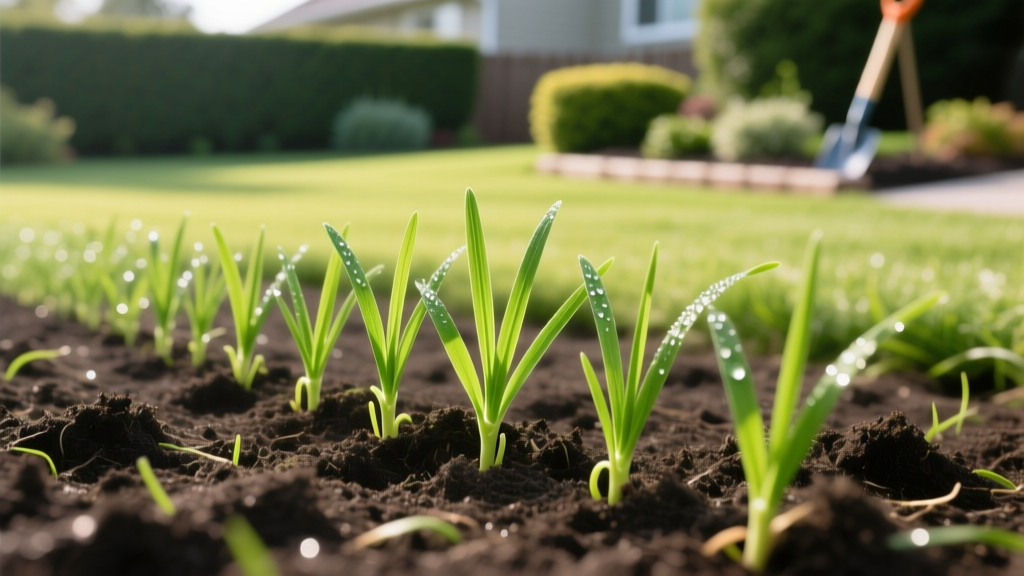
Tall Fescue Germination Time: Exact Days & Speed Tips
The standard tall fescue germination time is 7 to 14 days under optimal conditions. However, this window assumes precise soil temperatures, consistent moisture, and proper seed-to-soil contact. In reality, Turf-Type Tall Fescue (TTTF) can take anywhere from 5 to 21 days to sprout depending on environmental variables, seed coatings, and planting depth. Understanding the biological triggers of Festuca arundinacea is the difference between establishing a thick, durable lawn and wasting seed on a patchy, weed-infested yard.
The Biological Timeline of Tall Fescue Seed
Germination is not an instantaneous event; it is a multi-stage physiological process. When you broadcast TTTF seed, the following sequence occurs beneath the soil surface:
- Imbibition (Days 1-2): The dry seed rapidly absorbs water, swelling to twice its original size. This activates dormant enzymes inside the endosperm.
- Metabolic Activation (Days 3-5): Enzymes convert stored starches into sugars, providing the energy required for cellular division. The radicle (primary root) begins to push through the seed coat.
- Radicle Emergence (Days 6-8): The primary root anchors the seedling into the soil and begins absorbing water and nutrients. At this stage, the seed is still largely invisible above ground.
- Coleoptile Emergence (Days 9-14): The protective sheath (coleoptile) pushes upward through the soil surface. Once it breaches the topsoil, the first true leaf unfurls, turning bright green as photosynthesis begins.
Soil Temperature: The Master Switch for Germination
Air temperature is a poor indicator of seed viability; soil temperature dictates the speed of enzymatic activity. Tall fescue is a cool-season grass, meaning it thrives in cooler soils, but germination speed is directly correlated to warmth within its viable range. According to NC State Extension Turf Files, the optimal soil temperature range for rapid TTTF germination is between 50°F and 65°F.
| Soil Temperature (at 2-inch depth) | Expected Germination Time | Establishment Risk Level |
|---|---|---|
| Below 45°F | 21 to 30+ days (or dormant) | High: Seed rot and winterkill risk |
| 45°F - 50°F | 14 to 21 days | Moderate: Slow establishment allows weed competition |
| 50°F - 65°F (Optimal) | 7 to 12 days | Low: Rapid canopy closure outcompetes weeds |
| 65°F - 75°F | 5 to 8 days | Moderate: High moisture demand; fungal disease risk increases |
| Above 75°F | Erratic / Poor | Severe: Seedling blight and heat stress mortality |
Seedbed Preparation and Sowing Depth
The most common reason for delayed or failed tall fescue germination is improper sowing depth. TTTF seeds contain a finite amount of energy in their endosperm. If buried deeper than 1/2 inch, the seedling exhausts its energy reserves before the coleoptile can reach sunlight, resulting in sub-surface death.
For optimal results, target a sowing depth of 1/4 to 1/2 inch. When overseeding an existing lawn, use a slit-seeder or a core aerator followed by drag-matting to ensure seeds fall into the aeration holes rather than resting on the thatch layer. For new lawns, till the top 4 inches of soil, rake it level, and broadcast seed at a rate of 5 to 6 lbs per 1,000 square feet.
Pro Tip: Seed Coatings Matter. Many premium TTTF cultivars (like 'Titanium 2LS' or 'Rebel IV') come with specialized seed coatings. Coatings like Yellow Jacket or Apron Maxx contain fungicides to prevent Pythium damping-off and hydrophilic polymers that retain water around the seed. If using heavily coated seed, increase your seeding rate by 15% to account for the added weight of the coating material.
Moisture and Fertilizer Protocols to Accelerate Sprouting
During the critical 14-day germination window, the top 1/2 inch of soil must remain consistently moist but never waterlogged. The imbibition phase requires immediate access to water; if the seed swells and then dries out, the embryo will die.
The 14-Day Watering Schedule
- Days 1-14: Water lightly 2 to 3 times per day for 5-10 minutes per zone. The goal is to apply roughly 1/8 to 1/4 inch of water daily to keep the seedbed damp.
- Days 15-30: Once 80% of the seeds have sprouted, reduce watering frequency to once daily, but increase the duration to encourage deeper root growth.
- Day 30+: Transition to deep, infrequent watering (1 inch per week, split into two sessions) to build drought tolerance.
Starter Fertilizer Application
Applying a starter fertilizer at the time of seeding drastically reduces the time it takes for the radicle to establish. Look for an NPK ratio high in phosphorus, such as 10-18-10 or 18-24-6. Phosphorus is relatively immobile in soil and is critical for early root development and ATP (energy) transfer within the germinating seed. Apply at a rate of 1.0 lb of nitrogen per 1,000 square feet immediately after sowing.
⚠️ Pre-Emergent Herbicide Warning: Standard pre-emergents like Prodiamine or Dithiopyr will completely halt tall fescue germination. They do not distinguish between crabgrass and fescue seed. If you must seed in an area recently treated with pre-emergent, you must wait 60 to 90 days. Alternatively, use a product containing mesotrione (e.g., Tenacity) at the time of seeding, which provides pre-emergent weed control while being safe for germinating TTTF.
Troubleshooting Delayed Germination
If you have passed the 14-day mark and see no green shoots, diagnose the failure using this framework:
- Symptom: Seeds are visible on top of the soil but not sprouting.
Cause: Poor seed-to-soil contact or rapid drying. The seeds are absorbing morning dew but baking in the afternoon sun. Fix: Top-dress lightly with peat moss or compost to retain moisture. - Symptom: Seedlings sprout, turn yellow, and collapse.
Cause: Pythium blight or damping-off disease, usually caused by overwatering combined with soil temps above 70°F. Fix: Reduce watering frequency immediately and apply a preventative fungicide like azoxystrobin. - Symptom: Zero germination after 21 days in cool weather.
Cause: Seed was buried too deep (over 1/2 inch) or covered with a thick layer of straw that blocked sunlight and trapped excessive moisture, causing rot. Fix: Rake the area lightly to expose seeds and re-water. - Symptom: Patchy germination in specific zones only.
Cause: Irrigation head overlap failure or residual pre-emergent barrier in those specific zones. Fix: Audit sprinkler coverage with catch cups and re-seed bare patches after scarifying the soil.
Transitioning from Germination to Establishment
Germination is only the first phase; establishment takes 45 to 60 days. According to Penn State Extension, the first mowing should occur when the new fescue reaches 3.5 to 4 inches in height. Never remove more than 1/3 of the leaf blade in a single pass. Set your mower deck to 3.0 inches to shade the soil, retain moisture, and protect the delicate new crown tissue from UV stress. Avoid heavy foot traffic and postpone broadleaf weed control applications until the new lawn has been mowed at least three times, ensuring the root system is robust enough to handle chemical stress.

