Grass Types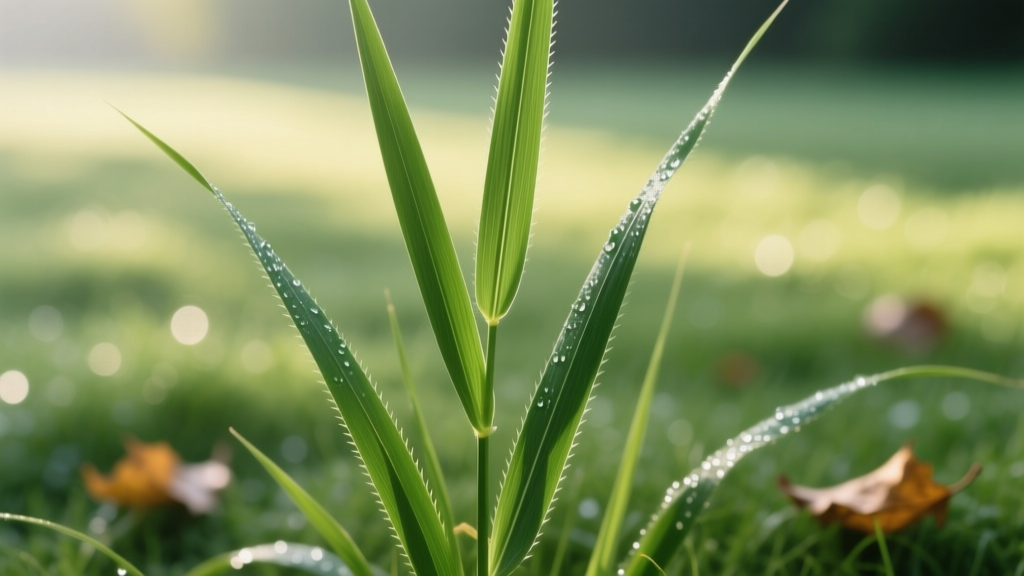
Tall Fescue Identification: A Beginner's Visual Field Guide
Accurate tall fescue identification is the first step toward a healthier, more resilient lawn. Tall fescue (Festuca arundinacea) dominates cool-season and transition-zone lawns due to its deep root system and drought tolerance. However, misidentifying it can lead to disastrous maintenance choices, such as applying the wrong pre-emergent herbicides or overseeding at the incorrect time. According to the NC State TurfFiles, tall fescue is a bunch-type grass, meaning it spreads primarily by vertical shoots called tillers rather than horizontal stolons or rhizomes (though modern rhizomatous varieties exist).
This guide strips away the botanical jargon and provides a practical, step-by-step framework for identifying tall fescue in your yard, distinguishing it from common lookalikes, and determining which specific cultivar you are growing.
The Core Traits of Tall Fescue: A Collar Region Breakdown
The most reliable way to identify any grass species is by examining the collar region—the area where the leaf blade meets the stem (culm). Grab a magnifying glass or use your smartphone's macro camera lens to inspect these four critical structures.
Quick ID Checklist: The Collar Region
- Vernation: Rolled (the youngest leaf is rolled in the bud, not folded).
- Ligule: Membranous, very short (0.5 to 1 mm), and often jagged or fringed at the top edge.
- Auricles: Short, blunt, slightly hairy on the margins, and barely clasping the stem.
- Leaf Blade: 1/8 to 1/2 inch wide, with prominent parallel veins on top and a smooth, glossy underside.
The Squeeze Test for Vernation
To check vernation, pull a shoot from the base of the plant and gently squeeze the bottom of the youngest, unopened leaf between your thumb and index finger. If it feels round and cylindrical, the vernation is rolled. If it feels flat like a folded piece of paper, the vernation is folded (which immediately rules out tall fescue and points toward Kentucky Bluegrass or Perennial Ryegrass).
Tall Fescue vs. Lookalikes: A Comparison Matrix
Beginners frequently confuse tall fescue with other cool-season grasses and weedy invaders. The table below highlights the exact morphological differences you need to look for in the field.
| Feature | Tall Fescue | Quackgrass (Weed) | Perennial Ryegrass | Kentucky Bluegrass |
|---|---|---|---|---|
| Vernation | Rolled | Rolled | Folded | Folded |
| Auricles | Short, blunt, slightly hairy | Long, finger-like, clasping | Absent or very tiny | Absent |
| Leaf Tip | Pointed, slightly rough | Pointed | Pointed | Boat-shaped (Prow) |
| Underside | Glossy, smooth | Dull, smooth | Very glossy, smooth | Dull, smooth |
| Growth Habit | Bunch (Tillers) | Rhizomes (Spreading) | Bunch (Tillers) | Rhizomes (Spreading) |
Step-by-Step Field Testing for Beginners
When you are standing in your lawn, use this three-step physical testing protocol to confirm your tall fescue identification.
- The Pull Test (Serrated Margins): Pinch a leaf blade between your thumb and index finger and slowly pull your hand toward the tip. Tall fescue leaf margins have microscopic serrations (tiny teeth). If it feels rough or catches on your skin like a mild saw blade, it is likely tall fescue. Perennial ryegrass and Kentucky bluegrass will slide through smoothly.
- The Shine Test (Abaxial Surface): Flip the leaf over. The underside (abaxial surface) of tall fescue is distinctly glossy and reflects sunlight. While perennial ryegrass is also shiny, combining the shine test with the pull test will help you separate the two.
- The Auricle Inspection: This is the ultimate tie-breaker between tall fescue and quackgrass. Pull the leaf sheath away from the stem. If you see long, white, finger-like appendages wrapping around the stem, you have quackgrass (a highly invasive weed). If the appendages are short, stubby, and barely cling to the stem, you have tall fescue.
Modern Turf-Type vs. K-31: Knowing What You Have
Identifying the species is only half the battle; you must also identify the cultivar type. The USDA Plants Database notes that Festuca arundinacea encompasses both agricultural forage varieties and highly refined turfgrasses. Misidentifying your cultivar type will ruin your mowing and overseeding strategy.
Warning: The K-31 Clumping Problem
If your lawn features wide, light-green blades (up to 1/2 inch or more) that grow in distinct, ugly clumps surrounded by bare dirt or weeds, you likely have Kentucky 31 (K-31). K-31 is an older forage-type tall fescue. It does not blend well with finer grasses and cannot be fixed simply by lowering your mowing height. You will need to gradually overseed with modern turf-type varieties to phase it out.
If your lawn features wide, light-green blades (up to 1/2 inch or more) that grow in distinct, ugly clumps surrounded by bare dirt or weeds, you likely have Kentucky 31 (K-31). K-31 is an older forage-type tall fescue. It does not blend well with finer grasses and cannot be fixed simply by lowering your mowing height. You will need to gradually overseed with modern turf-type varieties to phase it out.
Visual Differences at a Glance
- Kentucky 31 (K-31): Blade width 3/8 to 1/2+ inch. Color is pale to medium green. Grows in aggressive, distinct bunches. Highly drought-tolerant but aesthetically coarse.
- Turf-Type Tall Fescue (TTTF): Blade width 1/8 to 1/4 inch. Color is dark, rich green. Grows in a dense, uniform carpet due to high tiller density. Blends well with Kentucky Bluegrass.
- Rhizomatous Tall Fescue (RTF): A newer subset of TTTF that produces short underground rhizomes, allowing it to spread laterally and recover from damage faster than traditional bunchgrasses.
Expert Identification Tips & Common Mistakes
"The most common mistake homeowners make is identifying a grass based solely on its color or drought tolerance. Many weedy grasses, like smooth bromegrass or quackgrass, will stay green during a mild drought and mimic tall fescue from ten feet away. You must get down on your knees and inspect the collar region. The auricles never lie."
— Adapted from turfgrass extension guidelines, Penn State Extension
Beginner Pitfalls to Avoid
- Confusing Seedlings with Mature Grass: Newly germinated tall fescue seedlings have much narrower blades and lack the pronounced serrations of mature plants. Wait until the plant has produced at least 3 to 4 mature leaves before attempting collar identification.
- Ignoring Environmental Stress: During severe summer heat or drought, tall fescue blades will roll inward into a tight 'V' shape to conserve moisture. This makes the leaf appear much narrower than it actually is. Water the area and wait 24 hours before measuring blade width.
- Assuming All Bunchgrasses are Tall Fescue: Annual ryegrass and rough bluegrass also grow in bunches. Always verify the vernation and ligule structure.
Frequently Asked Questions (FAQ)
Can tall fescue spread and fill in bare spots on its own?
Traditional tall fescue is a bunchgrass and spreads only by tillering (growing wider from the crown). It will not send out runners to fill in a bare spot two feet away. If you have a bare patch, you must overseed it. However, newer Rhizomatous Tall Fescue (RTF) varieties possess limited lateral spreading ability, though they still require overseeding for significant repair.
Is tall fescue considered a weed in a Kentucky Bluegrass lawn?
It depends on the cultivar. If coarse, light-green K-31 tall fescue invades a fine-bladed Kentucky Bluegrass lawn, it is visually disruptive and often treated as a weed. However, modern Turf-Type Tall Fescue (TTTF) blends seamlessly with Kentucky Bluegrass, and many professionals intentionally mix the two species (typically 80% TTTF / 20% KBG) to combine the drought tolerance of fescue with the spreading recovery of bluegrass.
How can I tell if my tall fescue is suffering from Brown Patch fungus?
Brown patch (Rhizoctonia solani) is the primary disease threat to tall fescue in humid summers. Look for circular patches of brown, dying grass ranging from 6 inches to several feet in diameter. The key identifier is a dark, smoke-colored ring at the outer edge of the patch during early morning hours when dew is present. Individual leaf blades will show tan lesions with dark brown borders.
Next Steps for Your Lawn
Once you have positively confirmed your tall fescue identification, tailor your maintenance to its specific needs. Set your mower deck to 3 to 4 inches to encourage deep root growth and shade out crabgrass. Apply a slow-release nitrogen fertilizer in the early fall (September), which is the peak growing season for cool-season grasses, and avoid heavy nitrogen applications in late spring to prevent Brown Patch outbreaks.