
Grass Types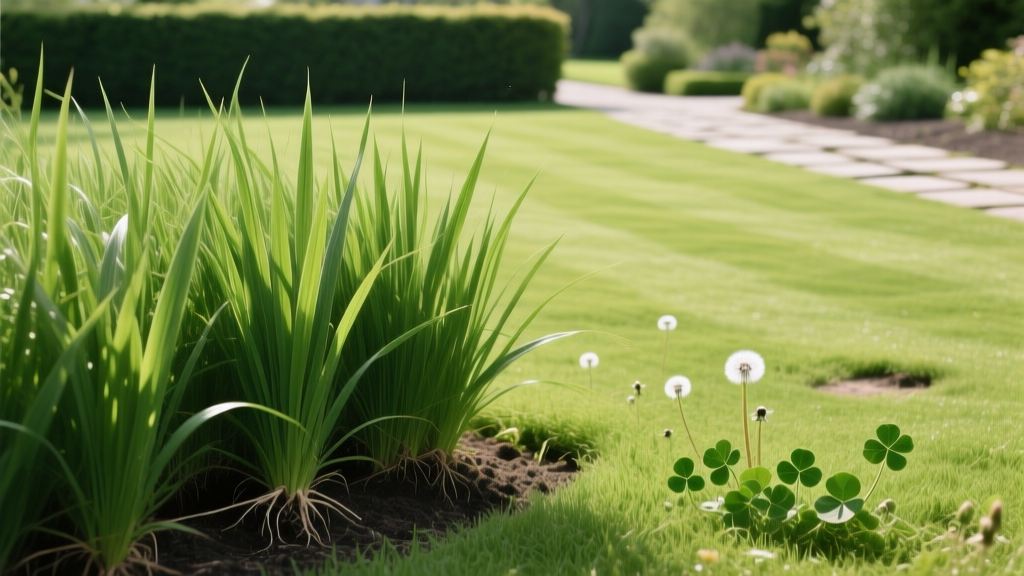
Step-by-Step Tall Fescue Lawn Maintenance Procedures & Calendar
The Unique Physiology of Tall Fescue
Tall fescue (Festuca arundinacea) is a deep-rooted, cool-season bunchgrass that dominates the transition zone and cooler climates. Unlike Kentucky bluegrass or Bermudagrass, tall fescue lacks rhizomes and stolons. It grows in discrete clumps and cannot naturally spread to fill in bare spots or repair damage. This physiological limitation dictates its entire maintenance protocol: you must actively manage density through rigorous overseeding and preventative weed control. When maintained correctly, modern turf-type and dwarf tall fescue cultivars can sustain root depths of 2 to 3 feet, providing exceptional drought tolerance and year-round color.
Agronomic Insight: Never mix tall fescue with fine fescues or Kentucky bluegrass in high-traffic areas. The differing growth rates and blade widths will result in a patchy, uneven canopy that complicates mowing and fertilization.
Step 1: Precision Mowing and Blade Management
Mowing is the most frequent maintenance procedure and the primary driver of turf health. Tall fescue requires a higher cutting height than most cool-season grasses to protect its crown and shade out annual weeds like crabgrass.
- Target Height: Maintain a canopy height of 3.5 to 4.0 inches during the growing season. During peak summer heat (July–August), raise the deck to 4.5 inches to reduce soil moisture evaporation.
- The One-Third Rule: Never remove more than 1/3 of the leaf blade in a single pass. If your target is 4 inches, mow when the grass reaches 6 inches. Scalping the grass exposes the soil to UV radiation and triggers shallow rooting.
- Blade Sharpness: Tall fescue leaf tissue is fibrous. A dull mower blade will shred the tips rather than slicing them cleanly, leaving a grayish-white cast on the lawn and creating entry wounds for Pythium blight and dollar spot. Sharpen rotary blades every 25 hours of operation.
Step 2: Deep-Root Watering Protocols
Tall fescue thrives on deep, infrequent irrigation cycles that encourage roots to chase moisture downward. Shallow, daily watering promotes a weak root system highly susceptible to summer drought stress.
The Tuna Can Method: Place 3 to 4 empty tuna cans across different irrigation zones. Run your sprinklers until the cans collect exactly 0.5 inches of water. Record the time. You will need to run your system for double that duration twice a week to achieve the recommended 1.0 to 1.5 inches of weekly moisture.
Timing is critical for disease prevention. Always schedule irrigation cycles to conclude between 4:00 AM and 8:00 AM. Watering in the evening leaves the leaf tissue wet for 12+ hours, creating the exact humid microclimate required for Rhizoctonia solani (Brown Patch) to infect the plant.
Step 3: The Seasonal Fertilization Matrix
Tall fescue requires 2.0 to 4.0 pounds of Nitrogen (N) per 1,000 square feet annually. The timing of these applications is non-negotiable; applying heavy nitrogen in the spring or summer forces excessive top growth at the expense of root development and severely increases the risk of Brown Patch.
| Season | Timing | Nitrogen Rate (lbs N / 1,000 sq ft) | Product Type & Strategy |
|---|---|---|---|
| Early Spring | March - April | 0.5 - 1.0 | Slow-release organic (e.g., Milorganite) or methylene-urea. Promotes steady growth without flushing the plant. |
| Late Spring | May | 0.0 - 0.5 | Skip unless the turf is pale. If needed, use a low-N, high-potassium (K) fertilizer to harden the plant for summer. |
| Summer | June - August | 0.0 | ZERO Nitrogen. Focus entirely on irrigation and disease monitoring. |
| Early Fall | September | 1.0 | Balanced N-P-K starter fertilizer (e.g., 18-24-12) applied simultaneously with fall overseeding to support seedling establishment. |
| Late Fall | November | 1.0 - 1.5 | Fast-release urea or ammonium sulfate. The grass stores this nitrogen in its roots for immediate spring green-up without excessive top growth. |
Step 4: Fall Overseeding Procedures
Because tall fescue is a bunchgrass, annual or bi-annual overseeding is mandatory to maintain a dense, carpet-like turf that resists weed invasion. The optimal window is early fall, when soil temperatures drop to 70°F and air temperatures range between 60°F and 75°F.
- Core Aeration: Run a core aerator over the lawn in two perpendicular directions to pull 2-to-3-inch soil plugs. This relieves compaction and creates direct seed-to-soil contact channels.
- Seed Selection: Purchase a certified turf-type tall fescue (TTTF) blend containing at least three different cultivars (e.g., Cochise 4, Falcon IV, Mustang) to ensure genetic diversity against localized diseases. Avoid "K-31" pasture fescue, which has a wide, pale blade unsuitable for lawns.
- Application Rate: Apply seed at a rate of 5 to 6 pounds per 1,000 square feet for overseeding. Use a rotary spreader, splitting the seed in half and walking in perpendicular grid patterns to ensure even distribution.
- Moisture Management: Water lightly 2 to 3 times daily for 10 minutes per zone to keep the top inch of soil consistently damp. Do not let the seed dry out during the 14-to-21-day germination window.
Step 5: Disease and Weed Defense
Pre-Emergent Herbicide Timing
Crabgrass is the primary summer invader of thinning tall fescue. Apply a pre-emergent herbicide containing Prodiamine (e.g., Barricade) or Dithiopyr (e.g., Dimension) in early spring when soil temperatures consistently reach 55°F at a 2-inch depth. Critical Warning: Prodiamine has a residual soil activity of 3 to 4 months. If you apply a full rate in April, it will prevent your tall fescue seed from germinating in September. If you plan to overseed heavily in the fall, use a split-application strategy or switch to Dimension, which breaks down faster.
Brown Patch Mitigation
Brown Patch (Rhizoctonia solani) is the most destructive disease affecting tall fescue, manifesting as circular, tan-colored lesions on leaf blades and expanding blighted patches up to 2 feet in diameter during humid summer nights. According to NC State Extension, prevention relies on reducing leaf wetness and avoiding summer nitrogen. If the disease is severe, apply a preventative fungicide containing Azoxystrobin (e.g., Scotts DiseaseEX) or Propiconazole (e.g., BioAdvanced Fungus Control) in early June before symptoms appear, rotating active ingredients every 28 days to prevent pathogen resistance.
Troubleshooting Bare Spots in Spring: Do not attempt to seed large bare patches in May. The seedlings will not develop sufficient root mass to survive July heat. Instead, apply a pre-emergent, manage the existing turf, and wait until late August to core aerate and reseed the damaged areas.
Long-Term Soil Health and pH Management
Tall fescue performs optimally in soils with a pH between 6.0 and 7.0. In regions with heavy clay or naturally acidic soils, nutrient lockout occurs, rendering your fertilization efforts useless. Conduct a soil test every three years through a university extension service (such as the Penn State Extension soil lab). If the pH drops below 6.0, apply pelletized calcitic lime at a rate of 50 pounds per 1,000 square feet in the fall. Avoid applying lime simultaneously with nitrogen fertilizers, as the chemical reaction will volatilize the nitrogen into ammonia gas, wasting your investment.

