Grass Types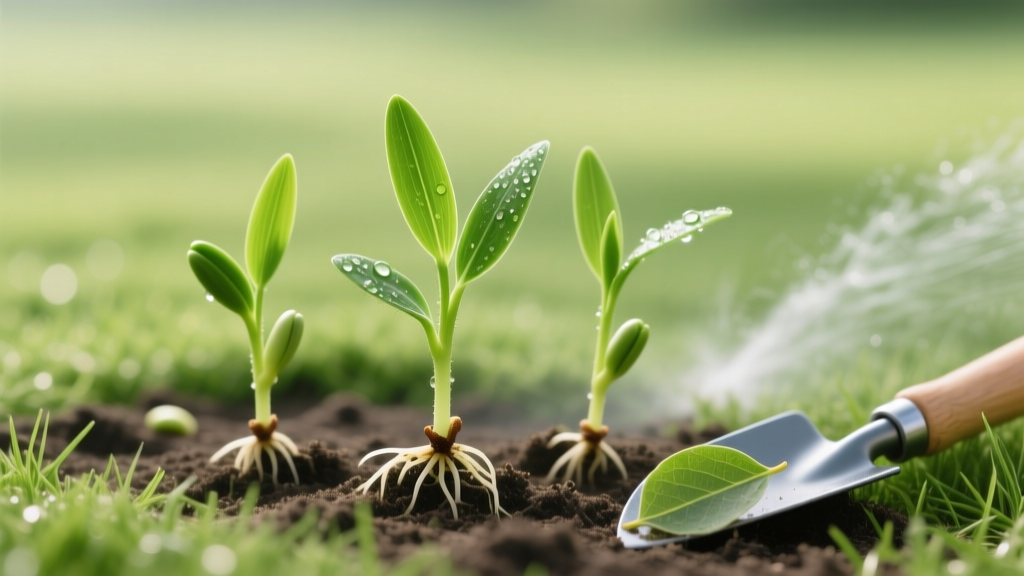
Tall Fescue Seedling Troubleshooting: Diagnosis and Fixes
The Critical First 30 Days: Why Tall Fescue Seedlings Fail
Tall fescue (Festuca arundinacea) typically germinates in 7 to 14 days when soil temperatures hold steadily between 50°F and 65°F. However, the seedling stage—defined as the period from radicle emergence until the third true leaf develops—is highly vulnerable. During this window, the root system extends barely 0.5 to 1 inch into the soil profile, leaving the plant entirely dependent on surface moisture and highly susceptible to soil-borne pathogens. According to North Carolina State Extension, up to 30% of seedling mortality in home lawns is directly tied to mismanaged irrigation and fungal pressure during the first three weeks post-germination.
Diagnostic Matrix: Match the Symptom to the Solution
| Visual Symptom | Primary Cause | Immediate Corrective Action |
|---|---|---|
| Pinched, water-soaked stems at soil line | Pythium or Rhizoctonia Damping-Off | Apply Azoxystrobin (0.31%) at 2.87 lbs/1,000 sq ft; reduce watering frequency. |
| Uniform yellowing (chlorosis) of new blades | Nitrogen deficiency or high soil pH locking out Iron | Apply liquid chelated iron (6% Fe) at 2 oz/1,000 sq ft; test soil pH. |
| Brown, crispy leaf tips; white crust on soil | Fertilizer burn (excess soluble salts) | Leach soil with 1 inch of water daily for 3 days; halt all granular feeding. |
| Seedlings uprooted easily; shallow roots | Surface tension drying; underwatering | Increase irrigation to 3x daily for 5 mins; apply 1/8 inch of water per session. |
Damping-Off: The Silent Seedling Killer
Damping-off is the most lethal threat to a tall fescue seedling. It is primarily caused by Pythium spp. (in warm, wet soils above 75°F) or Rhizoctonia solani (in cooler, damp soils). The pathogen attacks the coleoptile and radicle, causing the stem to pinch and collapse exactly at the soil interface. Once a seedling falls over, it cannot be saved.
Warning: Do not attempt to rescue flattened seedlings with fertilizer. The tissue is necrotic. Focus entirely on protecting the surrounding healthy seedlings by applying a preventive fungicide immediately.
Treatment Protocol: For active outbreaks, apply a granular fungicide containing Azoxystrobin (such as Scotts DiseaseEX) at a rate of 2.87 lbs per 1,000 square feet. Water it in lightly with 1/8 inch of water to move the active ingredient into the top 0.5 inches of the thatch/soil layer. For organic management, apply a bio-fungicide containing Bacillus amyloliquefaciens (e.g., Serenade Garden) at 2 to 4 oz per gallon, spraying to runoff every 7 days until the seedlings reach 2 inches in height.
Moisture Mismanagement: Finding the Hydration Sweet Spot
The most common reason homeowners kill their tall fescue seedlings is by watering them like an established lawn. Established fescue requires deep, infrequent watering (1 to 1.5 inches per week). Seedlings, however, have a root zone restricted to the top 0.5 inches of soil. If the top half-inch dries out, the seedling dies within hours.
The 3-Phase Seedling Watering Schedule
- Phase 1 (Days 1–14, Pre- and Post-Germination): Water 3 to 4 times daily for 5 minutes per zone. The goal is to keep the top 0.5 inches consistently moist but not saturated. Soil tension should remain between -10 and -20 kPa.
- Phase 2 (Days 15–28, Seedling reaches 1.5 inches): Reduce frequency to 2 times daily, but increase duration to 10 minutes. This encourages the radicle to push deeper into the soil profile to chase the receding moisture line.
- Phase 3 (Days 29+, Approaching first mow): Transition to once-daily watering for 20-30 minutes, delivering roughly 0.5 inches of water. This hardens the seedling and prepares it for standard deep-root irrigation cycles.
Nutrient Burn vs. Starvation in Young Fescue
Seedlings rely on the endosperm (the energy stored inside the seed) for the first 10 to 14 days. Applying high-nitrogen synthetic fertilizers too early will result in osmotic stress, pulling water out of the delicate root hairs and causing fertilizer burn. According to Penn State Extension, starter fertilizers should be applied at the time of seeding, not after germination.
Ideal Starter Formulation: Use a high-phosphorus starter fertilizer (e.g., 18-24-12 or 10-18-10). Phosphorus is critical for ATP production and rapid root cell division. Apply at a rate that delivers exactly 0.5 to 0.75 lbs of actual Nitrogen per 1,000 square feet. For a 24-25-4 product like Scotts Turf Builder Starter Food, this equates to roughly 3.5 lbs of product per 1,000 square feet. Expect to spend around $25 to $30 for a bag covering 5,000 square feet.
Pro Tip: If you missed the starter fertilizer application at seeding, wait until the seedlings have been mowed at least once before applying a light dose of liquid kelp or a low-analysis organic fertilizer (like 4-4-4) to avoid burning the young tissue.
The Pre-Emergent Herbicide Trap
Homeowners often panic when weeds sprout alongside their tall fescue seedlings and reach for pre-emergent herbicides. This is a fatal error for most chemical classes. Active ingredients like dithiopyr (Dimension), prodiamine (Barricade), and pendimethalin (Pendulum) inhibit root tip mitosis. They cannot distinguish between a crabgrass seedling and a tall fescue seedling; they will severely stunt or kill your new grass.
The Only Safe Option: Mesotrione (sold as Tenacity) is the only pre-emergent herbicide proven safe for use at the time of tall fescue seeding. It works by inhibiting HPPD, an enzyme required for photosynthesis in broadleaf and weedy grasses, but tall fescue naturally metabolizes it. Apply Mesotrione at 5 oz per acre (roughly 0.11 oz per 1,000 sq ft) on the day of seeding. Note that it will cause susceptible weeds to turn bright white before they die, which is a normal physiological response.
Mowing the First Time: Timing and Technique
Do not mow your tall fescue seedlings based on a calendar date; mow based on height. The trigger for the first cut is when 40% of the seedlings in the lawn reach 4.5 inches. Set your mower deck to exactly 3.5 inches. Never remove more than 1/3 of the blade tissue in a single pass, as this shocks the underdeveloped root system. Ensure your mower blade is freshly sharpened; a dull blade will tear the tender seedling tissue and literally rip the shallow-rooted plants out of the soil. For premium seed varieties like Jonathan Green Black Beauty (retailing around $55-$65 per 50lb bag), protecting the initial leaf canopy is vital for long-term turf density.
Frequently Asked Questions
Why are my tall fescue seedlings turning purple?
Purple or reddish tints on young fescue seedlings usually indicate phosphorus deficiency or cold-temperature stress. If soil temperatures drop below 45°F, root uptake of phosphorus halts. This is temporary and will resolve as soils warm. If it persists in warm weather, apply a liquid phosphite fertilizer.
Can I overseed bare spots in my newly seeded lawn?
Wait until the original seedlings have been mowed at least three times (roughly 45-60 days post-germination). Overseeding too early leads to competition for light and water, and the aggressive roots of the older seedlings will choke out the new ones.
Is it normal for the original seed hull to stay attached to the blade?
Yes. The seed coat (hull) often remains attached to the tip of the first leaf for several weeks. It will naturally fall off during the first mowing or degrade over time. Do not pull it off manually, as you risk uprooting the seedling.