
Grass Types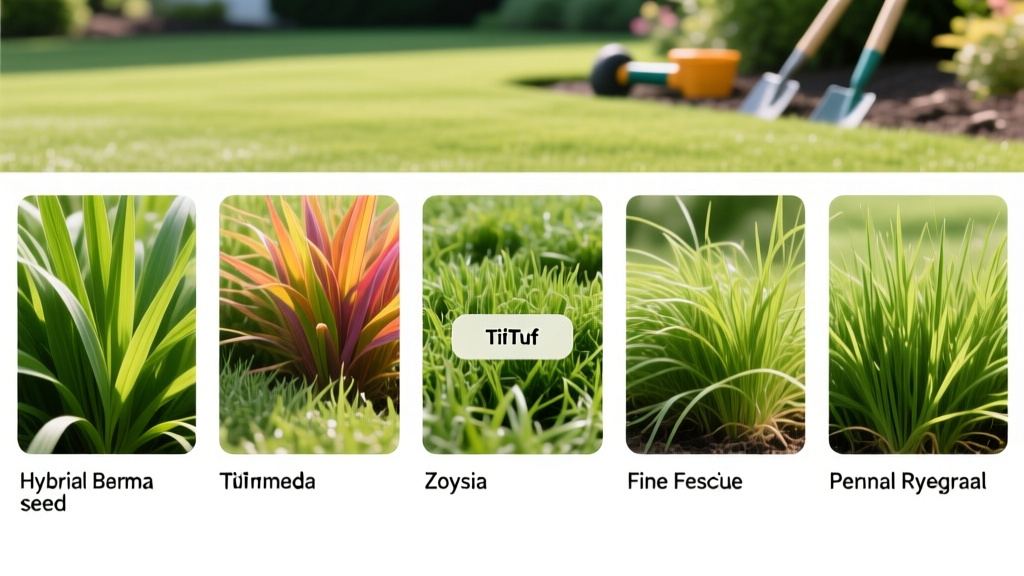
TifTuf Bermuda Seed: Why It Doesn't Exist & Best Alternatives
The Agronomic Reality: Why You Cannot Buy TifTuf Bermuda Seed
If you are searching for TifTuf Bermuda seed to plant your next lawn, you will quickly run into a frustrating roadblock: it does not exist. TifTuf (Cynodon dactylon x C. transvaalensis) is a proprietary, vegetative hybrid developed by the University of Georgia (UGA) turfgrass breeding program. Because it is a triploid cross—meaning it possesses three sets of chromosomes instead of the standard two—it is completely sterile. It produces no viable pollen and no seed.
Consumer Warning: Any online retailer claiming to sell 'TifTuf Bermuda seed' is either mislabeling generic common Bermuda seed or running a scam. True TifTuf is exclusively available as sod, sprigs, or plugs from licensed growers.
While the inability to buy seed limits your establishment methods, TifTuf's genetic sterility is exactly what gives it its superior traits. According to research from the University of Georgia, TifTuf uses up to 38% less water than the industry-standard Tifway 419 while maintaining superior turf quality, dense canopy growth, and exceptional wear tolerance. To get these benefits, you must establish the lawn vegetatively or pivot to a high-quality seeded alternative.
How to Actually Establish TifTuf Bermuda (Sod & Plugs)
Since seed is off the table, your two options for establishing TifTuf are solid sod or 3-inch plugs. Both require meticulous soil preparation to ensure the stolons and rhizomes can rapidly colonize the soil profile.
Step-by-Step Soil Preparation
- Test and Amend Soil: Bermuda grass thrives in a soil pH between 6.0 and 6.5. Apply pelletized lime if your pH is below 6.0, or elemental sulfur if it is above 7.0.
- Deep Tillage: Rototill the top 4 to 6 inches of soil. TifTuf develops a massive, deep root system (often exceeding 6 feet in mature stands), and compacted subsoil will severely restrict its drought-tolerance capabilities.
- Apply Starter Fertilizer: Incorporate a high-phosphorus starter fertilizer (such as a 10-18-10 NPK) at a rate of 1.5 lbs of actual phosphorus per 1,000 square feet to accelerate root knit.
- Grade and Level: Rake the area completely smooth. Vegetative Bermuda will telegraph any bumps or dips in the soil, making future reel-mowing impossible.
Sod vs. Plug Establishment Metrics
As of 2026, TifTuf sod typically costs between $0.45 and $0.65 per square foot ($450–$650 per 1,000 sq. ft. installed). Plugs are significantly cheaper but require a longer grow-in period. If using plugs, space them on 12-inch centers in a staggered diamond pattern. Under peak summer temperatures (85°F–95°F) with daily irrigation, 12-inch plug spacing will completely knit into a solid canopy in 8 to 10 weeks.
Seeded Bermuda Alternatives: If You Must Use Seed
If your budget, terrain, or local sod availability makes vegetative establishment impossible, you must choose a seeded Bermuda cultivar. Modern seeded Bermudas have closed the visual and performance gap with vegetative hybrids, though they still lag slightly in extreme drought recovery.
| Cultivar | Type | Drought Tolerance | Est. Cost (per 1k sq ft) | Best Use Case |
|---|---|---|---|---|
| TifTuf | Sod/Plugs | Exceptional (38% less water) | $450 - $650 | High-traffic lawns, strict water restrictions |
| Yukon | Seed | Very Good | $80 - $120 | Transition zone lawns, cold tolerance |
| Princess 77 | Seed | Good | $90 - $140 | Fine-textured density, golf course aesthetics |
| Arden 15 | Seed | Good | $70 - $110 | Deep green color, rapid spring green-up |
When planting seeded Bermuda, use a hulled seed at a rate of 2 to 3 lbs per 1,000 square feet. Hulled seed has the outer husk removed, which significantly speeds up germination (typically 7 to 10 days under optimal soil temperatures of 75°F+). For authoritative establishment data on seeded varieties, consult the NC State University TurfFiles database, which maintains rigorous NTEP (National Turfgrass Evaluation Program) trial results.
Warm-Season Care Protocol for Established TifTuf
Once your TifTuf is fully established, its maintenance requirements shift from promoting spread to managing vertical growth and density. TifTuf is an aggressive grower; neglecting its care protocol will result in a thatchy, scalped lawn.
Mowing Heights and Equipment
TifTuf can be maintained at heights ranging from 0.5 inches to 2.0 inches. However, the mowing equipment dictates the ideal height. If you are using a standard rotary mower, keep the deck set between 1.25 and 1.75 inches to avoid scalping the stolons. If you want the elite, carpet-like density TifTuf is famous for, you must invest in a manual or motorized reel mower and drop the height of cut (HOC) to 0.5 to 0.75 inches. During peak June and July growth, a reel-mowed TifTuf lawn at 0.5 inches will require mowing every 3 to 4 days.
Precision Fertilization
Feed TifTuf with 1.0 to 1.5 lbs of actual Nitrogen per 1,000 square feet per month during the active growing season (May through September). Use a slow-release nitrogen source like methylene urea or sulfur-coated urea to prevent massive flushes of top-growth that increase mowing frequency. Always pair nitrogen applications with a soil-test-driven potassium (K) regimen; maintaining a 1:1 or 1:2 N-to-K ratio in late summer hardens the grass against winter kill and Spring Dead Spot.
Irrigation and Drought Recovery
TifTuf’s primary agronomic advantage is its water use efficiency. While standard Bermudas require 1 to 1.5 inches of water per week to maintain optimal turgor pressure, TifTuf can maintain acceptable turf quality on as little as 0.6 to 0.8 inches per week. Utilize a smart irrigation controller with local evapotranspiration (ET) data to apply water deeply and infrequently, encouraging the roots to chase moisture deep into the soil profile.
'In multi-year drought trials, TifTuf maintained significantly higher turfgrass quality and living ground cover compared to all other commercial bermudagrass cultivars when irrigation was reduced to 38% of reference evapotranspiration.' — University of Georgia Turfgrass Research
Troubleshooting Common TifTuf Establishment Failures
Even with sterile, vegetative cultivars, environmental edge cases can derail your lawn. Monitor for these specific failure modes:
- Shade Intolerance: TifTuf requires a minimum of 8 hours of direct, unfiltered sunlight daily. If your yard has mature tree canopies reducing light below this threshold, TifTuf will thin out and succumb to algae or moss. You must either prune the canopy heavily or switch to a shade-tolerant species like Zoysia or St. Augustine.
- Spring Dead Spot (SDS): This soil-borne fungal disease (Ophiosphaerella spp.) attacks Bermuda roots in the fall, manifesting as dead, sunken circles the following spring. Prevent SDS by avoiding late-fall nitrogen applications, maintaining strict potassium levels, and aerifying heavily to reduce soil compaction.
- Hunting Billbug Damage: Often mistaken for drought stress or dormancy, hunting billbugs chew through the stolons at the soil line. If you can easily pull up handfuls of TifTuf and see frass (sawdust-like excrement) at the nodes, apply a systemic insecticide containing clothianidin or chlorantraniliprole in mid-to-late spring before the larvae mature.
By understanding the biological limitations of TifTuf seed and committing to proper vegetative establishment or selecting a premium seeded alternative, you can achieve a highly resilient, drought-tolerant warm-season lawn that performs flawlessly under severe summer stress.

