
Grass Types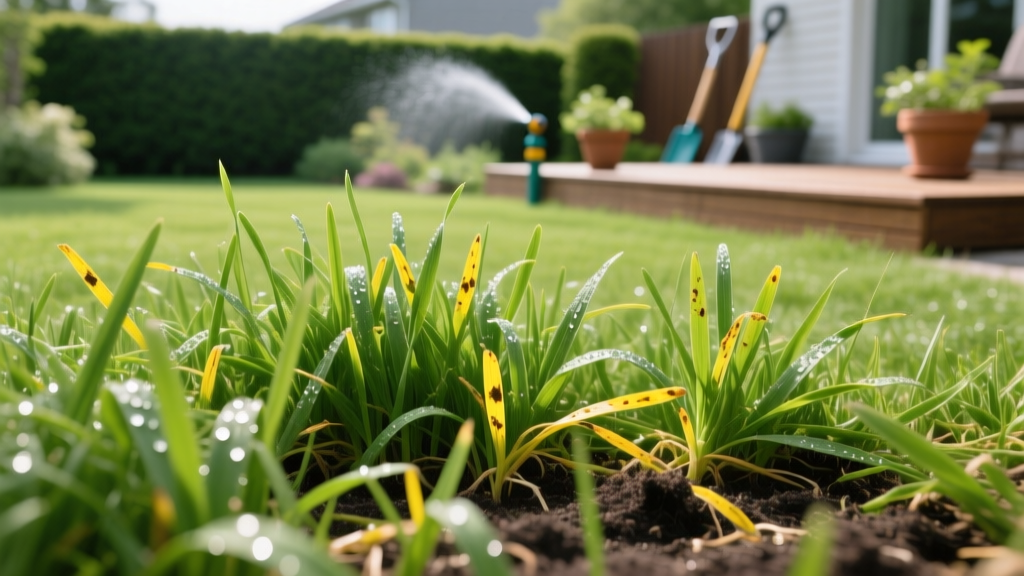
Put Down Too Much Grass Seed? Symptoms, Fixes, and Seeding Rates
The Hidden Costs of Putting Down Too Much Grass Seed
Many homeowners assume that if a little seed is good, a lot is better. When establishing a new lawn or overseeding an existing one, dumping an entire 50-pound bag of seed onto a 5,000-square-foot area seems like a foolproof way to guarantee a thick carpet of green. In reality, applying too much grass seed triggers a cascade of agronomic failures that can destroy your turf before it even matures.
From a purely financial perspective, premium turfgrass seed is expensive. In 2026, high-end coated Tall Fescue blends cost between $6.00 and $9.00 per pound, while elite Kentucky Bluegrass cultivars can exceed $14.00 per pound. Over-applying seed by just 10 pounds on a standard suburban lawn wastes $60 to $140 upfront. However, the secondary costs are far more damaging. Excessive seed density creates a hyper-competitive environment where seedlings fight for limited soil nutrients, water, and sunlight. This stress makes the turf highly susceptible to fungal pathogens, potentially requiring $50 to $80 per application of professional-grade fungicides to save the lawn.
⚠️ Warning: The Damping-Off Threat
When seedlings are packed too tightly, moisture gets trapped at the soil surface. This creates the perfect microclimate for Pythium and Rhizoctonia fungi. These pathogens cause 'damping-off,' a disease where seedlings suddenly pinch at the soil line, turn brown, and collapse, leaving you with bare patches despite heavy seeding.
When seedlings are packed too tightly, moisture gets trapped at the soil surface. This creates the perfect microclimate for Pythium and Rhizoctonia fungi. These pathogens cause 'damping-off,' a disease where seedlings suddenly pinch at the soil line, turn brown, and collapse, leaving you with bare patches despite heavy seeding.
5 Clear Symptoms You Overseeded Your Lawn
Identifying an over-seeded lawn early is critical to mitigating long-term damage. Watch for these specific physiological and visual cues during the first 14 to 30 days of germination:
- Seed Wash and Clumping: If you applied seed at 3x the recommended rate, the soil surface cannot anchor the volume. The first heavy irrigation or rainstorm will wash seeds into low spots, creating dense, unmanageable clumps while leaving high spots bare.
- Etiolation (Spindly Growth): Seedlings deprived of adequate sunlight due to canopy overcrowding will exhibit etiolation. The grass blades will appear abnormally thin, thread-like, and pale yellow as they stretch desperately for light.
- Stunted Root Development: Above-ground density forces the plant to prioritize shoot growth over root growth. If you gently tug on a 3-week-old seedling and it lifts with less than 1 inch of white root mass, the plants are starving each other underground.
- Premature Thatch Accumulation: Overcrowded turf produces excessive organic matter at the soil line. Lawns seeded too heavily often develop a spongy, hydrophobic thatch layer within the first six months, blocking water infiltration.
- Summer Heat Collapse: Because the root systems remain shallow due to early competition, the turf lacks the tensile strength and depth to access subsoil moisture. When summer temperatures exceed 85°F, the entire lawn will flash-brown and enter premature dormancy or die off completely.
Exact Seeding Rates by Grass Species (2026 Standards)
To avoid the pitfalls of over-application, you must calibrate your spreader to the exact biological requirements of your chosen species. The rates below reflect current university extension guidelines for optimal establishment.
| Grass Species | New Lawn (lbs / 1,000 sq ft) | Overseeding (lbs / 1,000 sq ft) | Germination Window |
|---|---|---|---|
| Kentucky Bluegrass | 2.0 - 3.0 | 1.0 - 1.5 | 14 - 28 days |
| Tall Fescue | 6.0 - 8.0 | 3.0 - 4.0 | 7 - 12 days |
| Perennial Ryegrass | 5.0 - 7.0 | 3.0 - 4.0 | 5 - 10 days |
| Bermudagrass (Common) | 2.0 - 3.0 | 1.0 - 1.5 | 10 - 21 days |
| Fine Fescue Blend | 4.0 - 5.0 | 2.0 - 3.0 | 7 - 14 days |
Source data aligned with Penn State Extension turfgrass establishment protocols and University of Minnesota lawn care guidelines.
How to Fix a Lawn With Too Much Grass Seed
If you have already broadcasted too much grass seed and germination is underway, you must intervene immediately to prevent total canopy collapse. Follow this targeted mitigation strategy.
Step 1: Thin the Canopy via Aggressive Mowing
Once the majority of seedlings reach 3 inches in height, drop your mower deck to 1.5 or 2.0 inches. This is lower than the standard maintenance height, but it is necessary to physically remove the weakest, most etiolated seedlings and open the canopy to sunlight and airflow. Ensure your mower blades are freshly sharpened; dull blades will tear the tender, overcrowded shoots, inviting bacterial pathogens. Bag the clippings immediately to prevent them from smothering the remaining seedlings.
Step 2: Adjust Irrigation to Prevent Fungus
New seed requires frequent, light watering, but over-seeded lawns hold excess moisture at the crown. Transition your watering schedule as soon as roots anchor. Instead of watering three times a day for 10 minutes, shift to once a day for 20 minutes in the early morning. This allows the soil surface to dry slightly during the afternoon, disrupting the life cycle of Pythium blight.
Step 3: Apply a Preventative Fungicide
If you notice circular, water-soaked lesions on the leaves or a greasy, matted appearance in the densest patches, fungal activity has begun. Apply a systemic fungicide containing Azoxystrobin (such as Heritage G or Scotts DiseaseEX) or Propiconazole (like Banner Maxx). Apply at the preventative rate listed on the label—typically 2.0 to 4.0 lbs per 1,000 sq ft for granular Azoxystrobin—and water it in immediately to move the active ingredient into the root zone.
💡 Pro Tip: Delay Pre-Emergent Herbicides
Do not apply standard pre-emergent crabgrass preventers (like Prodiamine or Dithiopyr) to an over-seeded lawn. These chemicals cannot distinguish between weed seeds and your expensive turfgrass seeds, and they will halt root cell division in your new seedlings, killing them outright. Wait until the new grass has been mowed at least three times before applying pre-emergents.
Do not apply standard pre-emergent crabgrass preventers (like Prodiamine or Dithiopyr) to an over-seeded lawn. These chemicals cannot distinguish between weed seeds and your expensive turfgrass seeds, and they will halt root cell division in your new seedlings, killing them outright. Wait until the new grass has been mowed at least three times before applying pre-emergents.
Calculating Your Exact Seed Needs (The Formula)
Stop guessing and start measuring. To calculate exactly how much seed you need, use this standard agronomic formula:
(Total Square Footage ÷ 1,000) × Species Seeding Rate = Total Pounds Required
Example Calculation:
You are planting a new Tall Fescue lawn measuring 60 feet by 80 feet.
1. Calculate Area: 60 × 80 = 4,800 sq ft.
2. Divide by 1,000: 4,800 ÷ 1,000 = 4.8.
3. Multiply by Rate (using 7 lbs for new Tall Fescue): 4.8 × 7 = 33.6 lbs.
You need exactly 33.6 pounds of seed. Buying a 50-pound bag means you will have 16.4 pounds left over. Store the excess in a sealed, rodent-proof bin in a climate-controlled garage for future patch repairs.
Frequently Asked Questions
Will extra grass seed eventually thin itself out naturally?
Yes, through a process called natural selection and intraspecific competition. However, the 'thinning' process usually involves the weaker plants dying and rotting at the soil line, which spikes thatch levels and invites disease. It is always better to seed at the correct rate than to rely on natural die-off.
Can I just rake up the extra seed if I haven't watered it yet?
If you realize your mistake before the first irrigation, you can use a stiff tine leaf rake to gently redistribute the seed clumps into bare areas. However, avoid aggressive raking that disturbs the seed-to-soil contact in areas where the density is already correct.
Does coated seed change the application rate?
Yes. Seed coated with clay, fungicides, or moisture-retention polymers (like WaterSmart PLUS) weighs significantly more than raw seed. A pound of coated seed contains fewer actual seeds than a pound of raw seed. Always check the manufacturer's tag; some brands recommend increasing the application rate by 10% to 15% when using heavily coated varieties to account for the added inert weight.

