Grass Types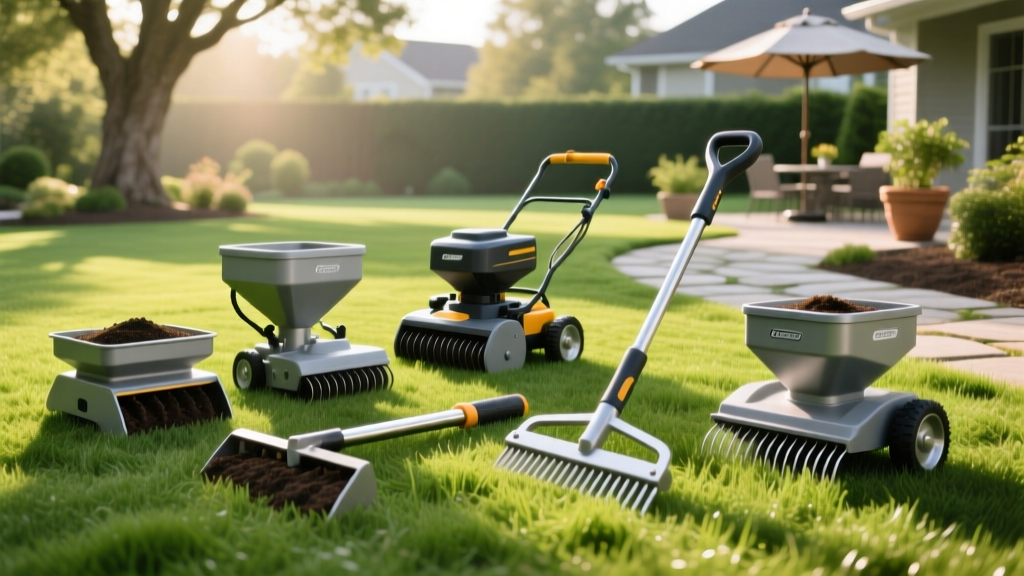
Top Grass Seeding Tools for Flawless Lawn Establishment
Achieving a 90% or higher germination rate during lawn establishment or overseeding relies less on the seed brand and more on the precision of your grass seeding tools. Improper seed-to-soil contact, uneven distribution, and incorrect planting depths are the primary causes of patchy turf. Selecting the right equipment for your specific soil type and grass species transforms a hit-or-miss weekend project into a predictable, professional-grade establishment.
The Core Grass Seeding Tools Matrix
Before purchasing or renting equipment, map your specific lawn scenario to the correct tool category. Using a broadcast spreader for precise overseeding in a narrow urban yard often results in seed waste on concrete, while relying on a drop spreader for a 10,000-square-foot rural estate will take hours and risk striping.
| Tool Category | Primary Function | Best Application | 2026 Price Range |
|---|---|---|---|
| Broadcast Spreader | Wide, fan-pattern seed dispersal | New lawns, large open areas | $40 - $120 |
| Drop Spreader | Precise, gravity-fed linear drop | Narrow yards, near garden beds | $50 - $90 |
| Slice Seeder | Cuts furrows and drops seed in one pass | Overseeding existing thin turf | $75 - $110 / day (rental) |
| Lawn Roller | Presses seed into soil crevices | Post-seeding soil contact | $45 - $80 |
| Core Aerator | Extracts soil plugs to reduce compaction | Pre-seeding clay soil prep | $80 - $150 / day (rental) |
Calibrating Broadcast vs. Drop Spreaders
The most common failure point in DIY seeding is trusting the manufacturer's dial settings on the side of the spreader. Humidity, seed coating thickness, and walking speed drastically alter the application rate. Calibrating your spreader takes 10 minutes and prevents the costly mistake of running out of seed halfway through the yard.
Broadcast Spreaders: The Scotts EdgeGuard Mini
For lawns under 5,000 square feet, the Scotts Turf Builder EdgeGuard Mini Broadcast Spreader (typically retailing around $45) remains the industry standard for homeowners. The EdgeGuard feature blocks the right side of the spread pattern, preventing seed from landing on driveways and sidewalks.
- Pros: Lightweight (holds up to 50 lbs), rust-proof poly hopper, excellent edge control.
- Cons: Pneumatic tires can leave ruts in heavily saturated, freshly tilled soil.
- Calibration Tip: Measure a 10x10 ft test area (100 sq ft). Weigh out exactly 1/10th of the bag's recommended 1,000 sq ft rate. Set the dial to the manufacturer's suggestion, walk the 10x10 box at a brisk, consistent pace (approx. 3 mph), and adjust the dial up or down until the hopper empties exactly at the final corner.
Drop Spreaders: The Earthway 1000-A
Drop spreaders like the Earthway 1000-A Professional Drop Spreader (~$65) drop seed directly between the wheels. They are mandatory for yards with intricate landscaping or where wind drift is a concern.
- Pros: Zero wind drift, exact placement, heavy-duty steel frame.
- Cons: Requires strict wheel-track overlapping; missing a track by two inches leaves a visible brown stripe of unseeded soil.
Soil Preparation Equipment: Beyond the Rake
Seed dropped onto hardpan soil or thick thatch will wash away in the first rainstorm. According to turfgrass researchers at University of Minnesota Extension, seed-to-soil contact is the single most critical variable for germination success.
Slice Seeders for Overseeding
If you are seeding into an existing lawn, a slice seeder is non-negotiable. Machines like the Billy Goat SR520H (available at most equipment rental yards for roughly $85-$110 per day) use vertically rotating steel blades to cut shallow furrows into the soil, dropping the seed directly into the slit.
Expert Warning: Slice Seeder Depth Settings
Do not set the blades too deep. For cool-season grasses like Kentucky Bluegrass and Fine Fescue, set the blade depth to 1/8 inch. For larger seeds like Tall Fescue or Perennial Ryegrass, set the depth to 1/4 inch. Setting the blades deeper than 1/2 inch will bury the seed too deeply, preventing the cotyledon from reaching the surface before its energy reserves deplete.
Do not set the blades too deep. For cool-season grasses like Kentucky Bluegrass and Fine Fescue, set the blade depth to 1/8 inch. For larger seeds like Tall Fescue or Perennial Ryegrass, set the depth to 1/4 inch. Setting the blades deeper than 1/2 inch will bury the seed too deeply, preventing the cotyledon from reaching the surface before its energy reserves deplete.
Core Aerators vs. Spike Aerators
For new lawn establishment on compacted clay soils, rent a walk-behind core aerator like the Ryan Lawnaire IV. Core aeration extracts 2-to-3-inch soil plugs, creating macropores for oxygen and water. Avoid spike aerators (shoes or solid-tine machines); they merely compress the surrounding clay tighter, worsening compaction and creating a barrier for delicate taproots.
Post-Seeding Tools for Maximum Germination
Once the seed is distributed, the establishment phase requires tools that maintain consistent moisture and physical contact.
Lawn Rollers
An 18-inch poly lawn roller, filled with water to reach approximately 50 to 75 pounds, presses loose seed into the soil matrix. Roll the lawn in a grid pattern (north-south, then east-west) immediately after spreading. Exception: If your soil is heavy, wet clay, skip the roller. Rolling wet clay causes severe surface crusting, which physically blocks emerging grass shoots.
Smart Irrigation Controllers
New seed requires the top 1/2 inch of soil to remain constantly moist but not waterlogged. This typically means watering for 5 to 10 minutes, three to four times a day. Manual watering almost always leads to drying out during work hours. Upgrading to a smart controller like the Rachio 3 Smart Sprinkler Controller (~$229) allows you to program multiple short-cycle "crop establishment" schedules that adjust automatically based on local hyper-local weather data and evapotranspiration rates.
Step-by-Step Tool Sequence for Spring Overseeding
Executing these tools in the wrong order wastes time and seed. Follow this proven sequence for cool-season grass establishment:
- Mow Low: Scalp the existing turf to 1.5 inches using a rotary mower with a bagging attachment to remove debris.
- Dethatch/Aerate: Use a power dethatcher if thatch exceeds 1/2 inch. Follow with a core aerator, making two passes in perpendicular directions.
- Amend: Spread a 1/4-inch layer of screened compost using a steel landscape rake.
- Slice Seed or Spread: Run the slice seeder in two perpendicular directions, using half the seed rate for each pass. If using a broadcast spreader, apply seed immediately after aeration while soil cores are still on the surface.
- Roll: Pass over the area with a water-filled lawn roller to collapse aeration holes and press seed into the soil.
- Hydrate: Activate your smart controller's establishment schedule within 30 minutes of rolling.
Proper tool selection and calibration bridge the gap between amateur guesswork and professional turf management. As noted by turf specialists at UMass Extension, investing time in soil preparation and precise seed placement drastically reduces the need for costly chemical interventions and secondary reseeding later in the season. By matching your equipment to your specific soil profile and grass cultivar, you guarantee the foundation necessary for a dense, drought-resilient lawn.