
Grass Types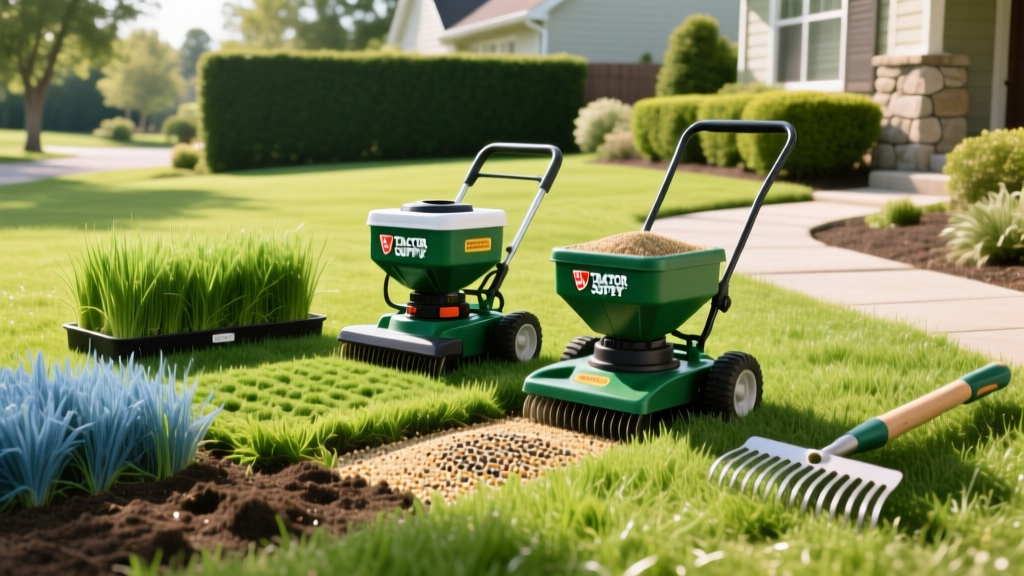
Choosing Grass Seeders at Tractor Supply for Lawn Establishment
Establishing a new lawn or overseeding an existing one requires precise seed-to-soil contact, accurate distribution rates, and an understanding of seed morphology. When sourcing equipment, evaluating the grass seeders at Tractor Supply involves navigating a mix of retail walk-behind spreaders, tow-behind models, and specialized rental equipment. Selecting the wrong seeder type can result in uneven germination, seed waste, or complete establishment failure, particularly when dealing with fine-seeded cool-season grasses or pelleted warm-season cultivars.
Retail vs. Rental: Navigating the Tractor Supply Inventory
Tractor Supply Co. (TSC) primarily stocks broadcast and drop spreaders for retail purchase, while slice (slit) seeders are often available through their in-store rental programs or partner equipment yards. Understanding this distinction is critical before you head to the store.
- Retail Broadcast Seeders: Brands like Agri-Fab and Earthway dominate the retail aisles. These are ideal for overseeding existing lawns where the soil has already been aerated or dethatched.
- Retail Drop Seeders: Models from Brinly-Hardy offer precise, edge-to-edge application, preventing seed from landing in adjacent flower beds or hardscapes.
- Rental Slice Seeders: For bare-soil establishment, renting a walk-behind slice seeder (such as a Billy Goat or Ryan model) is often necessary. These machines cut 1/4-inch furrows into the soil and drop the seed directly into the trench, guaranteeing the seed-to-soil contact required for NC State TurfFiles recommended germination protocols.
Equipment Comparison Matrix: Broadcast vs. Drop vs. Slice
Use the following matrix to determine which equipment category aligns with your specific lawn establishment goals and grass type.
| Feature | Broadcast (e.g., Agri-Fab 130-lb) | Drop (e.g., Brinly-Hardy 42-inch) | Slice Seeder (Rental) |
|---|---|---|---|
| Best Use Case | Overseeding large, open lawns | Precision overseeding near garden beds | Bare soil new lawn establishment |
| Price / Cost | $120 - $220 (Purchase) | $150 - $280 (Purchase) | $75 - $120 (Daily Rental) |
| Calibration Difficulty | Moderate (Wind affects spread) | High (Speed and overlap critical) | Low (Fixed furrow spacing) |
| Ideal Grass Types | Tall Fescue, Pelleted Bermuda | Kentucky Bluegrass, Fine Fescue | All types, especially Ryegrass & KBG |
Matching Seeder Mechanics to Grass Seed Morphology
Not all grass seed is created equal. The physical size and coating of the seed dictate how it flows through the hopper and agitator of the grass seeders at Tractor Supply.
Kentucky Bluegrass (KBG) and Fine Fescues
KBG seeds are exceptionally small and lightweight. When using a broadcast spreader, the seed can easily clump in the hopper if moisture is present, leading to streaky application. A drop seeder is highly recommended for KBG. If you must use a broadcast model, ensure the agitator at the bottom of the hopper is fully functional and consider mixing the seed with a dry, inert carrier like milorganite (at a 1:1 ratio by volume) to improve flowability.
Tall Fescue and Perennial Ryegrass
These cool-season grasses feature larger, oblong seeds that flow easily through both broadcast and drop seeders. Tall Fescue requires a heavy seeding rate (5 to 8 lbs per 1,000 square feet for new establishment). The Agri-Fab 130-lb capacity broadcast spreader is highly efficient here, allowing you to cover up to 2,500 square feet per hopper fill without stopping.
Bermudagrass and Zoysia
Warm-season grasses are often sold as "hulled," "unhulled," or "pelleted." Raw, unhulled Bermudagrass seed is lightweight and prone to wind drift. Always purchase pelleted seed when using broadcast seeders; the clay coating adds weight, ensuring the seed reaches the soil rather than blowing into neighboring properties.
Calibration Protocol for Agri-Fab Broadcast Models
Guessing the dial setting on your seeder leads to severe under-seeding (resulting in weed invasion) or over-seeding (causing seedling competition and damping-off disease). Follow this 100-square-foot calibration test, endorsed by University of Minnesota Extension turfgrass specialists.
- Measure a Test Area: Mark off a 10x10 foot (100 sq ft) section of your driveway or a tarp.
- Weigh the Seed: Calculate 10% of your target application rate. For example, if overseeding Tall Fescue at 5 lbs per 1,000 sq ft, you need exactly 0.5 lbs (8 ounces) of seed for the 100 sq ft test area.
- Set the Dial: Start with the manufacturer's recommended setting on the Agri-Fab dial (usually around 3.5 to 4 for fescue).
- Spread and Collect: Walk at your normal, steady pace (approx. 3 mph) over the test area. Sweep up all the seed that landed on the tarp.
- Adjust: Weigh the collected seed. If you collected 10 ounces, your setting is too high; dial it back to 3. If you collected 5 ounces, dial it up to 4.5. Repeat until you collect exactly 8 ounces.
WARNING: The Starter Fertilizer Trap
Never mix grass seed and starter fertilizer in the same hopper. The high salt index of the fertilizer will draw moisture out of the seed embryo, severely reducing germination rates. Apply seed first, then run a separate pass with a dedicated fertilizer spreader.
Never mix grass seed and starter fertilizer in the same hopper. The high salt index of the fertilizer will draw moisture out of the seed embryo, severely reducing germination rates. Apply seed first, then run a separate pass with a dedicated fertilizer spreader.
The Slice Seeder Dilemma: When to Rent Over Buying
Homeowners often attempt to establish a new lawn on bare dirt using a retail broadcast spreader purchased from TSC. This is a primary cause of establishment failure. Broadcast seeders leave the seed resting on top of the soil. Without mechanical incorporation, the seed is vulnerable to desiccation, bird predation, and surface runoff.
If your soil is entirely bare, bypass the retail spreader aisle and head to the rental desk. A slice seeder cuts through the topsoil, creating a micro-trench. The seed is deposited directly into this trench, and the closing wheels press the soil back over it. This mimics commercial agricultural drilling and reduces the required watering frequency by up to 40% during the critical 14-day germination window.
Pro-Tip for Slice Seeding: Run the slice seeder over your bare soil twice. Make the first pass in a North-South direction, and the second pass in an East-West direction (a checkerboard pattern). This ensures maximum turf density and eliminates visible row lines as the grass matures.
Frequently Asked Questions
Can I use a Tractor Supply broadcast seeder for grass seed and ice melt in the winter?
Yes, but you must thoroughly clean the hopper, agitator, and axle bearings after spreading ice melt (especially calcium chloride or rock salt). Salt is highly corrosive and will seize the gearbox and rust the metal components by spring if not washed out with a hose and dried completely, followed by a silicone lubricant spray on the moving parts.
What is the best tow-behind seeder for large acreage at TSC?
For properties exceeding 1 acre, the Brinly-Hardy 40-inch tow-behind broadcast spreader is a top choice. It features a rust-proof polyethylene hopper and pneumatic tires that won't sink into soft, freshly graded soil. Ensure your ATV or lawn tractor has a PTO or 12V battery connection if you opt for models with electronic agitators to prevent clogging with damp seed.
How do I prevent seed from blowing away when using a broadcast spreader on a windy day?
Do not seed if wind speeds exceed 10 mph. If you must seed in light breezes (5-8 mph), lower the spreader's deflector shield (if equipped) to drop the seed closer to the ground, or add a dry sand carrier to the seed mix to increase the overall weight and momentum of the particles as they leave the impeller.