
Grass Types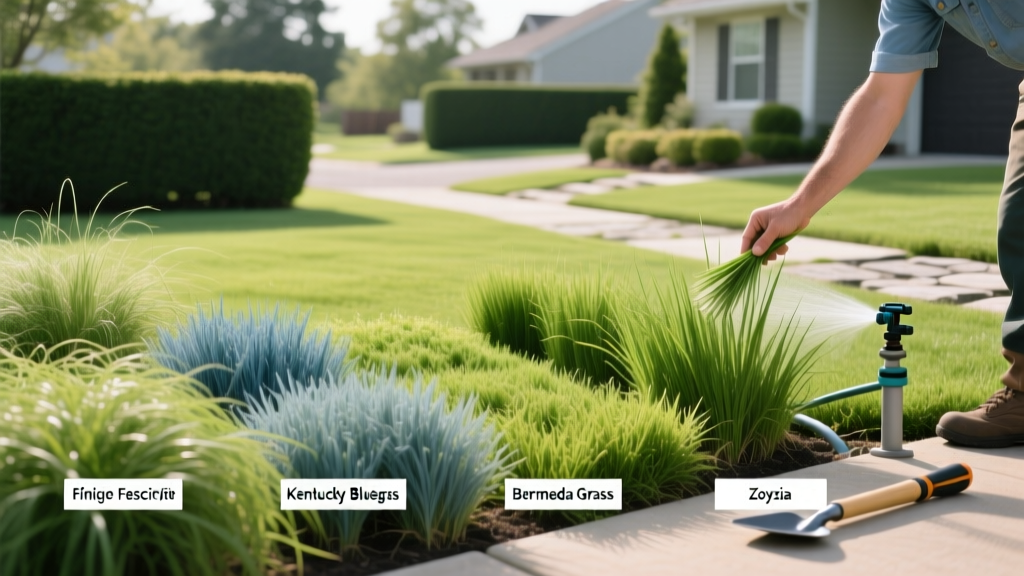
Vetting an Affordable Hydroseeding Official Website: A Buyer Guide
Navigating the Search for Affordable Hydroseeding
When homeowners begin searching for an affordable hydroseeding official website, they are typically met with a barrage of vague quote forms, stock imagery, and ambiguous promises of a "lush, green lawn in 30 days." However, true affordability in lawn establishment is not about finding the lowest initial bid; it is about maximizing the cost-to-germination ratio while minimizing soil erosion and seed washout. As of 2026, the hydroseeding industry has seen significant shifts in mulch technology and seed cultivar pricing, making it critical to scrutinize the technical specifications listed on a contractor's website before committing to a service.
A legitimate contractor's digital presence should function as a transparent ledger of their agronomic practices. If a company's official website fails to detail their slurry composition, seed cultivars, and soil preparation protocols, their "affordable" pricing is likely subsidized by cutting corners on material quality. Below is a comprehensive framework for evaluating hydroseeding contractors and understanding the real costs of establishment.
The True Cost of Hydroseeding in 2026
The national average for professional hydroseeding ranges from $0.08 to $0.15 per square foot, depending on the complexity of the terrain and the materials used. An "affordable" quote that drops below $0.06 per square foot should immediately trigger skepticism. Contractors achieving these rates are typically using 100% low-grade wood cellulose mulch without adequate tackifiers, which leads to severe washout during the first heavy rain.
| Slurry Material Tier | Cost Per Sq. Ft. (2026) | Best Application | Washout Risk |
|---|---|---|---|
| 100% Wood Cellulose | $0.06 - $0.08 | Flat, low-wind residential lots | High |
| 70/30 Wood/Straw Blend | $0.09 - $0.12 | Standard suburban lawns | Moderate |
| Bonded Fiber Matrix (BFM) | $0.14 - $0.20 | Slopes, erosion-prone areas | Very Low |
Warning: The Hidden Soil Prep Fee
Many budget-friendly hydroseeding websites advertise rock-bottom per-square-foot rates but exclude essential soil preparation. Tilling, grading, and amending the soil to a pH of 6.0–7.0 can add $0.04 to $0.08 per square foot. Always verify if the quoted price includes a baseline soil test and starter fertilizer application (typically a 10-18-10 NPK ratio).
Many budget-friendly hydroseeding websites advertise rock-bottom per-square-foot rates but exclude essential soil preparation. Tilling, grading, and amending the soil to a pH of 6.0–7.0 can add $0.04 to $0.08 per square foot. Always verify if the quoted price includes a baseline soil test and starter fertilizer application (typically a 10-18-10 NPK ratio).
Red Flags on a Contractor's Official Website
Evaluating an affordable hydroseeding official website requires looking past the homepage hero images. According to turfgrass researchers at the University of Minnesota Turfgrass Science program, successful establishment relies heavily on site-specific seed selection and soil contact. If the website you are reviewing exhibits the following red flags, look for a different provider.
1. The "Premium Sun and Shade Mix" Vagueness
Reputable contractors list exact seed cultivars on their websites or provide them upon request. A high-quality cool-season mix should specify cultivars like 'Titan Ultra' Tall Fescue or 'Midnight' Kentucky Bluegrass. If the website only advertises a generic "premium mix," they are likely purchasing bulk, uncertified seed that may contain weed seeds or annual ryegrass filler, which will die off during the first summer heatwave.
2. Lack of Tackifier Specifications
Tackifiers are the glue that holds the hydroseeding mulch to the soil. Budget operators often use cheap guar gum tackifiers that break down within 48 hours of UV exposure. Look for mentions of advanced organic tackifiers or cross-linked polymers on the contractor's materials page. Manufacturers like Profile Products set the industry standard for BFM and tackifier longevity; a quality contractor will proudly list the specific brands they utilize.
3. No Germination or Erosion Warranty
While no contractor can guarantee a perfect lawn if the homeowner fails to water it, professional websites will outline a clear "washout warranty." If heavy rain erodes the slurry within the first 72 hours due to improper tackifier ratios, a reputable company will re-spray the affected areas at no additional cost.
DIY Hydroseeding Kits vs. Professional Services
Homeowners seeking affordability often stumble upon DIY hydroseeding kits sold online. While these kits appear cheap upfront, their cost-per-square-foot is surprisingly high compared to professional commercial rigs. Below is a direct comparison to help you decide which route fits your budget and property size.
| Feature | DIY Hydroseeding Kits (e.g., HydroMousse) | Professional Commercial Hydroseeding |
|---|---|---|
| Cost Per Sq. Ft. | $0.18 - $0.30 | $0.08 - $0.15 |
| Mulch Quality | Low-grade cellulose/paper | Custom BFM or Straw blends |
| Application Uniformity | Poor (dependent on garden hose pressure) | Excellent (mechanical agitation & pumping) |
| Best For | Patch repair under 500 sq. ft. | Full lawn establishment (2,000+ sq. ft.) |
For small bare patches caused by dog urine or localized fungus, a DIY kit attached to a standard garden hose is a viable, affordable solution. However, for establishing an entire 5,000-square-foot lawn, hiring a professional with a commercial 1,000-gallon tank and mechanical agitation is significantly cheaper per square foot and yields vastly superior germination rates.
Essential Questions to Ask Before Signing
Once you have found an affordable hydroseeding official website that passes the initial red-flag test, you must verify their agronomic competence. Send the following technical questions via their website's contact form before requesting a formal quote:
- What is your seed application rate per 1,000 square feet? (Standard rates should be 8–10 lbs for Tall Fescue and 2–3 lbs for Kentucky Bluegrass. Anything less indicates they are stretching the seed to cut costs.)
- Do you include a starter fertilizer in the slurry, and what is the NPK ratio? (Phosphorus is critical for root development; a zero-phosphorus fertilizer is unacceptable for new seed establishment unless local environmental regulations dictate otherwise.)
- How do you handle soil compaction prior to spraying? (If they do not recommend core aeration or light tilling for compacted clay soils, the seed will fail to establish deep roots, regardless of the mulch quality.)
Post-Application: The Homeowner's Responsibility
The most affordable hydroseeding service in the world will fail if the homeowner neglects the critical 21-day germination window. The mulch matrix must remain consistently moist, but not waterlogged. This requires light watering 3 to 4 times a day for 10–15 minutes per zone. Once the grass reaches 3 inches in height, transition to deep, infrequent watering to encourage drought-resistant root growth. By combining a thoroughly vetted contractor with disciplined irrigation, you secure a premium lawn at a highly competitive price point.

